 Veronika Smolik
Author Archives: Veronika Smolik
Veronika Smolik
Author Archives: Veronika Smolik
Despite the wealth of data available, distilling a coherent narrative from a Kubernetes cluster remains a challenge for modern infrastructure teams. Even with powerful visualization tools like the Policy Board, Service Graph, and specialized dashboards, users often find themselves spending significant time piecing together context across different screens. Making good use of this data to secure a cluster or troubleshoot an issue becomes nearly impossible when it requires manually searching across multiple sources to find a single “connecting thread.”
Inevitably, security holes happen, configurations conflict causing outages, and teams scramble to find that needle-in-the-haystack cause of cluster instability. A new approach is needed to understand the complex layers of security and the interconnected relationships among numerous microservices. Observability tools need to not only organize and present data in a coherent manner but proactively help to filter and interpret it, cutting through the noise to get to the heart of an issue. As we discussed in our 2026 outlook on the rise of AI agents, this represents a fundamental shift in Kubernetes management.
Key Insight: With AI Assistant for Calico, observability takes a leap forward, providing a proactive, conversational, and context-aware intelligence layer to extract actionable insights from a Continue reading
AI Powered Intelligence, Unified Traffic Observability and Scalable Infrastructure Management
As anyone managing one or more Kubernetes clusters knows by now, scaling can introduce an exponentially growing number of problems. The sheer volume of metrics, logs and other data can become an obstacle, rather than an asset, to effective troubleshooting and overall cluster management. Fragmented tools and manual troubleshooting processes introduce operational complexity leading to the inevitable security gaps and extended downtime. As the number of clusters grows it becomes more important than ever to find ways of reducing the observability noise, decluttering the monitoring stack and eliminating the bottlenecks that get in the way of keeping your clusters stable and secure.
The Winter 2026 release of Calico Enterprise and Calico Cloud addresses the pain points of scaling clusters with three key enhancements:
AI Assistant for Calico: Efficiently navigate disparate data sources to quickly get answers through natural language, or proactively identify problems before they arise.
In our previous post, we addressed the most common questions platform teams are asking as they prepare for the retirement of the NGINX Ingress Controller. With the March 2026 deadline fast approaching, this guide provides a hands-on, step-by-step walkthrough for migrating to the Kubernetes Gateway API using Calico Ingress Gateway. You will learn how to translate NGINX annotations into HTTPRoute rules, run both models side by side, and safely cut over live traffic.
The announced retirement of the NGINX Ingress Controller has created a forced migration path for the many teams that relied on it as the industry standard. While the Ingress API is not yet officially deprecated, the Kubernetes SIG Network has designated the Gateway API as its official successor. Legacy Ingress will no longer receive enhancements and exists primarily for backward compatibility.
While the Ingress API served the community for years, it reached a functional ceiling. Calico Ingress Gateway implements the Gateway API to provide:
For years, AI and machine learning workloads lived in the lab. They ran as internal experiments, batch jobs in isolated clusters, or offline data pipelines. Security focused on internal access controls and protecting the data perimeter.
That model no longer holds.
Today, AI models are increasingly part of production traffic, which is driving new challenges around securing AI workloads in Kubernetes. Whether serving a large language model for a customer-facing chatbot or a computer vision model for real-time analysis, these models are exposed through APIs, typically REST or gRPC, running as microservices in Kubernetes.
From a platform engineering perspective, these AI inference endpoints are now Tier 1 services. They sit alongside login APIs and payment gateways in terms of criticality, but they introduce a different and more expensive risk profile than traditional web applications. For AI inference endpoints, ingress security increasingly means Layer 7 inspection and WAF (Web Application Firewall) level controls at the cluster edge. By analyzing the full request payload, a WAF can detect and block abusive or malicious traffic before it ever reaches expensive GPU resources or sensitive data. This sets the stage for protecting AI workloads from both operational Continue reading
Encrypting internal traffic and enforcing mutual (mTLS), a form of TLS in which both the client and server authenticate each other using X.509 certificates., has transitioned from a “nice-to-have” to a hard requirement, especially in Kubernetes environments where everything can talk to everything else by default. Whether your objectives are regulatory compliance, or simply aligning to the principles of Zero Trust, the goal is the same: to ensure every connection is encrypted, authenticated, and authorized.
The word ‘service mesh’ is bandied about as the ideal solution for implementing zero-trust security but it comes at a price often too high for organizations to accept. In addition to a steep learning curve, deploying a service mesh with a sidecar proxy in every pod scales poorly, driving up CPU and memory consumption and creating ongoing maintenance challenges for cluster operators.
Istio Ambient Mode addresses these pain points by decoupling the mesh from the application and splitting the service mesh into two distinct layers: mTLS and L7 traffic management, neither of which needs to run as a sidecar on a pod. By separating these domains, Istio allows platform engineers to implement mTLS cluster-wide without the complexity of Continue reading
The world of Kubernetes networking can sometimes be confusing. What’s a CNI? A service mesh? Do I need one? Both? And how do they interact in my cluster? The questions can go on and on.
Even for seasoned platform engineers, making sense of where these two components overlap and where the boundaries of responsibility end can be challenging. Seemingly bewildering obstacles can stand in the way of getting the most out of their complementary features.
One way to cut through the confusion is to start by defining what each of them is, then look at their respective capabilities, and finally clarify where they intersect and how they can work together.
This post will clarify:
Container Network Interface (CNI) is a standard way to connect and manage networking for containers in Kubernetes. It is a set of standards defined by Kubernetes for configuring container network interfaces and maintaining connectivity between pods in a dynamic environment where network peers are constantly being created and destroyed.
Those standards are implemented by CNI plugins. A CNI plugin is Continue reading
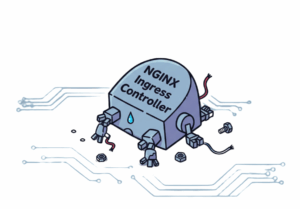
Ingress NGINX Controller, the trusty staple of countless platform engineering toolkits, is about to be put out to pasture. This news was announced by the Kubernetes community recently, and very quickly circulated throughout the cloud-native space. It’s big news for any platform team that currently uses the NGINX Controller because, as of March 26, 2026, there will be no more bug fixes, no more critical vulnerability patches and no more enhancements when Kubernetes continues to release new versions.
If you’re feeling ambushed, you’re not alone. For many teams, this isn’t just an inconvenient roadmap update, its unexpected news that now puts long-term traffic management decisions front and center. You know you need to migrate yesterday but the best path forward can be a confusing labyrinth of platforms and unfamiliar tools. Questions you might ask yourself:
 Do you find a quick drop-in Ingress replacement?
Does moving to Gateway API make sense and can you commit enough resources to do a full migration?
If you decide on Gateway API then what is the best option for a smooth transition?
With Ingress NGINX on the way out, platform teams are standing at a Continue reading
When your Kubernetes cluster handles thousands of workloads, every millisecond counts. And that pressure is no longer the exception; it is the norm. According to a recent CNCF survey, 93% of organizations are using, piloting, or evaluating Kubernetes, revealing just how pervasive it has become.
Kubernetes has grown from a promising orchestration tool into the backbone of modern infrastructure. As adoption climbs, so does pressure to keep performance high, networking efficient, and security airtight.
However, widespread adoption brings a difficult reality. As organizations scale thousands of interconnected workloads, traditional networking and security layers begin to strain. Keeping clusters fast, observable, and protected becomes increasingly challenging.
Innovation at the lowest level of the operating system—the kernel—can provide faster networking, deeper system visibility, and stronger security. But developing programs at this level is complex and risky. Teams running large Kubernetes environments need a way to extend the Linux kernel safely and efficiently, without compromising system stability.
Enter eBPF (extended Berkeley Packet Filter), a powerful technology that allows small, verified programs to run safely inside the kernel. It gives Kubernetes platforms a way to move critical logic closer to where packets actually flow, providing sharper visibility Continue reading
The Ingress NGINX Controller is approaching retirement, which has pushed many teams to evaluate their long-term ingress strategy. The familiar Ingress resource has served well, but it comes with clear limits: annotations that differ by vendor, limited extensibility, and few options for separating operator and developer responsibilities.
The Gateway API addresses these challenges with a more expressive, standardized, and portable model for service networking. For organizations migrating off Ingress NGINX, the Calico Ingress Gateway, a production-hardened, 100% upstream distribution of Envoy Gateway, provides the most seamless and secure path forward.
If you’re evaluating your options, here are the five biggest reasons teams are switching now followed by a step-by-step migration guide to help you make the move with confidence.
Ingress NGINX is entering retirement. Maintaining it will become increasingly difficult as ecosystem support slows. The Gateway API is the replacement for Ingress and provides:
Calico implements the Gateway API directly and gives you an Continue reading