One of the better explanations of SDN
Stumbled upon this via HighScalability:
Every time I feel like I'm "out of touch" with the hip new thing, I take a weekend to look into it. I tend to discover that the core principles are the same [...]; or you can tell they didn't learn from the previous solution and this new one misses the mark, but it'll be three years before anyone notices (because those with experience probably aren't touching it yet, and those without experience will discover the shortcomings in time.)
Yep, that explains the whole centralized control plane ruckus ;) Read also a similar musing by Ethan Banks.
Aryaka Envisions a Lofty $1B Price for Possible IPO
 It's revenues have to keep doubling though to make the numbers work.
Docker Weekly Roundup | October 9, 2016
It’s time for your weekly roundup! Get caught up on the top Docker news including; expansion into China through a commercial partnership with Alibaba Cloud, announcement of DockerCon 2017, and information on the upcoming Global Mentor Week. As we begin a new week, let’s recap the top five most-read stories of the week of October 9, 2016:
- Alibaba Cloud Partnership Docker expands into China market through new partnership with the Alibaba Group, the world’s largest retail commerce group. The focus of the partnership is to provide a China-based Docker Hub, enable Alibaba to resell Docker’s commercial offerings, and create a “Docker For Alibaba Cloud”.
- DockerCon 2017 a three day, conference organized by Docker. This year’s US edition will take place in Austin, TX and continue to build on the success of previous events as it grows and reflects Docker’s established ecosystem and ever-growing community.
- Global Mentor Week is a global event series aimed at providing Docker training to both newcomers and intermediate users. Participants will work through self-paced labs that will be available through an online Learning Management System (LMS). There will be different labs for different skill levels, Developers, Ops, Linux and Windows users.
Blade Chassis to End of Row Swithces Connectivity & High Availability Options
Spanning Tree Protocol (STP) free network inside Data Centre is main focus for network vendors and many technologies have been introduced in recent past to resolve STP issues in data centre and ensure optimal link utilization. Advent of switching modules inside blade enclosures coupled with the requirements for optimal link utilization starting right from blade server has made today’s Data Centre network more complex.
In this blog , we will discuss how traditional model of network switches placement (End of Row) can be coupled with blade chassis with different options available for end to end connectivity / high availability.
Network Switches are placed in End of Row and in order to remove STP Multi-Chassis Link Aggregation (MC-LAG) is deployed. Please see one of my earlier blog for understanding of MC-LAG.
Option 1: Rack mounted servers for computing machines, servers have installed multiple NICs in Pass-Though module and Virtual Machines hosted inside servers require Active/Active NIC Teaming.
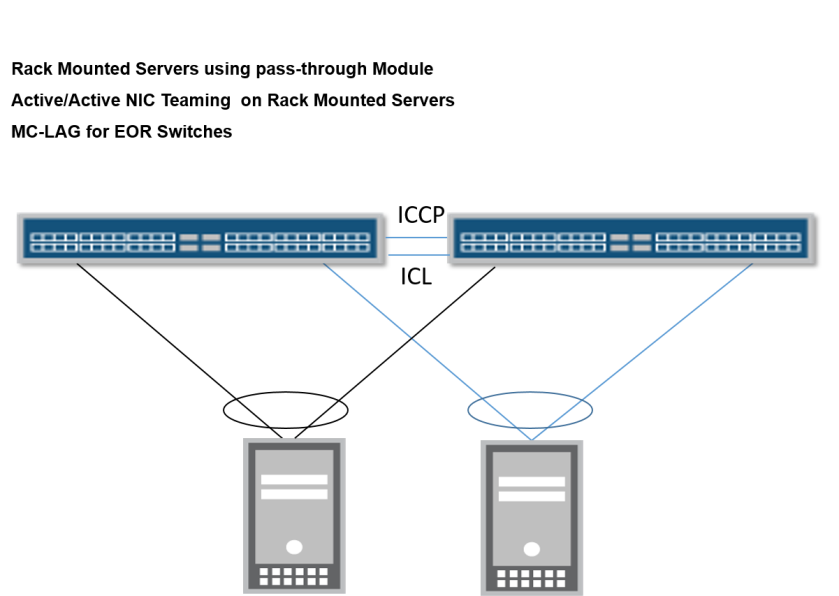
Option 2 : Blade Chassis has multiple blade servers and each blade servers has more than 1 NIC (which are connected with blade chassis switches through internal fabric link). Virtul Machines hosted inside blade servers require active/active NIC teaming.

Option 3 : Blade Chassis Continue reading
Show 310: High-Stakes OpenStack Networking
Todays show looks at OpenStack networking in a high-stakes production environment: Paddy Power Betfair, a publicly-traded betting and gaming exchange. The post Show 310: High-Stakes OpenStack Networking appeared first on Packet Pushers.

Worth Reading: Building the LinkedIn Knowledge Graph


The post Worth Reading: Building the LinkedIn Knowledge Graph appeared first on 'net work.