More Jinja – Working with YAM as an Input
Jinja2 Simple YAML Example
We’re now going to take a look at grabbing a file from the hard drive written in YAML syntax. YAML is arguably the most human readable data serialization format which makes it really easy for coders and non-coders alike to work with.
We’re going to build on the last Jinja2 example. Instead of creating the templates and variables directly in python. We’re going to load them instead from files on our computer.
This may seem like a small detail, but this allows us to deconstruct the building of our configurations, meaning that different people can be responsible for different components of the configuration. As with anything, if you can break a complex process down into several smalller less complex tasks, the whole thing starts to feel easier.
Loading Libraries
We’ll start by loading the required libraries
In [2]:
import yaml
from jinja2 import Environment, FileSystemLoader, Template
Set the Environment
Essentially, this set’s the path which will define the directory where the templates will be loaded from. In this case, I’m setting it to load from the same directory.
In [3]:
ENV = Environment(loader=FileSystemLoader('./'))
Printing Continue reading
Big Switch Networks Closes $48.5M in Series C Funding
 Big Switch Networks is looking forward to a big 2016.
ACL Implementation Guide
Learn the basics about access control lists and how to use them for IP traffic filtering on a network.
Next Gen EOS for Cloud-Scale Networking
As we celebrate 2016, and reflect upon Arista’s decade of innovation, the disparity between legacy technology and modern technology is clear, and the gap is widening. Arista is unique in its role as a pioneer in cloud networking. Let us review. Arista EOS: The Best fit for Cloud Design It is clear that cloud data...Continue reading »
Next Gen EOS for Cloud-Scale Networking
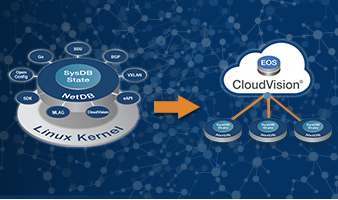
As we celebrate 2016, and reflect upon Arista’s decade of innovation, the disparity between legacy technology and modern technology is clear, and the gap is widening. Arista is unique in its role as a pioneer in cloud networking. Let us review.

5G: Paving The Way For New Paradigms
5G will integrate compute, storage and communication functions, enabling new services.
Arista Outfits EOS for Containers & Hybrid Clouds
 Monitoring, streamed telemetry, and scale are all on Arista's mind.
Upcoming Events: Data Center Fabrics Workshop in Zurich
Online webinars are great, but many engineers still prefer live workshops – they’re an excellent opportunity for unrestricted 2-way communication and exchange of ideas – so I decided to turn a few of my best webinars (or webinar tracks) into workshops, and Gabi Gerber, the wonderful organizer of Data Center days in Switzerland took over the logistics, resulting in the first-ever Data Center Fabrics workshop in Zurich in late March.
Read more ...Network Design – Where Should I Start?
After listening to a recent Packet Pushers podcast, the question was raised about network design and where the network design should start. When I first started designing IT, I believed the correct starting point was to define the required outcome through the deployment of technology. For example, the requirement from the customer could be to […]
The post Network Design – Where Should I Start? appeared first on Packet Pushers.
Network Design – Where Should I Start?
After listening to a recent Packet Pushers podcast, the question was raised about network design and where the network design should start. When I first started designing IT, I believed the correct starting point was to define the required outcome through the deployment of technology. For example, the requirement from the customer could be to […]
The post Network Design – Where Should I Start? appeared first on Packet Pushers.
What is the broadcast address in IPv6 ?
What is the broadcast address in IPv6 ?
Think of the answer before reading the post...
4 Carriers Create NFV MANO Open Source Groups
 Carriers want their own flavors of MANO.
Non-Blocking #1: sFlow with Peter Phaal of InMon and sFlow.org
The inaugural "Non-Blocking" podcast for ForwardingPlane.net. We discuss sFlow with one if its creators, Peter Phaal of InMon.Discuss sFlow, the protocol, it's uses, similarities to other management frameworks, how it is dissimilar from netflow and why it is worth while to take some time to learn it.
The post Non-Blocking #1: sFlow with Peter Phaal of InMon and sFlow.org appeared first on Packet Pushers.
Non-Blocking 1: sFlow with Peter Phaal of InMon and sFlow.org
The inaugural "Non-Blocking" podcast for ForwardingPlane.net. We discuss sFlow with one if its creators, Peter Phaal of InMon.Discuss sFlow, the protocol, it's uses, similarities to other management frameworks, how it is dissimilar from netflow and why it is worth while to take some time to learn it.
The post Non-Blocking 1: sFlow with Peter Phaal of InMon and sFlow.org appeared first on Packet Pushers.
Redistribution of named and tagged static routes
I always name my IOS static routes as a best practise. However I hit a syntax issue last week when I tried to combine the named static with a tag, then redistributing that tagged static route into OSPF. If you have … Continue reading
The post Redistribution of named and tagged static routes appeared first on The Network Sherpa.
Next BOSNOG Meetup 1/28/16 @ 6:30p at MS NERD Center
Attention Boston area networkers -- the next Boston Network Operators Group meetup will be held at the Microsoft New England Research and Development (NERD) Center on January 28, 2016 @ 6:30p. Dave Husak, founder of Plexxi, is the featured speaker. Food and drink will be provided.Break Those Chains
So because I’m new to this whole blogging at Packet Pushers thing (and blogging in general), I’ve been trying to decide on my place in the grand scheme of things. There are a lot of folks here that do a great job of deep-dives, vendor happenings, and general overviews. I could do those, but what’s the point of rehashing what this site and 100s of others (Google FTW) do?
The post Break Those Chains appeared first on Packet Pushers.
Break Those Chains
So because I’m new to this whole blogging at Packet Pushers thing (and blogging in general), I’ve been trying to decide on my place in the grand scheme of things. There are a lot of folks here that do a great job of deep-dives, vendor happenings, and general overviews. I could do those, but what’s the point of rehashing what this site and 100s of others (Google FTW) do?
The post Break Those Chains appeared first on Packet Pushers.