LF Networking, GSMA Align to Goose NFVi Efforts
The partnership will reduce the time and costs associated with operationalizing VNFs, anticipate...
Copyright 2019 SDxCentral, LLC; For non-commercial use
The partnership will reduce the time and costs associated with operationalizing VNFs, anticipate...
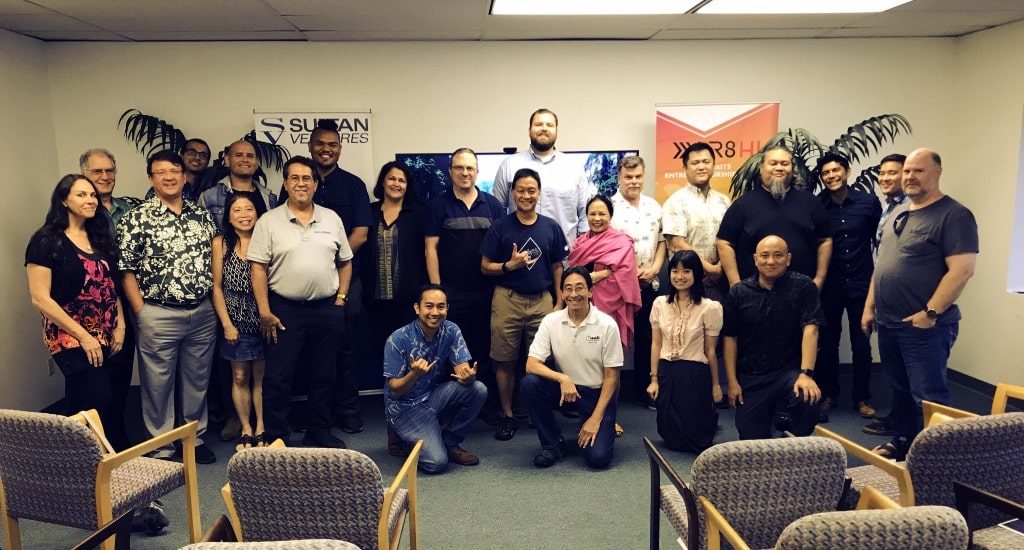
My first exposure to the Internet Society was back in 1995 when they held the 5th Annual INET International Networking Conference in Honolulu, Hawaii. It was a time when accessing the Internet was a new experience, at least for the public. Terms like hyperlinks, HTTP, FTP, Pine, and the World Wide Web were exciting and the innocence of connecting the world was full of potential.
Fast forward 25 years and the Internet is truly a worldwide resource. With the advent of smartphones, high-speed Internet, wireless technologies, and robust web protocols, accessing and communicating has become a rich experience. But within a quarter of a century, the innocence of the Internet has also tarnished. Not a day goes by without a story in the media about security breaches, privacy lost, horrible things broadcast over social media, online bullying, surveillance, hate speech, and the list goes on.
It is in this environment that we’re launching the Internet Society Hawaii Chapter. The mission of the Internet Society still rings true today: to bring the Internet of opportunity to everyone everywhere, an Internet that is open, globally connected, secure, and trustworthy. These principles apply whether you live in an urban center or rural community. Continue reading
Today's Heavy Networking explores how to select a higher-ed program for your computer science education, including the key elements of a CS degree, community college vs. 4-year institutions, measuring educational costs and returns, and more. Our guest is Aaron Francis, a systems engineer and instructor.
The post Heavy Networking 456: How To Choose A Higher Ed Program For An IT Career appeared first on Packet Pushers.
Another week, another BGP hijack. This time a steel company in western Pennsylvania got surprised with a sizable portion of the Internet’s traffic. In this Network Collective short take, Nick Buraglio joins me to talk about the recent BGP blunder, its causes, some of the reactions, and discuss the BGP optimization tool that sparked the whole issue.


The post BGP Blunder appeared first on Network Collective.
The Sweden-based vendor highlights involvement in 11 live contracts, but Huawei and Nokia remain in...

Juniper’s Mist acquisition is getting a dose of the SDN Campus and its coming up in a nasty rash. The symptoms are: an overlay network using L2TPv3 (aka MPLS for ordinary people) and and software controller badged AI-driven microservice cloud architecture insight in the user experience. Actually, before we press on, this is the twaddle […]
The post Juniper Mist Edge – SD Campus Emerges appeared first on EtherealMind.

The alliance between high performance computing and artificial intelligence is proving to be a fruitful one for researchers looking to accelerate scientific discovery in everything from climate prediction and genomics to particle physics and drug discovery. …
New Twists In The Intertwining Of HPC And AI was written by Michael Feldman at .
Machine learning systems are stuck in a rut Barham & Isard, HotOS’19
In this paper we argue that systems for numerical computing are stuck in a local basin of performance and programmability. Systems researchers are doing an excellent job improving the performance of 5-year old benchmarks, but gradually making it harder to explore innovative machine learning research ideas.
The thrust of the argument is that there’s a chain of inter-linked assumptions / dependencies from the hardware all the way to the programming model, and any time you step outside of the mainstream it’s sufficiently hard to get acceptable performance that researchers are discouraged from doing so.
Take a simple example: it would be really nice if we could have named dimensions instead of always having to work with indices.
Named dimensions improve readability by making it easier to determine how dimensions in the code correspond to the semantic dimensions described in, .e.g., a research paper. We believe their impact could be even greater in improving code modularity, as named dimensions would enable a language to move away from fixing an order on the dimensions of a given tensor, which in turn would make function lifting more convenient…
For Continue reading
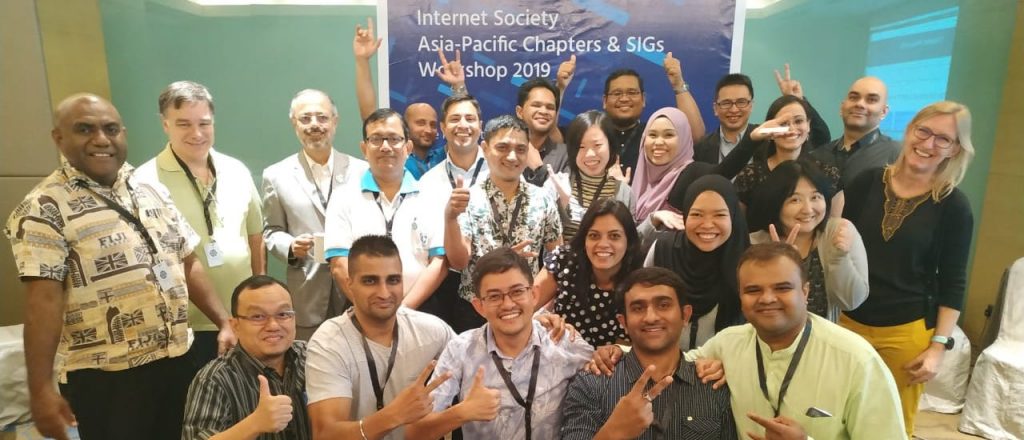
Earlier this month, 19 representatives from 14 local Chapters in Asia-Pacific gathered in Kuala Lumpur, Malaysia, for a two-day workshop to boost their capability in implementing the Internet Society 2019 Action Plan collaboratively and in a coordinated manner, and to maximize impact across the vast and fast-developing region.
Chapter leaders from Hong Kong, India, Japan, Malaysia, Pakistan, the Philippines, Taiwan, and the Pacific Islands, among other places, spent a weekend together. They learned from each other and planned the collective implementation of the Action Plan that has four focus areas: connecting the world, improving technical security, building trust, and shaping the future of the Internet.
Run by members across the world who support the Internet Society’s mission, Chapters are central to our work. They give us unique local perspectives on emerging Internet issues. The Regional Chapters Workshop, which is held yearly, is an important event that lets us strategize with Chapters on a wave of impactful local actions to amplify our regional voice and promote the organization’s mission – the Internet is for Everyone.
To help the Chapters carry out their work, the workshop focused on training and leadership in the focus areas, including IoT security, routing Continue reading
Docker Hub is home to the world’s largest library of container images. Millions of individual developers rely on Docker Hub for official and certified container images provided by independent software vendors (ISV) and the countless contributions shared by community developers and open source projects. Large enterprises can benefit from the curated content in Docker Hub by building on top of previous innovations, but these organizations often require greater control over what images are used and where they ultimately live (typically behind a firewall in a data center or cloud-based infrastructure). For these companies, building a secure content engine between Docker Hub and Docker Trusted Registry (DTR) provides the best of both worlds – an automated way to access and “download” fresh, approved content to a trusted registry that they control.
Ultimately, the Hub-to-DTR workflow gives developers a fresh source of validated and secure content to support a diverse set of application stacks and infrastructures; all while staying compliant with corporate standards. Here is an example of how this is executed in Docker Enterprise 3.0:
DTR allows customers to set up a mirror to grab content from a Hub repository by constantly polling it and pulling new image Continue reading
