Bloomberg Using Kubernetes to Test Kubernetes Deployments
 PowerfulSeal test platform likened to Netflix's Chaos Monkey.
PowerfulSeal test platform likened to Netflix's Chaos Monkey.
On Monday we released our latest version of Cumulus Linux, 3.5. It includes symmetric VxLAN routing, Voice VLAN and 10 new hardware platforms. This includes General Availability (GA) of our two supported chassis, the four slot Backpack and eight slot OMP800. We announced Early Access (EA) support for both chassis in our previous release, Cumulus Linux 3.4.
At Cumulus, moving fast to fix problems and get features in the hands of our customers is core to our culture. In today’s webscale networks, it’s hard for even the largest of organizations to operate on classic 18+ month buying cycles. Some folks want the ability to use new technology as soon as possible.
The EA process gives customers the ability to use working software or hardware and provide direct feedback on the final product. That feedback improves all aspects of the product, from purchasing, delivery, default configurations or operations.
When we announced EA for our chassis systems, we had many Fortune 500 customers express interest. For some, the EA process allowed them to start the purchasing process knowing that it would take months until a final purchase order was ready. For others, they were able to put working, stable Continue reading

I’m doing some research on Facebook’s Open/R routing platform for a future blog post. I’m starting to understand the nuances a bit compared to OSPF or IS-IS, but during my reading I got stopped cold by one particular passage:
Many traditional routing protocols were designed in the past, with a strong focus on optimizing for hardware-limited embedded systems such as CPUs and RAM. In addition, protocols were designed as purpose-built solutions to solve the particular problem of routing for connectivity, rather than as a flexible software platform to build new applications in the network.
Uh oh. I’ve seen language like this before related to other software projects. And quite frankly, it worries me to death. Because it means that people aren’t learning their lessons.
Any time I see an article about how a project was rewritten from the ground up to “take advantage of new changes in protocols and resources”, it usually signals to me that some grad student decided to rewrite the whole thing in Java because they didn’t understand C. It sounds a bit cynical, but it’s not often wrong.
Want proof? Check out Linus Torvalds and his opinion about rewriting the Linux kernel in Continue reading
Earlier this year, as part of the Internet Society’s 25th anniversary celebration, we asked you to share your memories of the early Internet. As we look forward to the new year, it’s fun to read through the stories and look back at where we started.
One of the earliest memories was from Stanford University.
I got my first Arpanet email account in 1978.
[By 1985] All the graduate students and professors had accounts, and there was a campus Ethernet, Macs were being integrated into the network via AppleTalk (print and file sharing services)… Also, beyond email we had ftp servers that served shareware and USENET to help with sysadmin problems. Much of the networking software and hardware was developed on campus, including the AppleTalk gateways (Kinetics) and routers (early Cisco protoypes).
There was also this dose of funny reality from nearly ten thousand kilometers away, in Moscow:
I had remote data connection more than 26 years ago, in 1991. We had so called dial up modem connection via telephone PSTN pre-analogue PBX- the step-by-step switch.
It was toooooo extremely long.
Another member shared this memory from INET ’93 San Francisco:
…among the papers and presentations one which drew the largest crowd was Continue reading
In Episode 18 of Network Collective, Pete Lumbis of Cumulus Networks and Kevin Myers of IP Architechs join us to talk about the pros and cons of running whitebox or commodity hardware in your network. There’s no denying that the price point on commodity hardware is attractive but we discuss all you should consider when you’re looking to transition away from a major network hardware vendor.
Show Notes
What is whitebox networking?
Why whitebox networking?
In case you’ve missed it, this week we’re highlighting the top five most popular Docker blogs in 2017. Coming in the third place is the announcement of LinuxKit, a toolkit for building secure, lean and portable Linux Subsystems.

LinuxKit includes the tooling to allow building custom Linux subsystems that only include exactly the components the runtime platform requires. All system services are containers that can be replaced, and everything that is not required can be removed. All components can be substituted with ones that match specific needs. It is a kit, very much in the Docker philosophy of batteries included but swappable. LinuxKit is an open source project available at https://github.com/linuxkit/linuxkit.
To achieve our goals of a secure, lean and portable OS,we built it from containers, for containers. Security is a top-level objective and aligns with NIST stating, in their draft Application Container Security Guide: “Use container-specific OSes instead of general-purpose ones to reduce attack surfaces. When using a container-specific OS, attack surfaces are typically much smaller than they would be with a general-purpose OS, so there are fewer opportunities to attack and compromise a container-specific OS.”
The leanness directly helps with security by removing parts not Continue reading
 Here is a list of our Top 5 sponsored posts of 2017
 Virtualization becomes a bigger part of 5G discussion.
 Five companies stand out for their strong hyperconverged moves.
An analysis of the pros and cons of Bluetooth Low Energy link-layer security for IoT protection.
I’ve blogged before about how the new integrity-checking filesystem in Windows, ReFS, doesn’t actually have integrity checking turned on by default. It’s pretty silly that for a modern filesystem meant to compete with ZFS and BtrFS, to have the main 21st century feature turned off by default. But it’s not quite ridiculous. Not yet.
Now it turns out that scrubbing is only supported on Windows Server
I used to say that Windows 10 is the best Windows ever, and that Microsoft kinda won my trust back. But what the hell?
I contacted Microsoft support over chat, who first suggested I do a system restore (sigh). But after I insisted that they please confirm that it’s supposed to work confirmed that no that only ships with Windows Server.
It’s not even clear from their pricing if I need the $882 Standard Edition or the $6,155 Datacenter Edition. Either one is way too much for such a standard feature.
What the hell, Microsoft? All I want is a checksumming file system. Either provide it, or don’t. Don’t give me a checksumming filesystem that can’t be Continue reading
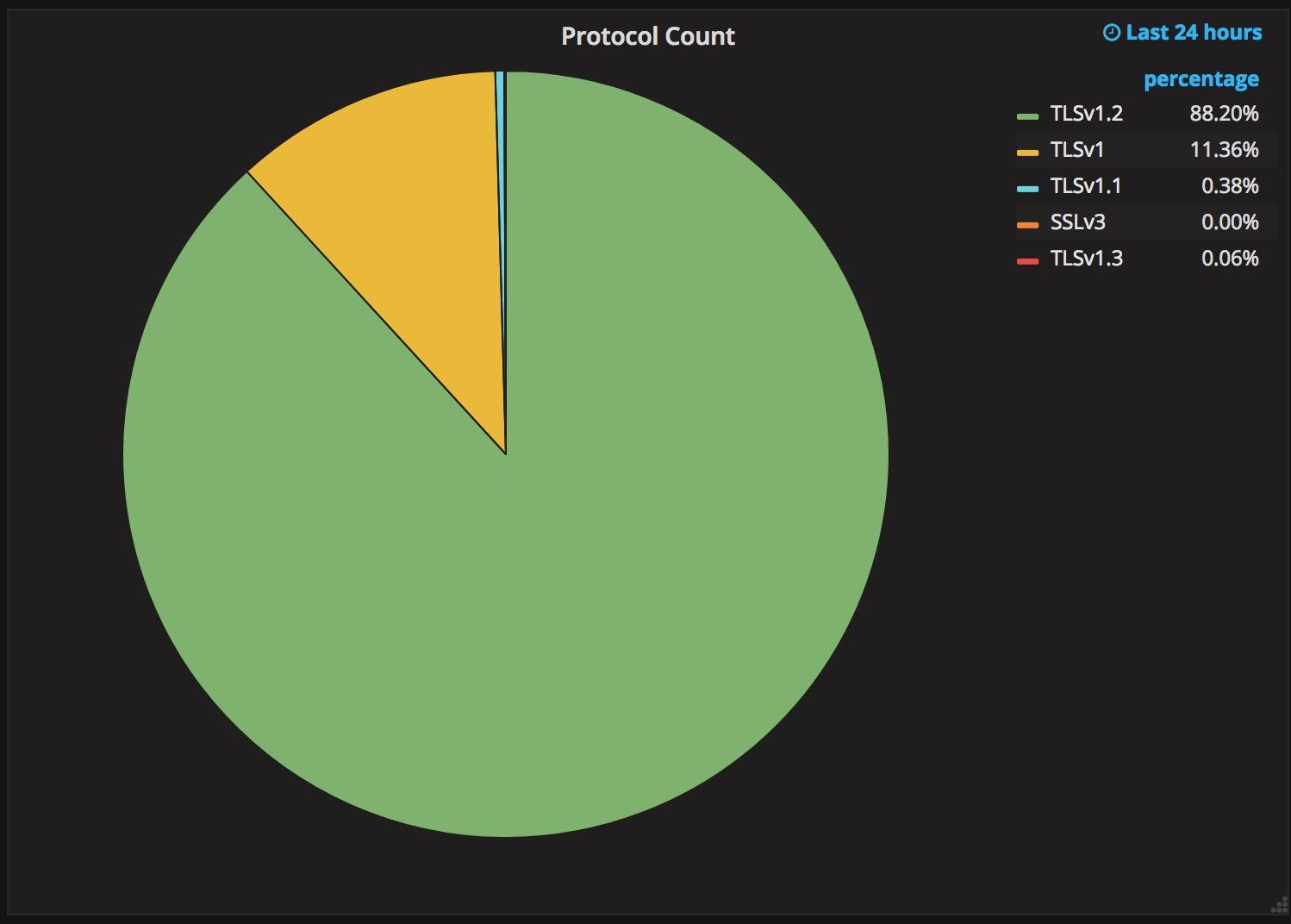
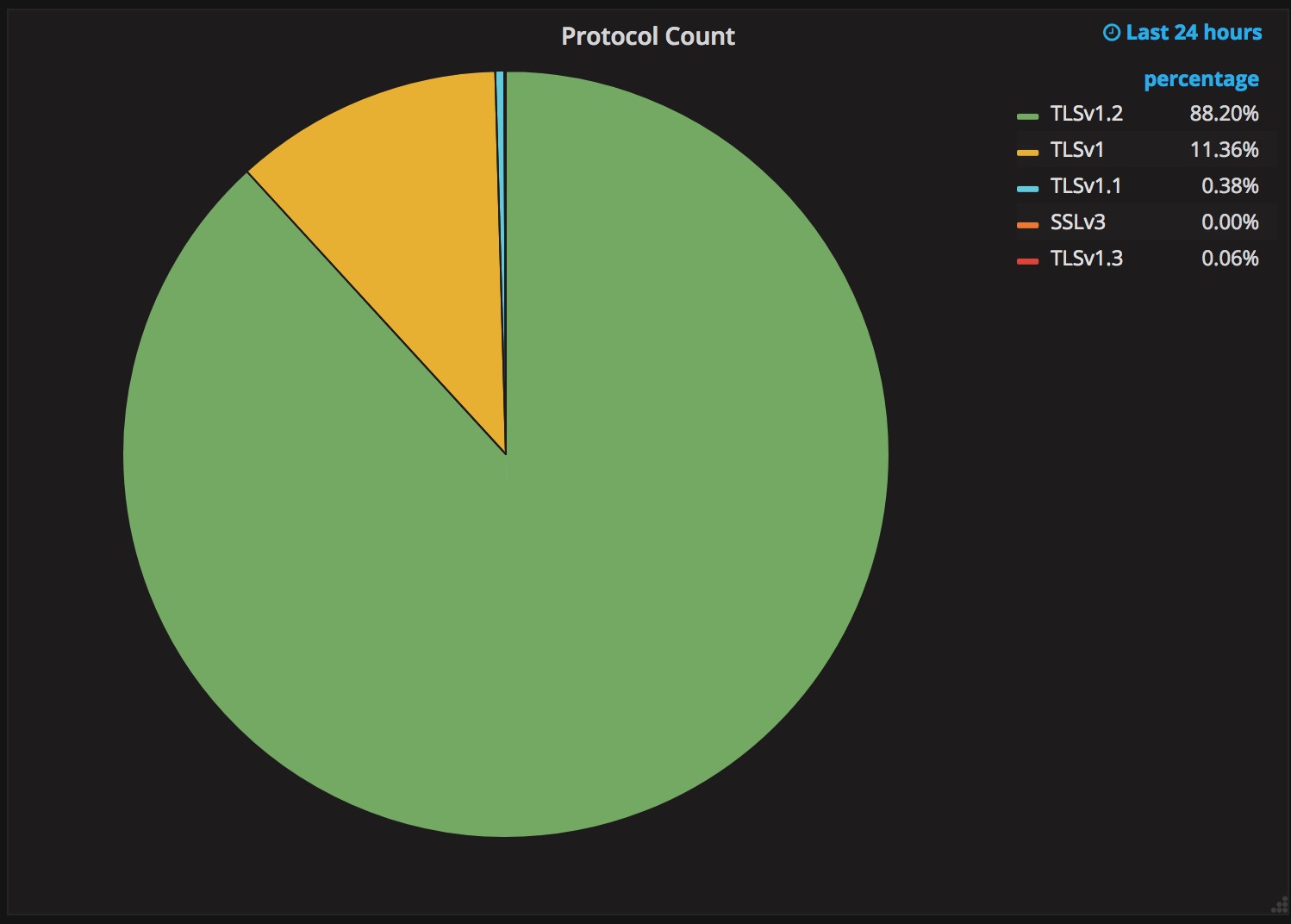
Upgrading a security protocol in an ecosystem as complex as the Internet is difficult. You need to update clients and servers and make sure everything in between continues to work correctly. The Internet is in the middle of such an upgrade right now. Transport Layer Security (TLS), the protocol that keeps web browsing confidential (and many people persist in calling SSL), is getting its first major overhaul with the introduction of TLS 1.3. Last year, Cloudflare was the first major provider to support TLS 1.3 by default on the server side. We expected the client side would follow suit and be enabled in all major browsers soon thereafter. It has been over a year since Cloudflare’s TLS 1.3 launch and still, none of the major browsers have enabled TLS 1.3 by default.
The reductive answer to why TLS 1.3 hasn’t been deployed yet is middleboxes: network appliances designed to monitor and sometimes intercept HTTPS traffic inside corporate environments and mobile networks. Some of these middleboxes implemented TLS 1.2 incorrectly and now that’s blocking browsers from releasing TLS 1.3. However, simply blaming network appliance vendors would be disingenuous. The deeper truth of the Continue reading
Upgrading a security protocol in an ecosystem as complex as the Internet is difficult. You need to update clients and servers and make sure everything in between continues to work correctly. The Internet is in the middle of such an upgrade right now. Transport Layer Security (TLS), the protocol that keeps web browsing confidential (and many people persist in calling SSL), is getting its first major overhaul with the introduction of TLS 1.3. Last year, Cloudflare was the first major provider to support TLS 1.3 by default on the server side. We expected the client side would follow suit and be enabled in all major browsers soon thereafter. It has been over a year since Cloudflare’s TLS 1.3 launch and still, none of the major browsers have enabled TLS 1.3 by default.
The reductive answer to why TLS 1.3 hasn’t been deployed yet is middleboxes: network appliances designed to monitor and sometimes intercept HTTPS traffic inside corporate environments and mobile networks. Some of these middleboxes implemented TLS 1.2 incorrectly and now that’s blocking browsers from releasing TLS 1.3. However, simply blaming network appliance vendors would be disingenuous. The deeper truth of the Continue reading

It's the day after Christmas; or, depending on your geography, Boxing Day. With the festivities over, you may still find yourself stuck at home and somewhat bored.
Either way; here are three relatively short cryptography challenges, you can use to keep you momentarily occupied. Other than the hints (and some internet searching), you shouldn't require a particularly deep cryptography knowledge to start diving into these challenges. For hints and spoilers, scroll down below the challenges!

The first one is simple enough to explain; here are 5 hashes (from user passwords), crack them:
$2y$10$TYau45etgP4173/zx1usm.uO34TXAld/8e0/jKC5b0jHCqs/MZGBi
$2y$10$qQVWugep3jGmh4ZHuHqw8exczy4t8BZ/Jy6H4vnbRiXw.BGwQUrHu
$2y$10$DuZ0T/Qieif009SdR5HD5OOiFl/WJaDyCDB/ztWIM.1koiDJrN5eu
$2y$10$0ClJ1I7LQxMNva/NwRa5L.4ly3EHB8eFR5CckXpgRRKAQHXvEL5oS
$2y$10$LIWMJJgX.Ti9DYrYiaotHuqi34eZ2axl8/i1Cd68GYsYAG02Icwve
A website works by redirecting its www. subdomain to a regional subdomain (i.e. uk.), the site uses HSTS to prevent SSLStrip attacks. You can see cURL requests of the headers from the redirects below, how would you practically go about stripping HTTPS in this example?
$ curl -i http://www.example.com
HTTP/1.1 302 Moved Temporarily
Server: nginx
Date: Tue, 26 Dec 2017 12:26:51 GMT
Content-Type: text/html
Transfer-Encoding: chunked
Connection: keep-alive
location: https://uk.example.com/
$ curl -i http://uk.example.com
HTTP/1.1 200 OK
Server: nginx
Content-Type: text/html; Continue readingIt's the day after Christmas; or, depending on your geography, Boxing Day. With the festivities over, you may still find yourself stuck at home and somewhat bored.
Either way; here are three relatively short cryptography challenges, you can use to keep you momentarily occupied. Other than the hints (and some internet searching), you shouldn't require a particularly deep cryptography knowledge to start diving into these challenges. For hints and spoilers, scroll down below the challenges!
The first one is simple enough to explain; here are 5 hashes (from user passwords), crack them:
$2y$10$TYau45etgP4173/zx1usm.uO34TXAld/8e0/jKC5b0jHCqs/MZGBi
$2y$10$qQVWugep3jGmh4ZHuHqw8exczy4t8BZ/Jy6H4vnbRiXw.BGwQUrHu
$2y$10$DuZ0T/Qieif009SdR5HD5OOiFl/WJaDyCDB/ztWIM.1koiDJrN5eu
$2y$10$0ClJ1I7LQxMNva/NwRa5L.4ly3EHB8eFR5CckXpgRRKAQHXvEL5oS
$2y$10$LIWMJJgX.Ti9DYrYiaotHuqi34eZ2axl8/i1Cd68GYsYAG02Icwve
A website works by redirecting its www. subdomain to a regional subdomain (i.e. uk.), the site uses HSTS to prevent SSLStrip attacks. You can see cURL requests of the headers from the redirects below, how would you practically go about stripping HTTPS in this example?
$ curl -i http://www.example.com
HTTP/1.1 302 Moved Temporarily
Server: nginx
Date: Tue, 26 Dec 2017 12:26:51 GMT
Content-Type: text/html
Transfer-Encoding: chunked
Connection: keep-alive
location: https://uk.example.com/
$ curl -i http://uk.example.com
HTTP/1.1 200 OK
Server: nginx
Content-Type: text/html; Continue readingWe’ve rounded up the most-read Docker blogs of 2017. Topping our list at number two is, Exciting new things for Docker with Windows Server 1709.
What a difference a year makes… last September, Microsoft and Docker launched Docker Enterprise Edition (EE), a Containers-as-a-Service platform for IT that manages and secures diverse applications across disparate infrastructures, for Windows Server 2016. Since then we’ve continued to work together and Windows Server 1709 contains several enhancements for Docker customers.
To experiment with the new Docker and Windows features, a preview build of Docker is required. Here’s how to install it on Windows Server 1709 (this will also work on Insider builds):
Install-Module DockerProvider
Install-Package Docker -ProviderName DockerProvider -RequiredVersion preview
To run Docker Windows containers in production on any Windows Server version, please stick to Docker EE 17.06.
A key focus of Windows Server version 1709 is support for Linux containers on Windows. We’ve already blogged about how we’re supporting Linux containers on Windows with the LinuxKit project.
To try Linux Containers on Windows Server 1709, install the preview Docker package and enable the feature. The preview Docker EE package includes a full LinuxKit Continue reading