Late last year Adam Angell shared a very thought provoking observation on the Network Automation Forum Slack channel, part rant, part shared experience, part lament. I want to quote a statement he makes that really struck me like a "Gibbs head slap". For me it seems easier to go from a Software dev(eloper) to come READ MORE
The post Whats DevOps got to do with it? appeared first on The Gratuitous Arp.
Pavel Odintsov published a series of introductory blog posts describing protocols we can use to collect network traffic telemetry:
These blog posts will not make you an expert but will give you an excellent overview of the telemetry landscape1.
Hint: more than enough to turn you into an instant AI-assisted LinkedIn garbage generator Thought Leader™ 😜 ↩︎
Before diving into the somewhat complex world of Artificial Intelligence (AI), let’s first consider what intelligence means from a human perspective. Judo, as a martial art, serves as a good—though not an obvious—example. I trained in judo for over 20 years. During that time, I learned which throwing techniques to use to take down an opponent efficiently by leveraging their movement energy and reactions. But how did I learn that? Through a supervised training process, where our coach first taught us the throwing techniques and the situations in which they work best. Then, we practiced them ourselves. Mastering these techniques requires thousands of repetitions before achieving perfection. Ultimately, timing and reaction to the opponent’s movements play a significant role in determining whether a throw is successful or not. After mastering several throwing technics, I was capable of apply them in the situation not necessarily to seen before.
How does this relate to Artificial Intelligence (AI)? AI is a broad term encompassing solutions that aim to mimic human brain functions. A subset of AI is Machine Learning (ML), which enables systems to make decisions based on input data without being explicitly programmed for each scenario. The driving force behind this Continue reading

As the title suggests, Palo Alto's clientless VPN allows users to access internal resources (HTTPS-based) without installing the GlobalProtect client. This is useful when you have an internal application that external contractors need to use, but they may not want to install a VPN client. All they need to do is open a browser, log in to your GlobalProtect portal, and access the applications directly. In this blog post, we'll go through the steps to configure Palo Alto Clientless VPN.
As always, if you find this post helpful, press the ‘clap’ button. It means a lot to me and helps me know you enjoy this type of content.
GlobalProtect Clientless VPN lets users securely access internal web applications from a browser without installing the GlobalProtect client. This is helpful for providing partners or contractors with access to specific internal applications. You can set up the GlobalProtect portal landing page to give users direct access to these applications.
Clientless VPN acts as a reverse proxy, intercepting and modifying web pages from internal applications before presenting them to remote users. When users access these URLs, their requests pass through the GlobalProtect portal.
Hello my friend,
As mentioned in the previous blogpost, we started talking about practical usage of Python and Go (Golang) for network and IT infrastructure automation. Today we’ll take a look how we can interact with any SSH-speaking device, whether it is a network device, server, or anything else.
Our ultimate goal is to make you successful with software developing for IT infrastructure management. Out blogs are the first step so that you can get up to speed if you already well equipped with fundamentals as protocols, data formats, etc. We believe that sharing is caring, hence we share back our knowledge with you, so that your path could be a little bit easier and quicker, so that you have more time to focus on what matters. If that’s enough for you to move forward, that’s great.
At the same time, if you feel you need more, you want to have finely-curated labs, slack support and deep dive not just in coding, but really in fundamentals, our training programs are here for you:
We offer the following training programs in network automation for you:
If you are going to be audacious enough to call the thing you are creating Universal Storage, then by definition it has to do everything – meaning support every kind of data format and access protocol, and do so with good performance on all fronts. …
Vast Data Builds Out Data Platform With Block Storage And Kafka Streams was written by Timothy Prickett Morgan at The Next Platform.
Trends in the global BGP table–the Default Free Zone (DFZ) table–can tell us a lot about the state of the global Internet. Is the Internet growing? Is IPv6 growing, or are we still in a world of “all things IPv4?” Geoff Huston joins Tom Ammon and Russ White to review the state of the routing table from 2024.
download
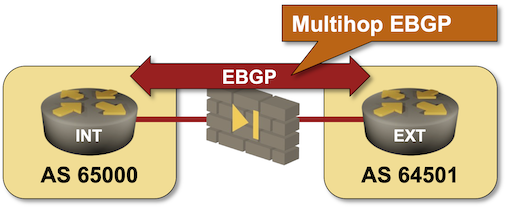
When I asked my readers what they would consider a good use case for EBGP multihop (thanks again to everyone who answered!), many suggested running BGP across a layer-3 firewall (Running BGP across a “transparent” (bump-in-the-wire) firewall is trivial). I turned that suggestion into a lab exercise in which you have to establish an EBGP multihop session across a “firewall” simulated by a Linux host.
If you haven’t set up your own lab infrastructure, click here to start the lab in your browser using GitHub Codespaces. After starting your codespace, change the directory to basic/e-ebgp-multihop and execute netlab up.
If you want a CPU that has the floating point performance of a GPU, all you have to do is wait six or so years and the CPU roadmaps can catch up. …
Sizing Up Compute Engines For HPC Work At 64-Bit Precision was written by Timothy Prickett Morgan at The Next Platform.
SPONSORED FEATURE: When it comes to artificial intelligence, it seems nothing succeeds like excess. …
Better AI Might Depend On The Data Infrastructure Getting Better First was written by Timothy Prickett Morgan at The Next Platform.
As if you don’t have enough to do with the AI revolution, Microsoft says that 2025 is also the year that organizations need to begin getting ready for quantum computing. …
With Majorana, Microsoft Says Quantum Is Years, Not Decades, Away was written by Jeffrey Burt at The Next Platform.
Kubernetes has revolutionized cloud-native applications, but networking remains a crucial aspect of ensuring scalability, security, and performance. Default networking approaches, such as iptables-based packet filtering, often introduce performance bottlenecks due to inefficient packet processing and complex rule evaluations. This is where Calico eBPF comes into play, offering a powerful alternative that enhances networking efficiency and security at scale.
Kubernetes networking consists of two primary components:
Choosing the right data plane is critical for optimal performance. Factors such as cluster size, throughput, and security requirements should guide this choice. Poor networking choices can lead to congestion, excessive latency, and resource starvation.
Networking in Kubernetes is an abstract idea. While Kubernetes lays the foundation, your Container Networking Interface (CNI) is in charge of the actual networking. To better understand networking, we usually divide it into two sections: a control plane and a data plane.