Cloudflare Stream now supports NFTs

Cloudflare Stream now supports NFTs

Cloudflare Stream has been helping creators publish their videos online without having to think about video quality, device compatibility, storage buckets or digging through FFmpeg documentation. These creators want to be able to claim ownership of their works and assert control over how that ownership claim is transferred. Increasingly, many of those creators are looking to Non-Fungible Tokens (NFTs).

NFTs are a special type of smart contract that allows provable ownership of the contract on the blockchain. Some call NFTs collectibles because like coins or stamps, collectors who enjoy them buy, sell and trade them. Collectors keep track of NFTs on the Ethereum blockchain which acts as a shared source of truth of all the activity.

Today, we’re introducing a new API that takes a ERC-721 token ID and contact address and sets it on a video so every video on Stream can be represented with an NFT.

curl -X POST -H "Authorization: Bearer $AUTH_TOKEN" --data '{"contract":"0x57f1887a8bf19b14fc0d912b9b2acc9af147ea85","token":"5"}' https://api.cloudflare.com/client/v4/accounts/$ACCOUNT_ID/stream/$VIDEO_ID/nft

Once you set it, you cannot change these values so be sure to set it to an NFT you own! If you set a video you own to an NFT you don’t own, the owner of the NFT can claim Continue reading

Announcing Cloudflare’s Database Partners

Announcing Cloudflare’s Database Partners

Cloudflare Workers is the easiest way for developers to deploy their application’s code with performance, scale and security baked in. No configuration necessary. Worker code scales to serve billions of requests close to your users across Cloudflare’s 200+ data centers.

But that’s not the only interesting problem we need to solve. Every application has two parts: code and state.

State isn’t always the easiest to work in a massive distributed system. When an application runs in 200+ data centers simultaneously, there’s an inherent tradeoff between distributing the data for better performance, availability, scale, and guaranteeing that all data centers see the same data at a given point in time.

Our goal is to make state at the edge seamless. We started that journey with Workers KV, which provides low-latency access to globally distributed data. We’re since added Durable Objects, with strong consistency and the ability to design coordination patterns on top of Workers. We’re continuing to invest in and build out these products.

However, some use cases aren’t easily implemented with Workers KV or Durable Objects. Think querying complex datasets, or communicating with an existing system-of-record. Even if we built this functionality ourselves, there will always be customers who want Continue reading

The Hedge 79: Brooks Westbrook and the Data Driven Lens

Many networks are designed and operationally drive by the configuration and management of features supporting applications and use cases. For network engineering to catch up to the rest of the operational world, it needs to move rapidly towards data driven management based on a solid understanding of the underlying protocols and systems. Brooks Westbrook joins Tom Amman and Russ White to discuss the data driven lens in this episode of the Hedge.

download

What Does Aruba Do With No SASE To Sell? It Changes The Conversation

SASE was clearly on the minds of Aruba executives during its Atmosphere 2021 event, but without an actual SASE offering in its portfolio, Aruba had to steer the conversation toward SD-WAN and Aruba's role as a partner that can help enterprises transform at their own pace.

The post What Does Aruba Do With No SASE To Sell? It Changes The Conversation appeared first on Packet Pushers.

Released: Docker Desktop for Mac [Apple Silicon]

Today we are excited to announce the general availability of Docker Desktop for Mac [Apple Silicon], continuing to support developers in our community with their choice of local development environments.  

First, we want to say a big thank you to our community. The excitement you have shown about being able to run Docker Desktop on the new M1 chip has been tremendous and hugely motivating to us. Your engagement on testing builds and reporting problems has been invaluable. As soon as Apple announced the new M1 chip, you let us know on our public roadmap that this was a high priority for you, and it quickly became by far our most upvoted roadmap item ever. You also responded very positively to our previous blog posts.

After the M1 machines were publicly available, those of you on our developer preview program tested some very early builds. And then as we moved into public tech previews and release candidates, many more of you joined in with testing your enormous variety of use cases, and reporting bugs. In total we have had 45,000 downloads of the various preview builds, and 140 tickets raised on our public bug tracker, not to Continue reading

Benefits Of Coworking Spaces

Coworking spaces have seen a rapid increase in recent years. In 2018, coworking spaces in the U.S increased by more than 16%. On the other hand, these spaces outside the U.S increased by 36%. So, what is the reason for this increase?

Are coworking spaces that effective? Let’s find out.

1. People Find Work More Meaningful In Coworking Spaces

We are all familiar with office politics. It exists in every business, and there is no way out of it. However, freelancers sharing coworking spaces don’t feel the need to put another persona when they work here.

That is because they are among people doing different kinds of work, and no one competes with each other. That is why it enhances the identity of one’s own work. Through this strong identity, people find more meaning as what they do seems more unique and interesting in such an environment.

2. Networking

Networking is perhaps one of the most important benefits of utilizing a coworking space. People connect with each other that they would not normally meet if it wasn’t for the space. These connections help in being part of a community.

However, if you are running a small business through Continue reading

A Boring Announcement: Free Tunnels for Everyone

A Boring Announcement: Free Tunnels for Everyone

A few months ago, we announced that we wanted to make Zero Trust security accessible to everyone, regardless of size, scale, or resources. Argo Tunnel, our secure method of connecting resources directly to Cloudflare, is the next piece of the puzzle.

Argo Tunnel creates a secure, outbound-only connection between your services and Cloudflare by deploying a lightweight connector in your environment. With this model, your team does not need to go through the hassle of poking holes in your firewall or validating that traffic originated from Cloudflare IPs.

In the past, Argo Tunnel has been priced based on bandwidth consumption as part of Argo Smart Routing, Cloudflare’s traffic acceleration feature. Starting today, we’re excited to announce that any organization can use the secure, outbound-only connection feature of the product at no cost. You can still add the paid Argo Smart Routing feature to accelerate traffic.

As part of that change (and to reduce confusion), we’re also renaming the product to Cloudflare Tunnel. To get started, sign up today.

If you’re interested in how and why we’re doing this, keep scrolling.

In 2018, Cloudflare introduced Argo Tunnel, a private, secure connection between your origin Continue reading

Bangkok’s Neutral Peering Hub Scales Its Capacity

Bangkok Neutral Internet Exchange (BKNIX) recently expanded its Internet exchange capacity thanks to outstanding carrier-class equipment provided by the Internet Society In 2015, Bangkok Neutral Internet Exchange (BKNIX) was launched with the ambition to fix slow Internet, improve online experience for users, and lower the cost of Internet access for people in Thailand. BKNIX knew […]

The post Bangkok’s Neutral Peering Hub Scales Its Capacity appeared first on Internet Society.

What is gNMI?

A few weeks ago we released an episode on the fundamentals of gRPC. And while programmatic interfaces are excellent tools for network automation, often that is only the beginning of the story. That’s no exception with gRPC. In this episode we continue down the path of that gRPC conversation and into gNMI, a standards based approached to programmatic interaction with network devices utilizing gRPC. We discuss what it is, how it works, and where it stands in today’s fast moving environment.

Relevant Links:

Nick Russo
Guest
Roman Dodin
Guest
Tony Efantis
Host
Jordan Martin
Host

Outro Music:
Danger Storm Kevin MacLeod (incompetech.com)
Licensed under Creative Commons: By Attribution 3.0 License
http://creativecommons.org/licenses/by/3.0/

The post What is gNMI? appeared first on Network Collective.

Fundamentals: Is Switching Latency Relevant?

One of my readers wondered whether it makes sense to buy low-latency switches from Cisco or Juniper instead of switches based on merchant silicon like Trident-3 or Jericho (regardless of whether they are running NX-OS, Junos, EOS, or Linux).

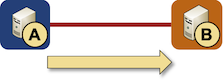
As always, the answer is it depends, but before getting into the details, let’s revisit what latency really is. We’ll start with a simple two-node network.

The simplest possible network

The simplest possible network

Fundamentals: Is Switching Latency Relevant?

One of my readers wondered whether it makes sense to buy low-latency switches from Cisco or Juniper instead of switches based on merchant silicon like Trident-3 or Jericho (regardless of whether they are running NX-OS, Junos, EOS, or Linux).

As always, the answer is it depends, but before getting into the details, let’s revisit what latency really is. We’ll start with a simple two-node network.

The simplest possible network

The simplest possible network

Cut-Through Switching Isn’t A Thing Anymore

So, cut-through switching isn’t a thing anymore. It hasn’t been for a while really, though in the age of VXLAN, it’s really not a thing. And of course with all things IT, there are exceptions. But by and large, Cut-through switching just isn’t a thing.

And it doesn’t matter.

Cut-through versus store-and-forward was a preference years ago. The idea is that cut-through switching had less latency than store and forward (it does, to a certain extent). It was also the preferred method, and purchasing decisions may have been made (and sometimes still are, mostly erroneously) on whether a switch is cut-through or store-and-forward.

In this article I’m going to cover two things:

  • Why you can’t really do cut-through switching
  • Why it doesn’t matter that you can’t do cut-through switching

Why You Can’t Do Cut-Through Switching (Mostly)

You can’t do cut-through switching when you change speeds. If the bits in a frame are sent at 10 Gigabits, they need to go into a buffer before they’re sent over a 100 Gigabit uplink. The reverse is also true. You can’t stuff a frame that’s piling into an interface 10 times faster than it’s sending (though it’s not slowed down).

So any switch Continue reading

VMware, Dell split to form independent firms

After many months of wrangling, Dell Technologies says it is spinning off its ownership of VMware to create two standalone companies.While it gives both companies more financial freedom, the new relationship should have no immediate effect on enterprise customers, but that could come down the road.VMware CEO Gelsinger moves to Intel Dell has had an 81% equity ownership of VMware since its 2016, $67 billion purchase of  EMC, which owned VMware. Under terms of the planned spin-off, VMware will distribute a cash dividend of $11.5 - $12 billion to all VMware shareholders, which includes about $9.7 billion to Dell Technologies, the companies stated.To read this article in full, please click here