Thought for My Day: Personal Profit by Not Travelling to An Office

I earned about 5% by not working in an office
The post Thought for My Day: Personal Profit by Not Travelling to An Office appeared first on EtherealMind.

I earned about 5% by not working in an office
The post Thought for My Day: Personal Profit by Not Travelling to An Office appeared first on EtherealMind.

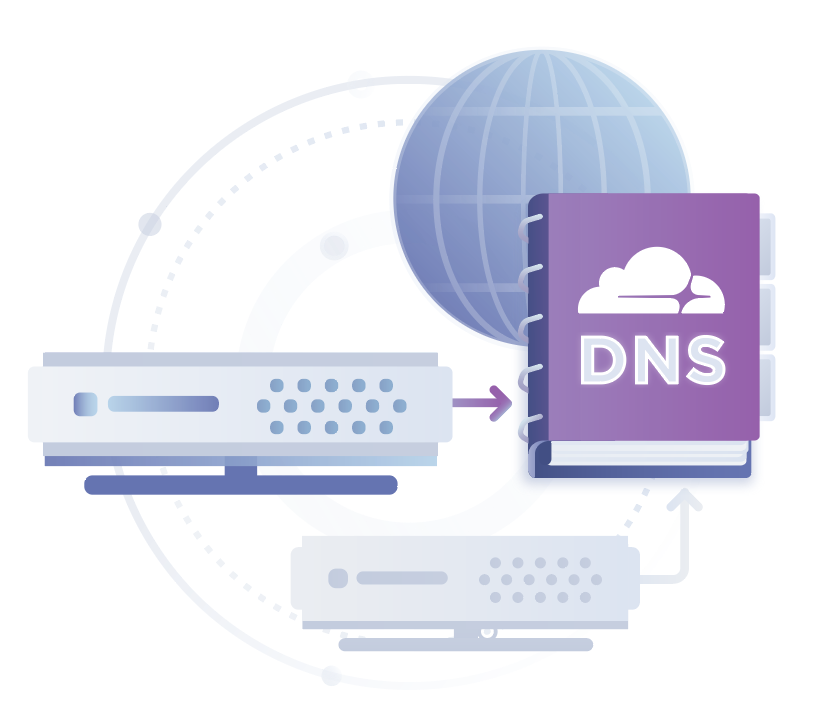
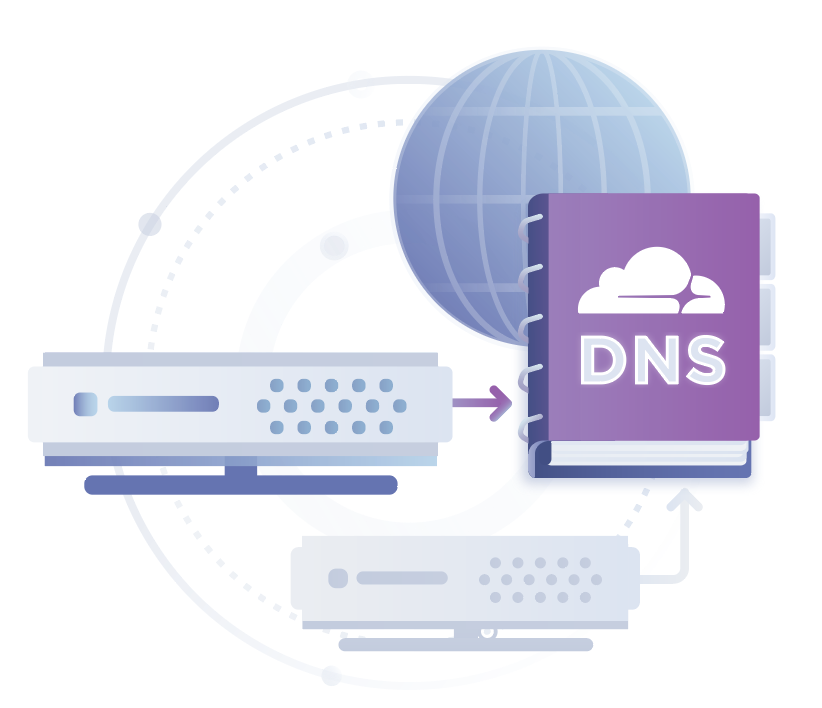
Like many who are able, I am working remotely and in this post, I describe some of the ways to deploy Cloudflare Gateway directly from your home. Gateway’s DNS filtering protects networks from malware, phishing, ransomware and other security threats. It’s not only for corporate environments - it can be deployed on your browser or laptop to protect your computer or your home WiFi. Below you will learn how to deploy Gateway, including, but not limited to, DNS over HTTPS (DoH) using a Raspberry Pi, Pi-hole and DNSCrypt.
We recently launched Cloudflare Gateway and shortly thereafter, offered it for free until at least September to any company in need. Cloudflare leadership asked the global Solutions Engineering (SE) team, amongst others, to assist with the incoming onboarding calls. As an SE at Cloudflare, our role is to learn new products, such as Gateway, to educate, and to ensure the success of our prospects and customers. We talk to our customers daily, understand the challenges they face and consult on best practices. We were ready to help!
One way we stay on top of all the services that Cloudflare provides, is by using them ourselves. In this blog, I'll talk about Continue reading
Two weeks ago I started with a seemingly simple question:
If a BGP speaker R is advertising a prefix A with next hop N, how does the network know that N is actually alive and can be used to reach A?
… and answered it for the case of directly-connected BGP neighbors (TL&DR: Hope for the best).
Jeff Tantsura provided an EVPN perspective, starting with “the common non-arguable logic is reachability != functionality".
Now let’s see what happens when we add route reflectors to the mix. Here’s a simple scenario:
Most readers are already familiar with VMware NSX as a natural platform for intrinsic security in the data center. They understand that NSX’s service-defined firewall is enabling network and security operators to use a distributed software-based solution to replace centralized hardware-based deployments.
The intrusion detection and prevention system (IDS/IPS) functionality released with NSX-T 3.0 enhances the security capabilities of the service-defined firewall, enabling operators to address several additional use cases.
In the coming weeks and months, particularly as we are entering the financial reporting season for the first quarter of 2020, we are naturally going to be looking for any good news we can find. …
The Big Will Get Bigger Because We Need Them To was written by Timothy Prickett Morgan at The Next Platform.
Google brought BeyondCorp zero-trust security to the masses; Alibaba injected $28B into the cloud;...
Networks just keep growing, don’t they? They’ve evolved from a few machines on a LAN to the introduction of Wi-Fi—and with the Internet of Things (IoT), we’ve now got a whole new class of devices. Throw in the rise of smartphones and tablets, cloud and edge computing, and network management starts to get a little unwieldy. Managing a network with 300 devices manually might be possible—300,000 devices, not so much.
Network automation has been around awhile now, in various names from various vendors, using a number of proprietary protocols. The key word being “proprietary.” Many traditional network vendors design a well-functioning network automation system, but participate in vendor lock-in by ensuring that the associated automation stack, and its requisite protocols, only run on their hardware.
Web-scale automation is different. It relies on open, extendable standards like HTTPS, JSON, and netconf, among an ever-increasing number of systems and solutions. With web-scale automation in your organization, network management can over time become a background function; something that only notifies you in exceptional circumstances.
This does not, in any way, reduce the need for those who know networks to be employed at your organization—it simply reduces the amount Continue reading
Forward Networks builds a real-time software model of your data center network that you can use to verify intent, test changes, and speed troubleshooting. Forward is sponsoring this Tech Bytes episode. Our guest is Nikhil Handigol, co-founder of Forward, and we’re going to talk about the state of network verification and where the technology is heading.
The post Tech Bytes: Network Verification – Smarter Network Ops With Forward Networks (Sponsored) appeared first on Packet Pushers.
The move would mean Rackspace’s return to the public market. The managed services company went...
Regional operator GCI claims it has invested “tens of millions of dollars” in the Anchorage...
The China-based cloud giant linked the three-year investment plan to bolster support for services...
Google had originally planned to release the product later this year. But then the COVID-19...
Multistage builds feature in Dockerfiles enables you to create smaller container images with better caching and smaller security footprint. In this blog post, I’ll show some more advanced patterns that go beyond copying files between a build and a runtime stage, allowing to get most out of the feature. If you are new to multistage builds you probably want to start by reading the usage guide first.
The latest Docker versions come with new opt-in builder backend BuildKit. While all the patterns here work with the older builder as well, many of them run much more efficiently when BuildKit backend is enabled. For example, BuildKit efficiently skips unused stages and builds stages concurrently when possible. I’ve marked these cases under the individual examples. If you use these patterns, enabling BuildKit is strongly recommended. All other BuildKit based builders support these patterns as well.
• • •
Multistage builds added a couple of new syntax concepts. First of all, you can name a stage that starts with a FROM command with AS stagename and use --from=stagename option in a COPY command to copy files from that stage. In fact, FROM command and --from flag Continue reading
Take a Network Break! We discuss Nvidia clearing a major hurdle to its Mellanox acquisition, GitHub changes its pricing, the startup Alkira tackles multi-cloud networking, and more tech news analysis. Our guest commentator is Stephen Foskett, founder of Tech Field Day and GestaltIT.
The post Network Break 280: Nvidia Advances Mellanox Acquisition; Startup Alkira Tackles Multi-Cloud Networking appeared first on Packet Pushers.
COVID-19 may kill the data center, or at the very least forever change storage as we know it, says...