Blade Chassis to End of Row Swithces Connectivity & High Availability Options
Spanning Tree Protocol (STP) free network inside Data Centre is main focus for network vendors and many technologies have been introduced in recent past to resolve STP issues in data centre and ensure optimal link utilization. Advent of switching modules inside blade enclosures coupled with the requirements for optimal link utilization starting right from blade server has made today’s Data Centre network more complex.
In this blog , we will discuss how traditional model of network switches placement (End of Row) can be coupled with blade chassis with different options available for end to end connectivity / high availability.
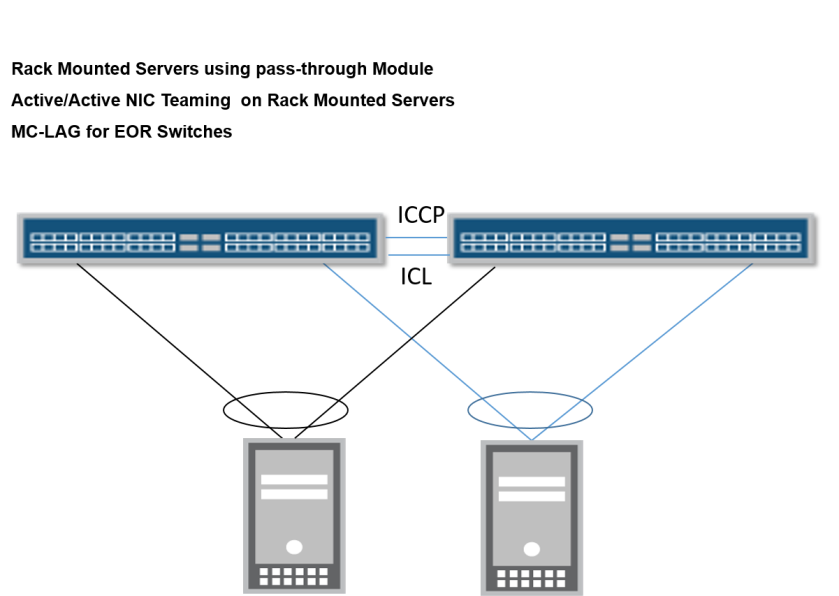
Network Switches are placed in End of Row and in order to remove STP Multi-Chassis Link Aggregation (MC-LAG) is deployed. Please see one of my earlier blog for understanding of MC-LAG.
Option 1: Rack mounted servers for computing machines, servers have installed multiple NICs in Pass-Though module and Virtual Machines hosted inside servers require Active/Active NIC Teaming.
Option 2 : Blade Chassis has multiple blade servers and each blade servers has more than 1 NIC (which are connected with blade chassis switches through internal fabric link). Virtul Machines hosted inside blade servers require active/active NIC teaming.

Option 3 : Blade Chassis Continue reading
Show 310: High-Stakes OpenStack Networking
Todays show looks at OpenStack networking in a high-stakes production environment: Paddy Power Betfair, a publicly-traded betting and gaming exchange. The post Show 310: High-Stakes OpenStack Networking appeared first on Packet Pushers.

Worth Reading: Building the LinkedIn Knowledge Graph


The post Worth Reading: Building the LinkedIn Knowledge Graph appeared first on 'net work.
#NXTWORK2016 Highlights
#NXTWORK16 Technology so fast they didnt have time to add the E! Continue reading

Docker Distributed System Summit videos & podcast episodes
Following LinuxCon Europe in Berlin last week, we organized a first of its kind Docker event called Docker Distributed Systems Summit. This two day event was an opportunity for core Docker engineers and Docker experts from the community to learn, collaborate, problem-solve and hack around the next generation of distributed systems in areas such as orchestration, networking, security and storage.
More specifically, the goal of the summit was to dive deep into Docker’s infrastructure plumbing tools and internals: SwarmKit, InfraKit, Hyperkit, Notary, libnetwork, IPVS, Raft, TUF and provide attendees with the working knowledge of how to leverage these tools while building their own systems.
We’re happy to share with you all the videos recordings, slides and audio files available as #dockercast episodes!
Youtube playlist
Podcast playlist
All the slides from the summit are available on the official Docker slideshare account.
Please join us in giving a big shout out to our awesome speakers for creating and presenting the following projects:
- InfraKit: A toolkit for creating and managing declarative, self-healing infrastructure
- Speaker: Bill Farner and David Chung (Docker)
- GitHub repo, Slides, video, podcast and Liveblogging
- Heart of the SwarmKit: Store, Topology Continue reading
Federated’s SAS Tech Makes 5G Possible in the 3.5 GHz Spectrum
 Google asked the FCC for permission to trial a wireless service in 3.5 GHz in 24 cities.
Worth Reading: Limitations of Current Branch Office WAN
The post Worth Reading: Limitations of Current Branch Office WAN appeared first on 'net work.
SDxCentral Weekly News Roundup — October 14, 2016
 NoviFlow launched its vSwitch Offload system for optimizing the deployment of NFV.