Time Is Not On Your Side

It’s been almost five years since I wrote about the challenges of project management and timing your work as an engineer. While most of that information is still very true even today I’ve recently had my own challenges with my son’s Eagle Scout project. He is of a mind that you can throw together a plan and just do a whole week of work in just a couple of days. I, having worked in the IT industry for years, have assured him that it absolutely doesn’t work like that. Why is there a disconnect between us? And how does that disconnect look to the rest of the world?
Time Taking You
The first problem that I often see when working with people that aren’t familiar with projects is that they vastly underestimate the amount of time it takes to get something done. You may recall from my last post that my project managers at my old VAR job had built in something they called Tom Time to every quote. That provided a way for my estimate to reflect reality once I arrived on site and found the things didn’t go according to plan.
Part of the reason why my estimates Continue reading
Dynamic data collection with Zaraz Worker Variables
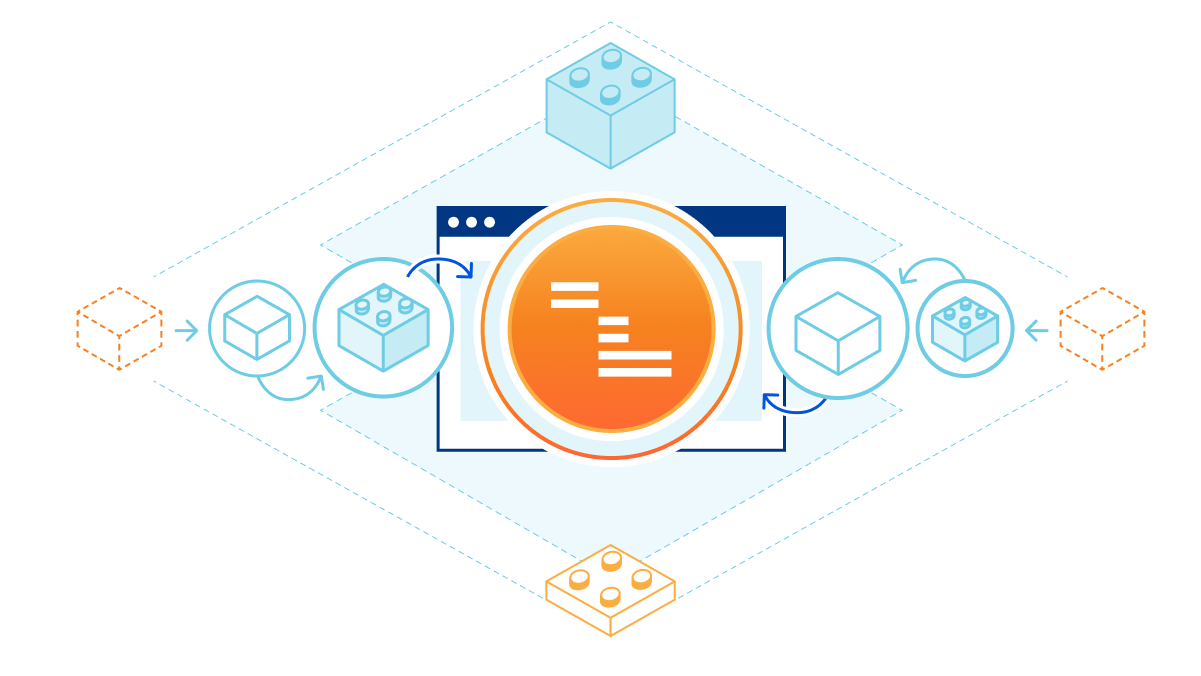
Bringing dynamic data to the server

Since its inception, Cloudflare Zaraz, the server-side third-party manager built for speed, privacy and security, has strived to offer a way for marketers and developers alike to get the data they need to understand their user journeys, without compromising on page performance. Cloudflare Zaraz makes it easy to transition from traditional client-side data collection based on marketing pixels in users’ browsers, to a server-side paradigm that shares events with vendors from the edge.
When implementing data collection on websites or mobile applications, analysts and digital marketers usually first define the set of interactions and attributes they want to measure, formalizing those requirements along technical specifications in a central document (“tagging plan”). Developers will later implement the required code to make those attributes available for the third party manager to pick it up. For instance, an analyst may want to analyze page views based on an internal name instead of the page title or page pathname. They would therefore define an example “page name” attribute that would need to be made available in the context of the page, by the developer. From there, the analyst would configure the tag management system to pick the attribute’s Continue reading
Video: Link State Routing Protocol Basics
After introducing the routing protocols and explaining the basics of link-state routing it was time for implementation considerations including:
- Collecting local endpoint reachability information
- Finding neighbors and exchanging the collected information (hint: a link-state topology database is just a distributed key-value store)
- Running the SPF algorithm (including partial SPF details) and installing the results
You need Free ipSpace.net Subscription to watch the video.
Video: Link State Routing Protocol Basics
After introducing the routing protocols and explaining the basics of link-state routing it was time for implementation considerations including:
- Collecting local endpoint reachability information
- Finding neighbors and exchanging the collected information (hint: a link-state topology database is just a distributed key-value store)
- Running the SPF algorithm (including partial SPF details) and installing the results
You need Free ipSpace.net Subscription to watch the video.
Hedge 181: Roundtable

It’s time for Eyvonne, Tom, and Russ to talk about some current stories in the world of networking—the May roundtable. Yes, I know it’s already June, and I’m a day late, but … This month we talk about the IT worker shortage, Infiniband, and the “next big thing.”
So draw up a place to sit and hang out with us as we chat.
RIPE 86 Bites – What’s the Time?
RIPE held a community meeting in May in Rotterdam. There were a number of presentations that sparked my interest, but rather than write my impressions in a single lengthy note, I thought I would just take a couple of topics and use a shorter, and hopefully more readable bite-sized format. Here’s the second of these bite-sized notes from the RIPE 86 meeting, on the topic of time.What Is Standalone 5G and How Will Network Operators Use It?
Networks running standalone 5G could deliver faster speeds with lower latency for tasks such as monitoring the health of government vehicles and tracking edge devices.Encryption in container environments
Kubernetes has become the de facto standard for container orchestration, providing a powerful platform for deploying and managing containerized applications at scale. As more organizations adopt Kubernetes for their production workloads, ensuring the security and privacy of data in transit has become increasingly critical. Encrypting traffic within a Kubernetes cluster is one of the most effective components in a multi-layered defence when protecting sensitive data from interception and unauthorized access. Here, we will explore why encrypting traffic in Kubernetes is important and how it addresses compliance needs.
Why Encryption is Necessary
Two encryption methods are commonly adopted for protecting the data integrity and confidentiality; encryption at rest and encryption in transit. Encryption at rest refers to encrypting stored data, e.g. in your cloud provider’s managed disk solution, whereby if the data was simply copied and extracted the raw information obtained would be unintelligible without cryptographic keys to decrypt the data.
Encrypting data in transit is an effective security mechanism and a critical requirement for organization compliance and regulatory frameworks, as it helps protect sensitive information from unauthorized access and interception while it is being transmitted over the network. We will dive deeper into this requirement.
Encrypting data in transit Continue reading
Data Classification: How Businesses Can Get Data Protection Right
Data classification makes it easier to use data throughout the enterprise and can also enhance compliance efforts and protection against ransomware.Kubernetes Unpacked 027: KubeCon EU 2023 Recap
In today's Kubernetes Unpacked podcast, Michael and Kristina chat about KubeCon EU, which took place in April 2023 in Amsterdam. They explore the latest and greatest technologies that are coming, the value of in-person gatherings, and why conference codes of conduct matter. They also share their top 3 KubeCon takeaways.
The post Kubernetes Unpacked 027: KubeCon EU 2023 Recap appeared first on Packet Pushers.
Kubernetes Unpacked 027: KubeCon EU 2023 Recap
In today's Kubernetes Unpacked podcast, Michael and Kristina chat about KubeCon EU, which took place in April 2023 in Amsterdam. They explore the latest and greatest technologies that are coming, the value of in-person gatherings, and why conference codes of conduct matter. They also share their top 3 KubeCon takeaways.IPv6 Buzz 127: IPv6 Security And Firewalls
In this episode, Ed and Tom interview Scott on the topic of IPv6 security and firewalls. This is one of Scott's many areas of expertise as he is the co-author of IPv6 Security from Cisco Press. They discuss firewalls strategies, design and operational considerations, pros and cons of a dual-stack approach, and more.
The post IPv6 Buzz 127: IPv6 Security And Firewalls appeared first on Packet Pushers.
IPv6 Buzz 127: IPv6 Security And Firewalls
In this episode, Ed and Tom interview Scott on the topic of IPv6 security and firewalls. This is one of Scott's many areas of expertise as he is the co-author of IPv6 Security from Cisco Press. They discuss firewalls strategies, design and operational considerations, pros and cons of a dual-stack approach, and more.Cloudflare is deprecating Railgun


Cloudflare will deprecate the Railgun product on January 31, 2024. At that time, existing Railgun deployments and connections will stop functioning. Customers have the next eight months to migrate to a supported Cloudflare alternative which will vary based on use case.
Cloudflare first launched Railgun more than ten years ago. Since then, we have released several products in different areas that better address the problems that Railgun set out to solve. However, we shied away from the work to formally deprecate Railgun.
That reluctance led to Railgun stagnating and customers suffered the consequences. We did not invest time in better support for Railgun. Feature requests never moved. Maintenance work needed to occur and that stole resources away from improving the Railgun replacements. We allowed customers to deploy a zombie product and, starting with this deprecation, we are excited to correct that by helping teams move to significantly better alternatives that are now available in Cloudflare’s network.
We know that this will require migration effort from Railgun customers over the next eight months. We want to make that as smooth as possible. Today’s announcement features recommendations on how to choose a replacement, how to get started, and guidance on where you Continue reading
Reduce latency and increase cache hits with Regional Tiered Cache
Today we’re excited to announce an update to our Tiered Cache offering: Regional Tiered Cache.
Tiered Cache allows customers to organize Cloudflare data centers into tiers so that only some “upper-tier” data centers can request content from an origin server, and then send content to “lower-tiers” closer to visitors. Tiered Cache helps content load faster for visitors, makes it cheaper to serve, and reduces origin resource consumption.
Regional Tiered Cache provides an additional layer of caching for Enterprise customers who have a global traffic footprint and want to serve content faster by avoiding network latency when there is a cache miss in a lower-tier, resulting in an upper-tier fetch in a data center located far away. In our trials, customers who have enabled Regional Tiered Cache have seen a 50-100ms improvement in tail cache hit response times from Cloudflare’s CDN.
What problem does Tiered Cache help solve?
First, a quick refresher on caching: a request for content is initiated from a visitor on their phone or computer. This request is generally routed to the closest Cloudflare data center. When the request arrives, we look to see if we have the content cached to respond to Continue reading
RIPE 86 Bites – Gigabits for EU
RIPE held a community meeting in May in Rotterdam. There were a number of presentations that sparked my interest, but rather than write my impressions in a single lengthy note, I thought I would just take a couple of topics and use a shorter, and hopefully more readable bite-sized format. Here’s the first of these bite-sized notes from the RIPE 86 meeting , on the topic of the Eu Gigabit Connectivity initiative.Source IP Address in Multicast Packets
One of my readers sent me this (paraphrased) question:
What I have seen in my network are multicast packets with the IP source address set to 0.0.0.0 and source port set to 0. Is that considered acceptable? Could I use a multicast IP address as a source address?
TL&DR: **** NO!!!
It also seemed like a good question to test ChatGPT, and this time it did a pretty good job.