
Worth Reading: The road to 200g


The post Worth Reading: The road to 200g appeared first on 'net work.
Skyport Systems and The Zero Trust DC
Skyport Systems offers a trusted computing platform to securely host virtual machines. Big deal? Well, maybe more than it seems at first glance.
I was sitting in some Juniper training last week being told about their Zero Trust security capabilities (referred to in VMWare NSX terminology as micro-segmentation
), and as I listened I started thinking about zero trust
in the wider context of who can be relied upon when it comes to software, and even the hardware on which it runs.
Software Issues
Let’s face it, the events of the the last few years have brought to light for Americans that far from a need to fear what other nation states might be willing to do to get access to our data, the real threat may lie within. Juniper was in the news at the end of last year after the announcement that ScreenOS contained unauthorized
code suspected of being planted there by the NSA. And then in January 2016, Juniper announced that ScreenOS would be dropping the NSA-developed Dual_EC_DRBG random number generator which perhaps coincidentally has a known weakness in it, a vulnerability that was made even worse by an implementation change in ScreenOS to use a larger Continue reading
CloudRouter Achieves 650 Gb/s & Expands Into SDN
 It used a Mellanox NIC for the throughput.
Introducing CFSSL 1.2
Continuing our commitment to high quality open-source software, we’re happy to announce release 1.2 of CFSSL, our TLS/PKI Swiss Army knife. We haven’t written much about CFSSL here since we originally open sourced the project in 2014, so we thought we’d provide an update. In the last 20 months, we have added a ton of great features, and CFSSL has attracted an active community of users and contributors. Users range from large SaaS providers (Heroku) to game companies (Riot Games) and the newest Certificate Authority (Let’s Encrypt). For them and for CloudFlare, CFSSL has become a core tool for automating certificates and TLS configurations. With added support for configuration scanning, automated provisioning via the transport package, revocation, certificate transparency and PKCS#11, CFSSL is now even more powerful.
We’re also happy to announce CFSSL’s new home: cfssl.org. From there you can try out CFSSL’s user interface, download binaries, and test some of its features.
Motivation
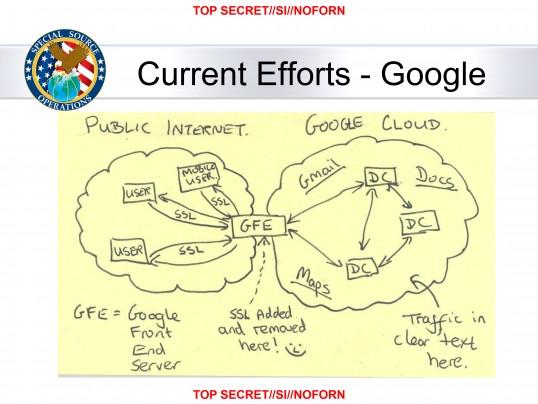

This 2013 National Security Agency (NSA) slide describing how data from Google’s internal network was collected by intelligence agencies was eye-opening—and shocking—to many technology companies. The idea that an attacker could read messages passed between services wasn’t technically groundbreaking, but it Continue reading
Network Configuration And The Broken Windows Theory
Taking shortcuts with changes can snowball into configuration chaos.
Do You Really Want to Write that Book?
It’s amazing how interesting questions come in batches: within 24 hours two friends asked me what I think about writing books. Here’s a summary of my replies (as always, full of opinions and heavily biased), and if you’re a fellow book author with strong opinions, please leave them in the comments.
Read more ...How Cloud Must Change To Meet Customer Requirements
Customers need flexible cloud platforms without the risk of vendor lock in.
Perceptions of NFV Hype and Reality
 “There are things known and there are things unknown, and in between are the doors of perception," wrote Aldous Huxley. That could be a description of the evolving tension between the perceptions of hype and reality of the NFV market as it enters its important phase of commercialization.
Datanauts 029: The Evil Behind Long-Distance vMotion & Stretched L2 Domains
The Datanauts explore the network and application issues that make moving VMs from one data center to another dangerous, and share ways to enable it safely.
The post Datanauts 029: The Evil Behind Long-Distance vMotion & Stretched L2 Domains appeared first on Packet Pushers.
Datanauts 029: The Evil Behind Long-Distance vMotion & Stretched L2 Domains
The Datanauts explore the network and application issues that make moving VMs from one data center to another dangerous, and share ways to enable it safely.
The post Datanauts 029: The Evil Behind Long-Distance vMotion & Stretched L2 Domains appeared first on Packet Pushers.