Creating a Dynamic Lab Environment with vEOS and GNS3 – Part II
SETTING UP A DHCP AND FILE SERVER FOR USE WITH ZTP
Now that we have a couple vEOS instances configured and able to communicate, and we have our out-of-band network set up, we can now begin to use ZTP to provide an initial startup config.
NOTE Notice that we did not connect the Management1 interface of either vEOS instance to anything inside of GNS3. If you remember when we created the VMs, their first interface is a host-only adapter connected to the vboxnet in VirtualBox, so it’s automatically connected and there’s nothing additional we need to do there, but GNS3 doesn’t know that so it considers the interface disconnected, and that’s OK. That saves us from having to add our management server(s) to the topology and cluttering it up (Just imagine trying to have a nice clean-looking topology in GNS3 if you had to have a connection from every vEOS instance to the management server(s) ), which is distracting and ugly - we’re better than that. |
ZTP is enabled as a default on the vEOS instances, but we still need to set up a server to provide DHCP and File services. For servers, Ubuntu is my go-to and I usually Continue reading
Creating a Dynamic Lab Environment with vEOS and GNS3 – Part I
GETTING STARTED
Preliminary Installation Setup
Install GNS3
Install VirtualBox
Get ahold of the .vmdk and aboot.iso files
It is recommended to install VirtualBox AFTER you install GNS3 to avoid problems with GNS3 detecting VirtualBox.
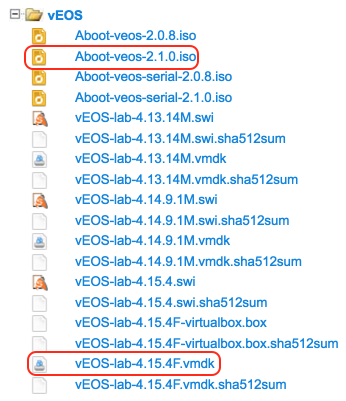
Go to www.arista.com, and go to Support > Software Download. The two files you’ll want are the .vmdk file as well as the Aboot .iso file:
Creating the Management Network
To simulate an out-of-band management network, we will create a vboxnet interface, similar to a loopback interface, on our laptop. This will also allow us to interact with our virtual machines via SSH, etc.
Open VirtualBox, go to Preferences, and click Network. Select “Host-only Networks”, and then click the NIC adapter image with a plus symbol on it to add a new host-only network if there isn’t one already:
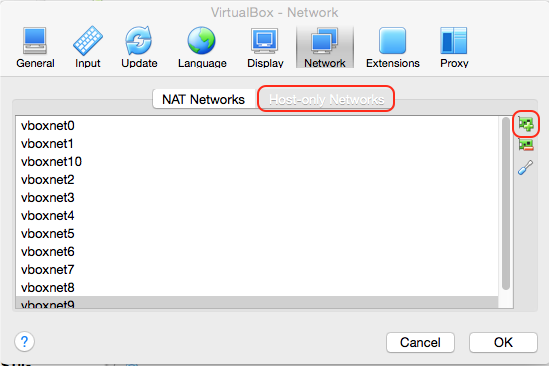
Select your newly-created vboxnet and click the screwdriver icon to configure it:

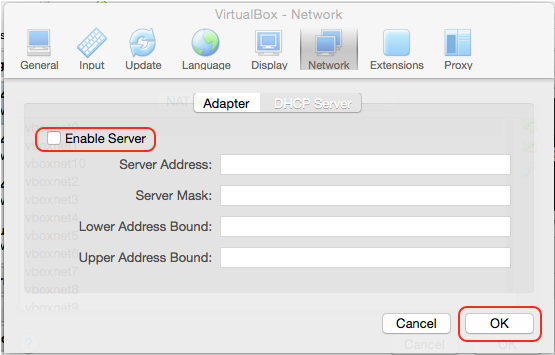
We’re going to be using ZTP to provision our switches, so select “DHCP Server”, ensure “Enable Server” is unchecked, and then click OK:
Verify you have a new interface reflecting your vboxnet configuration:

SETTING UP vEOS
Creating a Base Image
You’ll want a nice, clean base image to create clones Continue reading
The CORD Architecture

Edge provider networks, supporting DSL, voice, and other services to consumers and small businesses, tend to be more heavily bound by vendor specific equipment and hardware centric standards. These networks are built around the more closed telephone standards, rather than the more open internetworking standards, and hence they tend to be more expensive to operate and manage. As one friend said about a company that supplies this equipment, “they just print money.” The large edge providers, such as AT&T and Verizon, however, are not endless pools of money. These providers are in a squeeze between the content providers, who are taking large shares of revenue, and consumers, who are always looking for a lower price option for communications and new and interesting services.
If this seems like an area that’s ripe for virtualization to you, you’re not alone. AT&T has been working on a project called CORD for a few years in this area; they published a series of papers on the topic that make for interesting reading:
PLUMgrid Touts Containers & CloudApex in 5.0 Release
 CloudApex functionality is key.
Worth Reading: Yellow journalism on encryption


The post Worth Reading: Yellow journalism on encryption appeared first on 'net work.
Video And The Death Of Dialog

I was reading a trivia article the other day about the excellent movie Sex, Lies, & Videotape when a comment by the director, Stephen Soderbergh, caught my eye. The quote, from this article talks about how people use video as a way to distance ourselves from events. Soderbergh used it as a metaphor in a movie made in 1989. In today’s society, I think video is having this kind of impact on our careers and our discourse in a much bigger way.
Writing It Down In Pictures
People have become huge consumers of video. YouTube gets massive amounts of traffic. Devices have video recording capabilities built in. It’s not uncommon to see a GoPro camera attached to anything and everything and see people posting videos online of things that happen.
My son is a huge fan of videos about watching other people play video games. He’ll watch hours of video of someone playing a game and narrating the experience. When I tell him that he’s capable of playing the game himself he just tells me, “It’s not as fun that way Dad.” I, too, have noticed that a lot of things that would normally have been written down are Continue reading
SDxCentral Hires Marek as VP of Content
 She brings 20 years of experience in telecom reporting.
Cross-VC NSX for Multi-site Solutions
The Cross-VC NSX feature introduced in VMware NSX 6.2, allows for NSX logical networking and security support across multiple vCenters. Logical switches (LS), distributed logical routers (DLR) and distributed firewall (DFW) can now be deployed across multiple vCenter domains. These Cross-VC NSX objects are called Universal objects. The universal objects are similar to distributed logical switches, routers, and firewall except they have global or universal scope, meaning they can span multiple vCenter instances. With Cross-VC NSX functionality, in addition to the prior local-scope single vCenter objects, users can implement Universal Logical Switches (ULS), Universal Distributed Logical Routers (UDLR), and Universal DFW (UDFW) across a multi-vCenter environment that can be within a single data center site or across multiple data center sites. In this post we’ll take a look at how we do this. Continue reading
The Trouble with Tor
The Tor Project makes a browser that allows anyone to surf the Internet anonymously. Tor stands for "the Onion router" and that describes how the service works. Traffic is routed through a number of relays run across the Internet where each relay only knows the next hop (because each hop is enclosed in a cryptographic envelope), not the ultimate destination, until the traffic gets to the final exit node which connects to the website — like peeling the layers of an onion.

Think of it like a black box: traffic goes into the box, is bounced around between a random set of relays, and ultimately comes out to connect to the requested site. Anonymity is assured because anyone monitoring the network would have a difficult time tying the individuals making the requests going into the black box with the requests coming out.
Importance and Challenges of Anonymity
Anonymity online is important for a number of reasons we at CloudFlare believe in. For instance, Tor is instrumental in ensuring that individuals living in repressive regimes can access information that may otherwise be blocked or illegal. We this is so important that we offer Continue reading
Network Access: It’s Not Simple Anymore
Configuring access to corporate resources is multi-faceted in the age of the digital workspace.