SDxCentral Weekly News Roundup — September 11, 2015
 Did you miss this week's top headlines? That's alright -- we got there right here for you.
RouterJockey is launching a clothing line?!?!???
Ok maybe that title is a bit grandiose… But due to the great response I received Friday morning from the launch of the original PCAP shirt, and the IPv6 follow-up, I decided to create a few new designs and put everything into a store front. If the demand continues I will continue to publish new shirts, and keep up with relaunching original designs into their own campaigns. Not that I expect the demand for these shirts to continue long term, but you never know. Nevertheless I appreciate everyone’s support thus far.
But I need you! Yes… You! I need your ideas, and most importantly I need your feedback. So please, contact me on twitter and let me know what you think. If you like what you see, please share the url for the store.
Without further ado…
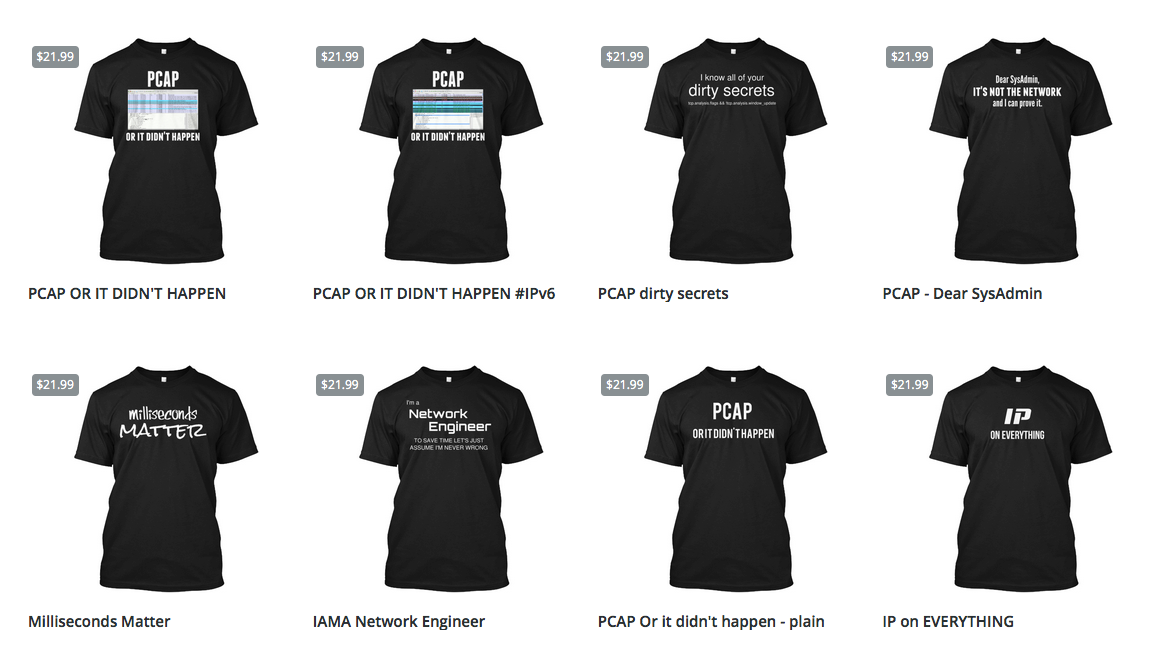
Click to visit the RouterJockey shop
The post RouterJockey is launching a clothing line?!?!??? appeared first on Router Jockey.
How to run Juniper vMX in UNetLab
Juniper offers its brilliant MX routers for virtual environments – namely vMX. And we cant name ourselves engineers if we wouldn’t try to run one in the Unetlab. Running vMX in the unetlab is a simple task, yet I see many complaints about vMX not working. With this being said I invite you to a journey called “running vMXiPexpert’s Newest “CCIE Wall of Fame” Additions 9/11/2015
Please join us in congratulating the following iPexpert students who have passed their CCIE lab!
This Week’s CCIE Success Stories
- Hesham Abdelkereem, CCIE #40790 (Dual, Wireless & Collaboration)
- Nadeem Akbar, CCIE #11610 (Wireless)
- Hugo Dantas, CCIE #49174 (Collaboration)
This Week’s Testimonial
Hesham Abdelkereem CCIE #40790 (Wireless & Collaboration)
The product that helped me was Video on Demand.
Nadeem Akbar CCIE #411610 (Wireless)
The CCIE Wireless Bootcamp helped me pass the exam.
We Want to Hear From You!
Have you passed your CCIE lab exam and used any of iPexpert’s self-study products, or attended a CCIE Bootcamp? If so, we’d like to add you to our CCIE Wall of Fame!
CCIE Benefits – What are they?
Original content from Roger's CCIE Blog Tracking the journey towards getting the ultimate Cisco Certification. The Routing & Switching Lab Exam
Now that I have passed the CCIE Lab exam people are asking me “What are the CCIE benefits?” As for tangible benefits to me personally they are in no particular order: I can now go to the CCIE Apparel store and purchase my CCIE Leather Jacket and other clothing with my CCIE digits on them […]
Post taken from CCIE Blog
Original post CCIE Benefits – What are they?
This Week On The Internet: Animated AT-AT, Abused Robot
From an animated AT-AT to the need for punchable robots to a post-Internet utopia, here's a selection of strange and interesting items coughed up online.
The post This Week On The Internet: Animated AT-AT, Abused Robot appeared first on Packet Pushers.
Cisco Scores a Point in Its Patent Case Against Arista
 A real ruling is months away, but Cisco can claim the latest round in its ITC case.
The Cloud, IP/MPLS Connectivity, & Telco NFV: What You Need Know
 Time is running out -- save your spot now for the Ericsson DemoFriday on September 18th.
PlexxiPulse—Reflections on VMworld
VMworld was buzzing last week. I was impressed by the focus on delivering solutions that help accelerate the deployment of workloads this year—a definite shift from years past. It was great to see demonstrations of solutions in action and the impact they have on their customers. There were a few things that made an impression on me at the show that I included in a blog post earlier this week. Were you at the show in San Francisco last week? What were your key takeaways?
Below please find a few of our top picks for our favorite news articles of the week. Enjoy!
Business 2 Community: The Future of Networking Will Be Written By the Leaders
By Jim Rapoza
One of my favorite bands of all time is The Clash, and a famous quote attributed to their late band leader Joe Strummer is that “the future is unwritten.” And in most cases that is very true. For example, few people in 2005 could have successfully predicted many of the trends and realities of today, whether in the everyday world or in the realm of technology. But while the future may be unwritten, sometimes we do have a pretty good Continue reading
Kuala Lumpur, Malaysia: CloudFlare’s 45th data center

Kuala Lumpur joins the CloudFlare network as our 45th global point of presence (PoP). While this latest deployment comes only a day after the announcement of our expansion in Berlin (back-to-back!), it's been a long three years since we last crossed a new border in Asia. Kuala Lumpur expands our presence in the Asia-Pacific region to nine PoPs: Kuala Lumpur, Seoul, Tokyo, Osaka, Hong Kong, Singapore, Sydney, Melbourne and Auckland.
No boomerangs allowed
One of the difficulties of delivering content locally in certain parts of Asia (and in many other parts of the world for that matter) is that certain ISPs only connect with other ISPs in the same local Internet ecosystem outside of their national borders. In the absence of domestic interconnection, a request (e.g. an e-mail or web request) from one local ISP to another "boomerangs" outside of the national border before it is ultimately delivered to another local ISP. If you live or travel in certain parts of Asia, this is one of the leading culprits for why the web feels slow. The lack of a domestic and central interconnection point also makes it challenging for networks like CloudFlare, both Continue reading
You Can Excel at Data Services Delivery — CENX Will Show You the Way
 Join the CENX webinar on data services delivery and lifecycle service orchestration (LSO) for a unique presentation on the benefits of service fulfillment through LSO and NFV.
PCAP or it didn’t happen…. The t-shirt!
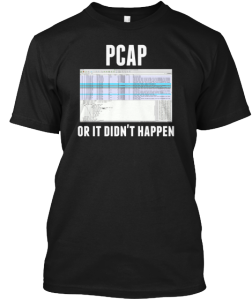
Some days I don’t know why I do things… But last night I was playing around with creating a PCAP meme when my friend Josh Kittle said he’d be interested in a t-shirt like that. I got to thinking about it and realized some network engineers out there also might enjoy something like this, so I fired up a campaign on teespring!
Let me know what you think, I may do other shirts in the future as this was fun to work on. If you have any ideas you don’t plan on using, let me know and I might work on developing them.
Oh, and since Jay Franklin had to have an IPv6 shirt… I also launched another version with an IPv6 packet capture, and the #IPv6 hashtag on the back.

Click one of the shirts to see them on teespring…
The post PCAP or it didn’t happen…. The t-shirt! appeared first on Router Jockey.
Basics of IPv6 Addressing
Another Friday, another short IPv6 video (didn’t have time to create anything more substantial this week). This one describes the basics of IPv6 addressing – I know most of you don’t need it, but do forward the link to friends who are still struggling with IPv6 basics.
QOTW: Outsourcing Memory


The post QOTW: Outsourcing Memory appeared first on 'net work.