At A Glance: The Mid-Atlantic + Government Docker Summit

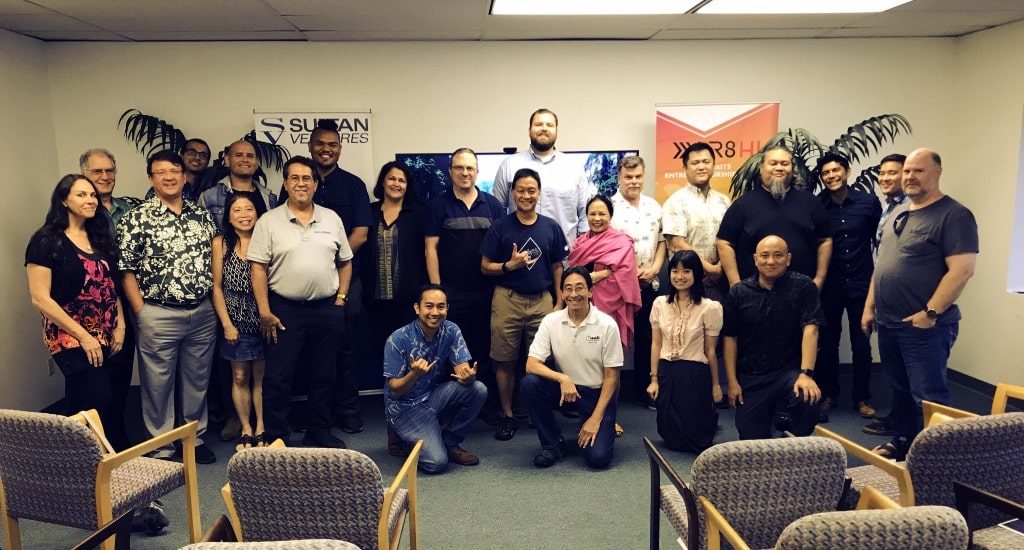
Last week, Docker hosted our 4th annual Mid-Atlantic and Government Docker Summit, a one-day technology conference held on Wednesday, May 29 near Washington, DC. Over 425 attendees in the public and private sector came together to share and learn about the trends driving change in IT from containers, cloud and DeVops. Specifically, the presenters shared content on topics including Docker Enterprise, our industry-leading container platform, Docker’s Kubernetes Service, Container Security and more.

Attendees were a mix of technology users and IT decision makers: everyone from developers, systems admins and architects to Sr. leaders and CTOs.

Summit Recap by the Numbers:
  • 428 Registrations
  • 16 sessions
  • 7 sponsors
  • 3 Tracks (Tech, Business and Workshops)
Keynotes

Highlights include a keynote by Docker’s EVP of Customer Success, Iain Gray, and a fireside chat by the former US CTO and Insight Ventures Partner, Nick Sinai, and current Federal US CIO, Suzette Kent.

The fireside highlighted top of mind issues for Kent and how that aligns with the White House IT Modernization Report; specifically modernization of current federal IT infrastructure and preparing and scaling the workforce. Kent mentioned, “The magic of IT modernization is marrying the technology with the people and the Continue reading

Heavy Networking 454: Analyzing Encrypted Traffic In The TLS 1.3 Era With ExtraHop (Sponsored)

Today's Heavy Networking examines packet analysis with sponsor ExtraHop. We drill into the company's marketing claims about deep analysis at line rate with Mike Ernst, VP of Sales Engineering. We also tackle how ExtraHop handles encrypted traffic, incuding TLS 1.3 and Perfect Forward Secrecy. Mike promises to keep his inner salesperson on mute for this conversation.

The post Heavy Networking 454: Analyzing Encrypted Traffic In The TLS 1.3 Era With ExtraHop (Sponsored) appeared first on Packet Pushers.

New switches, Wi-Fi gear to advance Arista’s campus architecture

Arista is rolling out more products and services in its continued assault on both the campus network and enterprise hybrid-cloud environments.In particular, the company is readying a new family of what it describes as its first purpose-built campus leaf switches as well as a Wi-Fi 6 (802.11ax) access point that fit into its overall grand plan called Cognitive Campus, with which the company says customers can more easily automate deployment, configuration, troubleshooting and deploying security. [ Read also: How to plan a software-defined data-center network ] Arista is also fashioning an alliance with Microsoft to better support enterprise use of hybrid cloud.To read this article in full, please click here

New switches, Wi-Fi gear to advance Arista’s campus architecture

Arista is rolling out more products and services in its continued assault on both the campus network and enterprise hybrid-cloud environments.In particular, the company is readying a new family of what it describes as its first purpose-built campus leaf switches as well as a Wi-Fi 6 (802.11ax) access point that fit into its overall grand plan called Cognitive Campus, with which the company says customers can more easily automate deployment, configuration, troubleshooting and deploying security. [ Read also: How to plan a software-defined data-center network ] Arista is also fashioning an alliance with Microsoft to better support enterprise use of hybrid cloud.To read this article in full, please click here

Home on the Palo Alto Networks Cyber Range

You’ve probably heard many horror stories by now about the crazy interviews that companies in Silicon Valley put you though. Sure, some of the questions are downright silly. How would I know how to weigh the moon? But the most insidious are the ones designed to look like skills tests. You may have to spend an hour optimizing a bubble sort or writing some crazy code that honestly won’t have much impact on the outcome of what you’ll be doing for the company.

Practical skills tests have always been the joy and the bane of people the world over. Many disciplines require you to have a practical examination before you can be certified. Doctors are one. The Cisco CCIE is probably the most well-known in IT. But what is the test really quizzing you on? Most people will admit that the CCIE is an imperfect representation of a network at best. It’s a test designed to get people to think about networks in different ways. But what about other disciplines? What about the ones where time is even more of the essence than it was in CCIE lab?

Red Team Go!

I was at Palo Alto Networks Ignite19 this past Continue reading

Hong Kong Chapter: Why Aren’t There More Women in Tech?

The tech industry in Hong Kong and across the world remains male dominated. Why aren’t there more women and what can be done to fix this?

To mark International Girls in ICT Day, which aims to encourage girls and young women to work in information and communications technology, the Internet Society Hong Kong Chapter organized an event to tackle these questions. Ladies X Tech X Gents: How Are the Three Compatible? brought together four successful developers to lead the dialogue:

  • Ivy Luk, Sales Engineer at Clare.AI (an Artificial Intelligence digital assistant solutions provider)
  • Emma Wong, Organiser of Google Developer Group and Women Techmakers Hong Kong
  • May Yeung, Director of Internet Society Hong Kong Chapter
  • Rick Mak, Co-Founder of Oursky (a web and mobile application development company)

Why are there so few women in the tech industry?

A common observation among the speakers was the high dropout rate of women developers in the tech industry – amid the already low women to men ratio. The speakers noted that it drops from roughly 3:7 at school to 1:10 at work.

One of the main reasons women leave the tech industry is the gender stereotype that it is a masculine profession. Continue reading

As Expected: Where Have All the SDN Controllers Gone?

Roy Chua (SDx Central) published a blog post titled “Where Have All the SDN Controllers Gone” a while ago describing the gradual disappearance of SDN controller hype.

No surprise there - some of us were pointing out the gap between marketing and reality years ago.

It was evident to anyone familiar with how networking actually works that in a generic environment the drawbacks of orthodox centralized control plane SDN approach far outweigh its benefits. There are special use cases like intelligent patch panels where a centralized control plane makes sense.

Read more ...

Towards federated learning at scale: system design

Towards federated learning at scale: system design Bonawitz et al., SysML 2019

This is a high level paper describing Google’s production system for federated learning. One of the most interesting things to me here is simply to know that Google are working on this, have a first version in production working with tens of millions of devices, and see significant future expansion for the technology (‘we anticipate uses where the number of devices reaches billions’).

So what exactly is federated learning?

Federated Learning (FL) is a distributed machine learning approach which enables training on a large corpus of decentralized data residing on devices like mobile phones. FL is one instance of the more general approach of “bringing the code to the data, instead of the data to the code” and addresses the fundamental problems of privacy, ownership, and locality of data.

Note that this beyond using an on-device model to make predictions based on local data. Here we’re actually training the model in a distributed fashion, using data collected on the devices, without the data ever leaving those devices. The FL system contains a number of privacy-enhancing building blocks, but the privacy guarantees of any end-to-end system Continue reading

Juniper: Security could help drive interest in SDN

Security challenges and developing AI/ML technologies are among the key issues driving software defined networking implementations according to a new Juniper survey of 500 IT decision-makers.And SDN interest abounds – 98 percent of the 500 said they were already using or considering an SDN implementation. Juniper said it had Wakefield Research poll IT decision makers of companies with 500 or more employees about their SDN strategies between May 7 and May 14, 2019. More about SD-WANTo read this article in full, please click here

Community Week: Share Ideas to Help Make the Internet Stronger

The role people play in our community is vital for an open and trustworthy Internet for everyone. We know that without the knowledge, experience, and contributions of our members the Internet Society wouldn’t be complete.

Chapters Leaders Training in Latin America and the Caribbean

The Chapters of the Latin American and Caribbean (LAC) region have come together to implement a training program that allows members to work with their local Chapter, contributing to the four focus areas of the Internet Society’s Action Plan 2019. The first LAC Capacity Building Program for Chapters was successfully launched last week, with the participation of 182 people out of almost 1000 applicants.

This initiative started at the beginning of the year as a result of a working session held with LAC Chapters leaders. During the session, it was determined that capacity building was an important leverage point for Chapter development and it would be a tool to achieve the Chapters’ local goals during 2019. In the process, three important phases were defined for the program:

  • Capacity Building: Training in our different focus areas
  • Community engagement: Allocation of trained members in Chapters to support local initiatives
  • 2020-2025 Planning: LAC Chapters Workshop to define LAC Community Continue reading

Happy Birthday BGP

The first RFC describing BGP, RFC 1105, was published in June 1989, thirty years ago. That makes BGP a venerable protocol in the internet context and considering that it holds the Internet together it's still a central piece of the Internet's infrastructure. How has this critically important routing protocol fared over these thirty years and what are its future prospects? It BGP approaching its dotage or will it be a feature of the Internet for decades to come?

On the 7th World IPv6 Launchiversary, How About Listening to a Podcast About IPv6?

photo of a bee

On this 7th “launchiversary” of World IPv6 Launch, I thought I’d share a way I’ve enjoyed learning more about IPv6 over the past year. I like listening to podcasts while I’m running or driving, and a show that’s in my playlist is “IPv6 Buzz” where IPv6 veterans Ed Horley, Scott Hogg, and Tom Coffeen “dive into the 128-bit address space wormhole.

IPv6 buzz podcast logo

Anyone working with IPv6 for any amount of time, and particularly IPv6 advocacy, has probably read or heard something from Ed, Scott, or Tom. They’ve been explaining and promoting IPv6 for a long time in their own individual endeavors.

This podcast, which launched one year ago today, brings the three of them together with a wide range of guests from across the industry. Even with all my own years of IPv6 activity, I’ve learned a great amount about IPv6 security, recent drivers of deployment (including state task forces), tools and suggestions for promoting IPv6 growth. They dove deeply into IPv6 inside the IETF with Fred Baker, talked about going IPv6-only with Veronika McKillop of Microsoft, got into Happy Eyeballs with Dan Wing, and most recently explored enterprise IPv6 issues with Enno Rey.

Part Continue reading

Can Huawei survive, and what should customers do?

Chinese IT hardware giant Huawei is in a very tough position now, cut off from most western technology partners following the Trump administration’s declaration of the firm as a national security risk. The question now becomes what do its customers do.The Trump administration issued an order that effectively bars American firms from selling components and software to the company, and very quickly Huawei was cut off from Intel, ARM, Infineon, Samsung, and Google. The SD Association and Wi-Fi Alliance have also cut ties with Huawei.However, Huawei got a temporary break last month when the Commerce Department gave the company a reprieve after it added Huawei to a list of companies it considered a national security risk. Instead, the department posted a notice to the Federal Register that it would grant 90-day permissions for transactions necessary to maintain and support existing cellular networks and handsets.To read this article in full, please click here