0
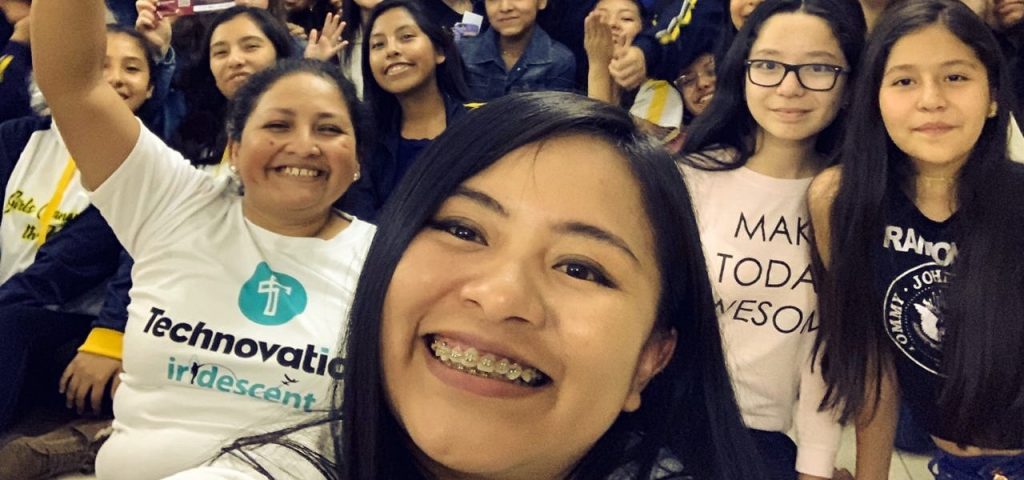
Young people everywhere are building technology, mobilizing communities, and raising their voices to shape policies that create an Internet that’s truly for everyone.
That’s why we’re partnering with the not-for-profit and non-governmental organization AIESEC on a pilot project to train 500 young people on Internet-related skills in Bolivia, Nepal, Namibia, and Kenya.
It’s our hope that this project will be the start a journey that will result in even more young voices joining a community of thousands of people around the world who believe in the open Internet.
Young people like Pamela Gonzales.
At only 24 years old, Gonzales is the co-founder of Bolivia Tech Hub, an early stage incubator that serves as one of La Paz’s only support systems for the city’s tech community, helping entrepreneurs to learn, develop, and collaborate on new projects.
She’s impacting hundreds of lives, but she says it didn’t
come easily.
In her first
year of university, she partnered with a friend of hers, a local web developer,
and together they secured funding and built something new.
“My mission was to find a place to learn the things I
couldn’t learn in the university,” Gonzales said. “I found there were a lot of
students Continue reading

 VMware also unveiled a beta program of the next Enterprise PKS iteration that will include support...
 SDxCentral Weekly Wrap for April 26, 2019: VMware starts from scratch; carrier 5G plans get an...
 The open source groups already work together. But they also have their own initiatives related to...
 It's unlikely either company will be losing any cloud market share this quarter as both flirt with...
 Open networking revenue (excluding hyperscalers) is expected to reach $1.35 billion by 2023, with a...
 T-Mobile US said it can deliver 5G on its own and it plans to at least double the speeds it...