Keep Pace with Network Infrastructure Tech Changes in 2019
Here is a quick overview of the key infractructure technologies that will imapct your networks in the coming year.
NAT64Check Version 2 is launched!

With the New Year comes the launch of NAT64Check version 2 from the Internet Society. The first version of NAT64Check was introduced a couple of years ago and has proved very popular and successful, so for the past year we’ve been working on a number of enhancements in response to feedback and requests. And we’re very happy to be able to make the new version available as we welcome in 2019.
NAT64Check is a tool developed by the Internet Society in collaboration with Stichting IPv6 Nederland, Go6, SJM Steffann, Internetbureau Max and Simply Understand. This allows you to enter the URL of a particular website, and then run tests over IPv4, IPv6 and NAT64 in order to check whether the website is actually reachable in each case, whether identical web pages are returned, and whether all the resources such as images, stylesheets and scripts load correctly. It also compares responsiveness using the different protocols, therefore allowing network and system administrators to easily identify anything is ‘broken’, to pinpoint where any non-IPv6 compatible elements need to be fixed.
 The original version of NAT64Check though, ran on two separate servers at Go6 and the IPv6 Lab which each had a limited view of the Internet Continue reading
2019 Goals
My 2019 ambition statement.2019 Goals
Writing down what I want to achieve helps me stay focused and keeps me from getting distracted by all the shinny things in the world. 2019 Goals Loose 20kgs Family Read 20 non-technical books JNCIX SP Azure solution architect One post a week Move to rails Loose 20kgs Over the...How to Transition to DevOps in Less Than 30 Days
It doesn't take long to lay the foundation for an agile enterprise. Get the initiative going and sort out the bumps along the way.
7 Enterprise Infrastructure Predictions for 2019
It is no secret that enterprise infrastructures are undergoing major changes. Growing use of public cloud, SaaS, and SD-WAN in 2019 will play a significant role in the way infrastructures evolve.
Another Step Closer to Our Mission

The Internet now reaches more than half the world.
A recent estimate indicates that nearly 4 billion people – more than half the world’s population – now use the Internet. More people are now online than existed in the world the year I was born. Everyone, it seems, values the Internet. We all still know the Internet is for everyone.
The Internet Society, including all our chapters and members, was part of Internet growth in this period. 2018 was a year of many changes at the Internet Society. We changed the staff and ways of organizing work to make things clearer. We changed our CEO. But at the same time, we brought infrastructure to some of the most remote parts of the world. We pushed for better security for many of the new devices that are connecting to the Internet. And we worked to include the whole range of voices when it comes to who’s making decisions about the Internet’s future.
These are just a few of the things we, the whole Internet Society, did together. We work together because that’s what internetworking is: working together, each of us making a greater whole of our individual parts.
So, as Continue reading
Vendor Lock-in – Is It Really That Bad?!
In today’s IT infrastructure, open source software is a common component. Many organizations and network engineers stay away from certain architectures and products citing vendor lock-in as their only argument but often lack the understanding to why they think vendor lock-in is a problem. Let me explain.
There are lock-ins of different forms. For example if you are buying MPLS VPN service from a SP, you are somewhat locked in to their offering and pricing. I see at least three types of different lock-in:
Vendor lock-in – This is the one that everyone is familiar in. It means that the vendor has a solution that is proprietary, perhaps using proprietary management or routing protocols so that it can’t interact with solutions from other vendors.
Tools lock-in – This may or may not be as much of a lock-in as vendor lock-in, but when an organization has invested enough time, money and manpower into a specific toolset, it’s difficult to move to other tooling.
People lock-in – An often oversighted form of lock-in. Depending on architecture, toolset and so on, your organization may need a certain type of engineers to work on the network. These may be difficult to find which Continue reading
Networking with Fish Update: Site Refresh
Four 1/2 years ago Networking with Fish as a web site was born. To say I knew nothing about having a web site would be a massive understatement. All I knew was I needed to “give back“. I needed to... Read More ›
The post Networking with Fish Update: Site Refresh appeared first on Networking with FISH.
IPv6 in China
China has an estimated Internet user population of 741 million, out of a total population of 1.4 billion people. If there was extensive deployment of IPv6 services in China, then the case that IPv6 has already achieved critical mass of deployment would be easy to make. On the other hand, if such a significant user population had no IPv6 service and no visible plans for IPv6 services, then the entire conversation about the times and certainties about the future of IPv6 takes on a different direction. Which means that China matters in the world of IPv6. It matters a lot.My Ignorance for a Year and Dell IDRAC
Hi,
I have a Dell R810 and it makes a lot of noise. So, I have put it somewhere remote in the home where it’s completely inhabitable for human beings. Now, the problem was always to go there and manually power-up the system. This has been the scenario for years. So, technically if am away from my home I need to take help from my wife. All this is going well and I was always wondered should it not have a better way to do things.
Was talking to my friend and he had some paid solution for the same thing, he doesn’t even remember and that’s for his cisco gear, now for Cisco gear as long you supply power they will be powered (if the Power button is always on), for servers however just like our Personal CPU’s and Laptops you have to manually press the power button.
Then yesterday all of a sudden I took this somewhat seriously and explored options, then I understood it was sitting right inside the server, Dell has something called Integrated DRAC system which helps you do this thing, all you need to have is a proper Lan connection, the message was Continue reading
Weekly Show 422: Hardware Supply Chains And Trusted Execution
Today's show dives into issues around IT supply chain security and mechanisms such as trusted execution. We examine how they work and how they're implemented, and look at similar measures in routing and switching.
The post Weekly Show 422: Hardware Supply Chains And Trusted Execution appeared first on Packet Pushers.
Serverless and Knative Underline Cloud Native Evolution
 Knative is seen as an important catalyst for unifying the dozens of serverless platforms in the market.
Testing notes: simulating link failure by filtering BFD packets
In some testing I am doing, I need to prove that BFD can be used with iBGP to tell the BGP protocol when there is an interruption. This will enable BGP to be brought down much faster than if regular BGP timers are used.
To make this easier to do, I used a firewall filter on one of the two routers to filter out BFD but accept all other packets:
Single-hop BFD (i.e. across a link) uses UDP 3784, while multi-hop BFD uses 4784. Since my BFD sessions are configured between loopbacks, it is this latter type I need to filter.

In the example below, CORE1 is a BGP client of CORE2, which is the route-reflector.
The following was configured on the routers to bring up the BFD session (I am only showing one side – you can figure out the mirror of this yourself I think):
[edit protocols bgp group CORE neighbor 10.0.0.6]
      bfd-liveness-detection {
          minimum-receive-interval 300;
          multiplier 3;
          transmit-interval {
              minimum-interval 100;
          }
      }
When the remote side was done, the session came up:
axians@CORE1> show bfd session
Dec 28 17:17:10
                               Detect Transmit
Address       State Interface  Time   Interval  Multiplier
10.0. Continue reading
Networking Vendors Jump On 400GbE in 2018
 The 400GbE standard is four times as fast as 100 gig Ethernet, and it offers an economically attractive price-per-port and better power efficiency.
LibreRouter: A Multi-Radio Wireless Router for Community Networks
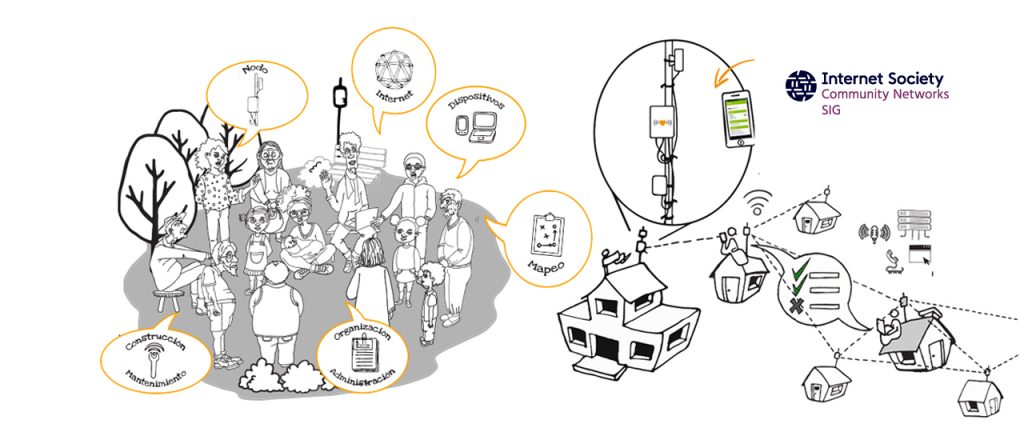
Since their inception, community networks have depended on modifying existing off-the-shelf routers to adapt them to their particular needs. Software development originated in community-network groups and the free software movement as a whole have pushed the barrier of innovation and helped commercial enterprises develop new products over the years.
The LibreRouter, created by the collaboration of the Internet Society Community Networks Special Interest Group (CNSIG) and AlterMundi with the support of Beyond the Net Funding Programme, is an open-source hardware WiFi router designed for the specific needs of community networks.
The LibreRouter Project works to achieve autonomy and technological sovereignty that allows deploying, managing, scaling, and sustaining community networks. The reality is that community networks are not a profitable market segment for the industry. This means that the equipment used is not adequate to solve the particular needs they have. To manufacture the equipment you have to be encouraged to understand it and do it in a different and integral way.
Besides the hardware development, the most important part of this project is the integral work that involves software solutions and documentation material. It’s an important work focused on the communities themselves having the capabilities to deploy their Continue reading
SD-WAN – Glorified DMVPN?
I had an interesting discussion with Jon Cooper in the Network Collective Slack. The discussion was around SD-WAN. We were discussing if SD-WAN is just a “glorified DMVPN” or if it’s something more than that. Note that this was a bit tongue in cheek comment from Jon but it’s interesting for the sake of discussion.
To compare the two, let’s look at some of the design and operational challenges of running a DMVPN.
Physical design – How many Hub routers do you need? In a DMVPN, the Hub router is a special type of device that is responsible for mapping the underlay IP address to the overlay IP address. If a Hub needs to be added, this Next Hop Server (NHS) needs to be added to the spokes. With Cisco SD-WAN, this is handled by the vBond which is a virtual machine running in a public cloud. Adding a device is simple as the WAN edge routers use a hostname (DNS) to ask for the IP of the vBond. This means that the physical design is less rigid.
Logical design – In a DMVPN, you need to decide on the number of DMVPN clouds. Do you do a single cloud Continue reading
Who Went Where: The Top Personnel Changes of 2018
 From Hans Vestberg’s quick rise at Verizon to Google Cloud’s leadership shakeup, this year was full of personnel changes that turned heads.
The Year in Review: Governments Try to Restrict Free Speech Online and Break Encryption

In 2018, the Internet saw concerted government efforts to restrict free speech on the Internet – some in the name of fighting “fake news” – and to compromise encryption on devices and messaging apps.
Can the government decide what’s fake news? Several countries either passed or explored laws intended to combat so-called fake news and online disinformation. In some cases, the laws contained significant prison time for those who create or disseminate fake news.
The problem, of course, is that the government decides what’s fake and what’s legitimate news. Free speech advocates have warned that the anti-fake news laws amount to censorship, with government officials playing content gatekeepers.
In Malaysia, the fake news law was quickly used to investigate an opponent of the administration in power. Malaysia repealed its anti-fake news law about four months after it passed, when opposition leader Mahathir Mohamad, one of the first people invested under the law, became prime minister.
In November, France passed its own anti-fake news law, allowing judges to determine fake news and order its removal. Distributors of news determined to be fake can face one year of prison time. India also considered but abandoned a fake news law earlier this Continue reading