IPv6 Progress Report: Going Mainstream
Akamai data provides view into IPv6 adoption since World IPv6 Launch in 2012.
SDxCentral Weekly News Roundup — June 3, 2016
 Cumulus releases Cumulus Linux 3.0
EVPN – the basics
So I decided to take a deep dive into eVPN, I’ll mostly be looking into VLAN-aware bundling, as per RFC 7432 – and mostly because I think this will fit more closely, with the types of deployments most of the customers are used to – good old IRB interfaces and bridge-tables!
As everyone knows, VPLS has been available for many years now and it’s pretty widely deployed, most of the customers I see have some flavour of VPLS configured on their networks and use it to good effect – so why eVPN? what’s the point in introducing a new technology if the current one appears to work fine.
The reality is that multipoint layer-2 VPNs (VPLS) were never quite as polished as layer-3 VPNs, when layer-3 VPNs were first invented they became, and still are the in many cases the “go to” technology for layer-3 connectivity across MPLS networks, and the technology itself hasn’t really changed that much for well over a decade. The same cannot be said for VPLS, over the years we’ve had many different iterations of the technology:
- Vanilla VPLS
- LDP signalled
- BGP signalled
- H-VPLS (hierarchical VPLS)
- BGP based
- LDP based
- VPLS auto-discovery
Along with the different Continue reading
Ping on you! – Beta 2.0 is online
Nicer, more stable, AJAX/JSON enabled pingonyou.com and also preparations in background to introduce the 24/7 Monitoring feature.
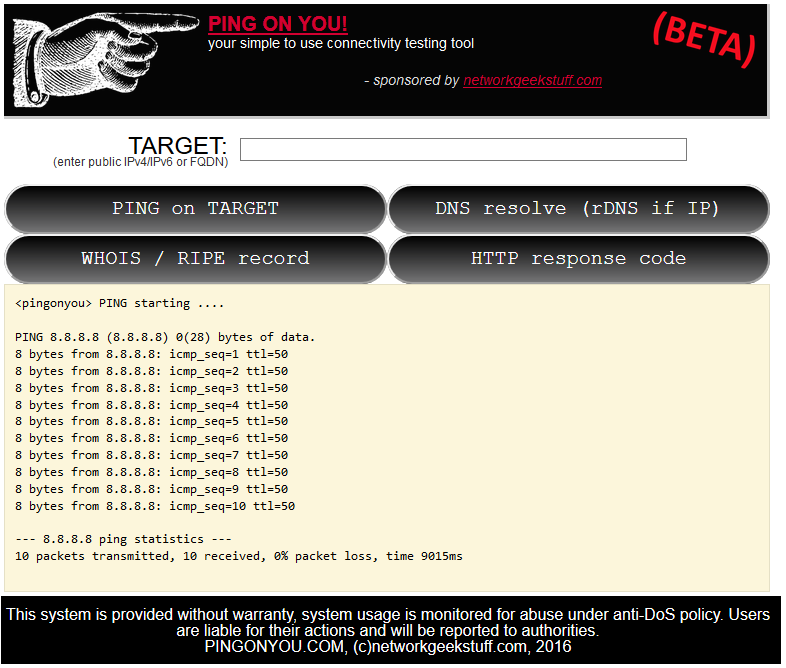
So here we are. First a bit of short history, if you have seen the first version of the pingonyou.com, you probably had a sense of 90’s view of the page just by looking at it. Everything was static HTML and all updates were actually refreshing the whole page (including every new line in the ping functionality needed a whole site refresh!). This was also including the fact that the design and color selection was really very basic. If you want to have a look on the old version, simply go to previous articles on this blog (where pictures are) for a comparison or here is a picture of beta 1.0. But lets now focus on the new version which is available from today!
Ping on You – Beta 2.0
The first thing is the color-scheme, after trying out several dozens of combinations, the blue variant was the best overall that provide both good console readability and combined with the fact that the functions that it provides needed to be categorized much better. First everyone that comes Continue reading