HL: Inside Cisco IOS Software Architecture

The post HL: Inside Cisco IOS Software Architecture appeared first on 'net work.
Protocol Spotlight: DLEP
Dynamic Link Exchange Protocol is a mechanism by which link layer devices (probably radio modems) can communicate neighbor reachability information to IP routers using those radios.Radio interfaces are frequently variable sub-rate interfaces. Path selection is a huge challenge with this sort of handoff, because not only is the available bandwidth less than the speed of the handoff interface, it's a moving target based on RF conditions from moment-to-moment. DLEP provides a flexible framework for communicating link performance and other parameters to the router so that it can make good path selection decisions.
It's obviously handy for point-to-point links, but that's not where it gets really interesting.
Consider the following network topology:

We have four routers sharing a broadcast network (10.0.0.0/24), each with a satellite backup link. Simple stuff, right?
But what if that 10.0.0.0/24 network isn't an Ethernet segment, but was really an ad-hoc mesh of microwave radio modems, and the routers were scattered among various vehicles, drones and robots?
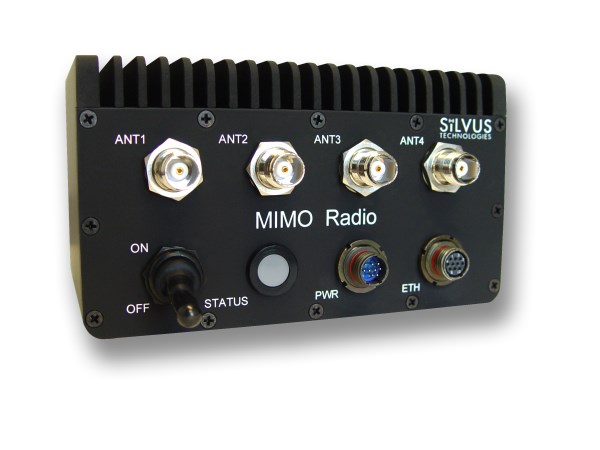

The radios know the topology of the mesh in real time, but the routers plugged into those radios do not.
Wasting microwave bandwidth with BFD packets would be silly because it won't tell Continue reading
NFV Is Here to Stay
 Service providers should begin embracing this transformative technology.
PQ Show 67: VMware NSX Everywhere With Guido Appenzeller (Sponsored)
VMware's Guido Appenzeller joins Ethan and Greg on this sponsored Priority Queue podcast to talk about NSX's capabilities beyond the data center, including containers, the cloud, mobile devices, and more.
The post PQ Show 67: VMware NSX Everywhere With Guido Appenzeller (Sponsored) appeared first on Packet Pushers.
PQ Show 67: VMware NSX Everywhere With Guido Appenzeller (Sponsored)
VMware's Guido Appenzeller joins Ethan and Greg on this sponsored Priority Queue podcast to talk about NSX's capabilities beyond the data center, including containers, the cloud, mobile devices, and more.
The post PQ Show 67: VMware NSX Everywhere With Guido Appenzeller (Sponsored) appeared first on Packet Pushers.
ONOS Code Takes Flight in 2015
 ONOS has done a ton of coding in just one year.


Cisco Adds To ACI
Docker container support and enhanced security are among the new features in Cisco's software-defined networking platform.HTTP/2 is here! Goodbye SPDY? Not quite yet
Why choose, if you can have both? Today CloudFlare is introducing HTTP/2 support for all customers using SSL/TLS connections, while still supporting SPDY. There is no need to make a decision between SPDY or HTTP/2. Both are automatically there for you and your customers.
Enabling HTTP/2
If you are a customer on the Free or Pro plan, there is no need to do anything at all. Both SPDY and HTTP/2 are already enabled for you. With this improvement, your website’s audience will always use the fastest protocol version when accessing your site over TLS/SSL.
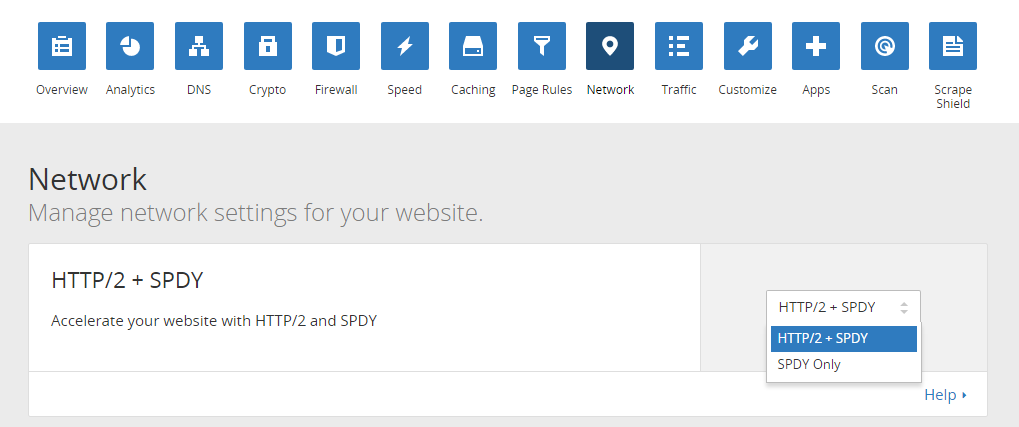
Customers on Business and Enterprise plans may enable HTTP/2 within the "Network" application of the CloudFlare Dashboard.
HTTP/2 is here!
In February of 2015, the IETF’s steering group for publication as standards-track RFCs approved the HTTP/2 and associated HPACK specifications.
After more than 15 years, the Hypertext Transfer Protocol (HTTP) received a long-overdue upgrade. HTTP/2 is largely based on Google's experimental SPDY protocol, which was first announced in November 2009 as an internal project to increase the speed of the web.
Benefits of HTTP/2 and SPDY
The main focus of both SPDY and HTTP/2 is on performance, especially latency as perceived by the end-user while using Continue reading
Cisco Updates ACI to Support Microsegmentation
 ACI plays nice with VMware and Microsoft virtual switches.
Searching for routes with non-IP address next-hops
I am searching in a series of large Redback config files for certain things, and I’m beginning to find Regex and Atom really powerful for this. The files are sometimes 20,000 lines long, and there are over 100 of them.
Of course I should script this, and someone more script savvy than me would do that in a trice, but I’ve come up with a part manual solution. Perhaps I will build it into a script later.
What I need to do is search each file for any ‘ip route’ commands that have a named interface as a next-hop rather than an IP address. So to do this, I am doing inverse-matching on four sets of numbers separated by dots.
I also need to exclude the keyword ‘context’ and the interface ‘null0’. This took me a while to figure out.
Here’s my pattern match:
ip route [0-9]+.[0-9]+.[0-9]+.[0-9]+/[0-9]+ (?![0-9]+.[0-9]+.[0-9]+.[0-9]+|context|null0)
This matches the string:
ip route 172.21.0.0/16 MADEUPINTERFACE
But not:
ip route 172.16.4.0/24 10.0.0.1
The expression is not very accurate, since it could match IP addresses like 999.999.999.999, but that does not matter in Continue reading