DigitalOcean Kicks Off Managed Database Service With PostgreSQL Support
 The Managed Database service offers one-button launch and handles maintenance and updates.
The Managed Database service offers one-button launch and handles maintenance and updates.

Ansible is a popular project by many metrics, including over 42,000 commits on GitHub. Our community contributes a lot of pull requests (PRs) every month. Unfortunately, the volume of incoming PRs means contributors often have to wait days, weeks, or months for PRs to be merged. Sometimes it takes that long for a cursory review. We want to change that, but we need your help!
The Core team and community at large are kicking off new initiatives under the contributor experience umbrella. The idea is to help address causes that slow down quality PRs from being merged into Ansible's codebase.
To help with this, we are dedicating one day a month to doing a community review. The goals we are setting for these meetings are:
Give potential new community members a place to learn and experiment with Ansible's review process and exchange feedback
Identify process and documentation improvements via feedback provided from the Ansible community
Give PRs needed attention; remove blockers where necessary
Identify PRs that could be merged or closed
We’re particularly interested in feedback from people starting their journey with open source as it helps us to improve our processes and documentation. It’s helpful to have new contributors Continue reading
 Verizon adds a secure connection to Alibaba Cloud, Microsoft Azure debuts new data services; 6Wind...
 The fabric is in trials with “two major wireless operators,” said Thomas Eklund Kaloom’s VP...

In Part 1, the merits and tradeoffs of subdirectories and subdomains were discussed. The subdirectory strategy is typically superior to subdomains because subdomains suffer from keyword and backlink dilution. The subdirectory strategy more effectively boosts a site's search rankings by ensuring that every keyword is attributed to the root domain instead of diluting across subdomains.
In the first part, our friend Bob set up a hosted Ghost blog at bobtopia.coolghosthost.com that he connected to blog.bobtopia.com using a CNAME DNS record. But what if he wanted his blog to live at bobtopia.com/blog to gain the SEO advantages of subdirectories?
A reverse proxy like NGINX is normally needed to route traffic from subdirectories to remotely hosted services. We'll demonstrate how to implement the subdirectory strategy with Cloudflare Workers and eliminate our dependency on NGINX. (Cloudflare Workers are serverless functions that run on the Cloudflare global network.)
Let's write a Worker that proxies traffic from a subdirectory – bobtopia.com/blog – to a remotely hosted platform – bobtopia.coolghosthost.com. This means that if I go to bobtopia.com/blog, I should see the content of Continue reading

Alice and Bob are budding blogger buddies who met up at a meetup and purchased some root domains to start writing. Alice bought aliceblogs.com and Bob scooped up bobtopia.com.
Alice and Bob decided against WordPress because its what their parents use and purchased subscriptions to a popular cloud-based Ghost blogging platform instead.
Bob decides his blog should live at at blog.bobtopia.com – a subdomain of bobtopia.com. Alice keeps it old school and builds hers at aliceblogs.com/blog – a subdirectory of aliceblogs.com.

Subdomains and subdirectories are different strategies for instrumenting root domains with new features (think a blog or a storefront). Alice and Bob chose their strategies on a whim, but which strategy is technically better? The short answer is, it depends. But the long answer can actually improve your SEO. In this article, we'll review the merits and tradeoffs of each. In Part 2, we'll show you how to convert subdomains to subdirectories using Cloudflare Workers.
Setting up subdirectories is trivial on basic websites. A web server treats its subdirectories (aka subfolders) the same as regular old folders in a Continue reading
Wake up! It's HighScalability time:

Opportunity crossed over the rainbow bridge after 15 years of loyal service. "Our beloved Opportunity remains silent."
Do you like this sort of Stuff? I'd greatly appreciate your support on Patreon. Know anyone who needs cloud? I wrote Explain the Cloud Like I'm 10 just for them. It has 39 mostly 5 star reviews. They'll learn a lot and love you forever.
Today in our Future of Networking series I speak with Guido Appenzeller. He's been deeply involved in SDN and held key roles at Big Switch Networks and VMware, and now a new job at Yubico. We talk about the role of public cloud in IT, where the industry is with the adoption of "software-defined," the rise of whitebox, the P4 programming language, and more.
The post Heavy Networking 430: The Future Of Networking With Guido Appenzeller appeared first on Packet Pushers.
Quantum computing hardware tends to garner the lion’s share of the attention from the press, but it’s the software toolkits for these devices that will be key to moving this technology out of the research lab. …
A Multi-Faceted Toolkit for Quantum Computing was written by Michael Feldman at .
Antonio Boj sent me this interesting challenge:
Is there any way to avoid, prevent or at least mitigate bridging loops when using VXLAN with EVPN? Spanning-tree is not supported when using VXLAN encapsulation so I was hoping to use EVPN duplicate MAC detection.
MAC move dampening (or anything similar) doesn’t help if you have a forwarding loop. You might be able to use it to identify there’s a loop, but that’s it… and while you’re doing that your network is melting down.
Read more ...A survey on dynamic and stochastic vehicle routing problems Ritzinger et al., International Journal of Production Research
It’s been a while since we last looked at an overview of dynamic vehicle routing problems: that was back in 2014 (See ‘Dynamic vehicle routing, pickup, and delivery problems’). That paper has fond memories for me, I looked at it while doing diligence for our investment in Deliveroo, and my how they’ve grown since then! With vehicle routing problems popping up in a number of interesting businesses, it’s time to take another look! Today’s paper choice is a more recent survey, focusing in on DSVRP problems.
So what exactly is a DSVRP problem? The VRP part stands for vehicle routing problems, typically you have a fleet of vehicles, and you need to use them to make a set of deliveries from point A to point B. How you assign pick-ups and deliveries to vehicles, and the routes those vehicles take, is the the VRP problem. Historically the VRP problem would be solved statically (we know up front the set of vehicles, pick-up and drop-off locations, etc.). Much more interesting (and much more realistic for many companies) is when we Continue reading
To a certain way of looking at it, Nvidia has always been engaged in the high performance computing business and it has always been subject to the same kinds of cyclical waves that affect makers of supercomputers and enterprise systems. …
The Computing Needs Of Earth Are Not Yet Satisfied was written by Timothy Prickett Morgan at .
 Chuck Robbins said he didn’t want to imply that a deal with AWS was in the works. But he added...
Subscribe to Kernel of Truth on iTunes, Google Play, Spotify, Cast Box and Sticher!
Click here for our previous episode.
Guess who’s back? Back again? The real Kernel of Truth podcast is back with season 2 and we’re starting off this season with all things EVPN! This topic is near and dear to Attilla de Groots’ heart having talked about it in his recent blog here. He now joins Atul Patel and our host Brian O’Sullivan to talk more about EVPN on host for multi-tenancy.
Join as we as discuss the problem that we’re solving for, how to deploy EVPN on the host, what the caveats are when deploying and more.
Guest Bios
Brian O’Sullivan: Brian currently heads Product Management for Cumulus Linux. For 15 or so years he’s held software Product Management positions at Juniper Networks as well as other smaller companies. Once he saw the change that was happening in the networking space, he decided to join Cumulus Networks to be a part of the open networking innovation. When not working, Brian is a voracious reader and has held a variety of jobs, including bartending in three countries and working as an extra in a German Continue reading
You know you have a cool job when your first project lets you bring your hobby into the office.
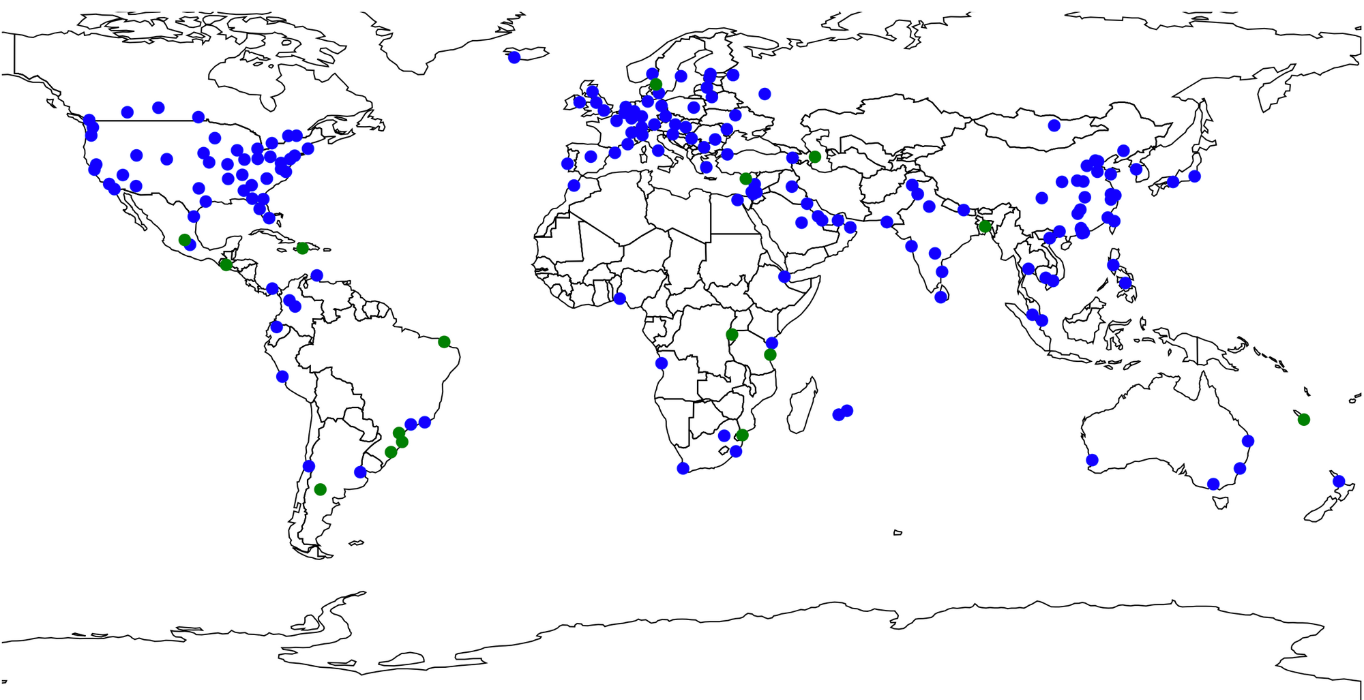
That’s what happened to me just a few short weeks ago when I joined Cloudflare. The task: to create a light-up version of our Data Center map – we’re talking more than a hundred LEDs tied to the deployment state of each and every Cloudflare data center. This map will be a part of our booths, so it has to be able to travel; meaning we have to consider physical shipping and the ability to update the data when the map is away from the office. And the fun part – we are debuting it at SF Developer Week in late February (I even get to give a talk about it!) That gave me one week of software time in our San Francisco office, and a little over two and a half in the Austin office with the physical materials.
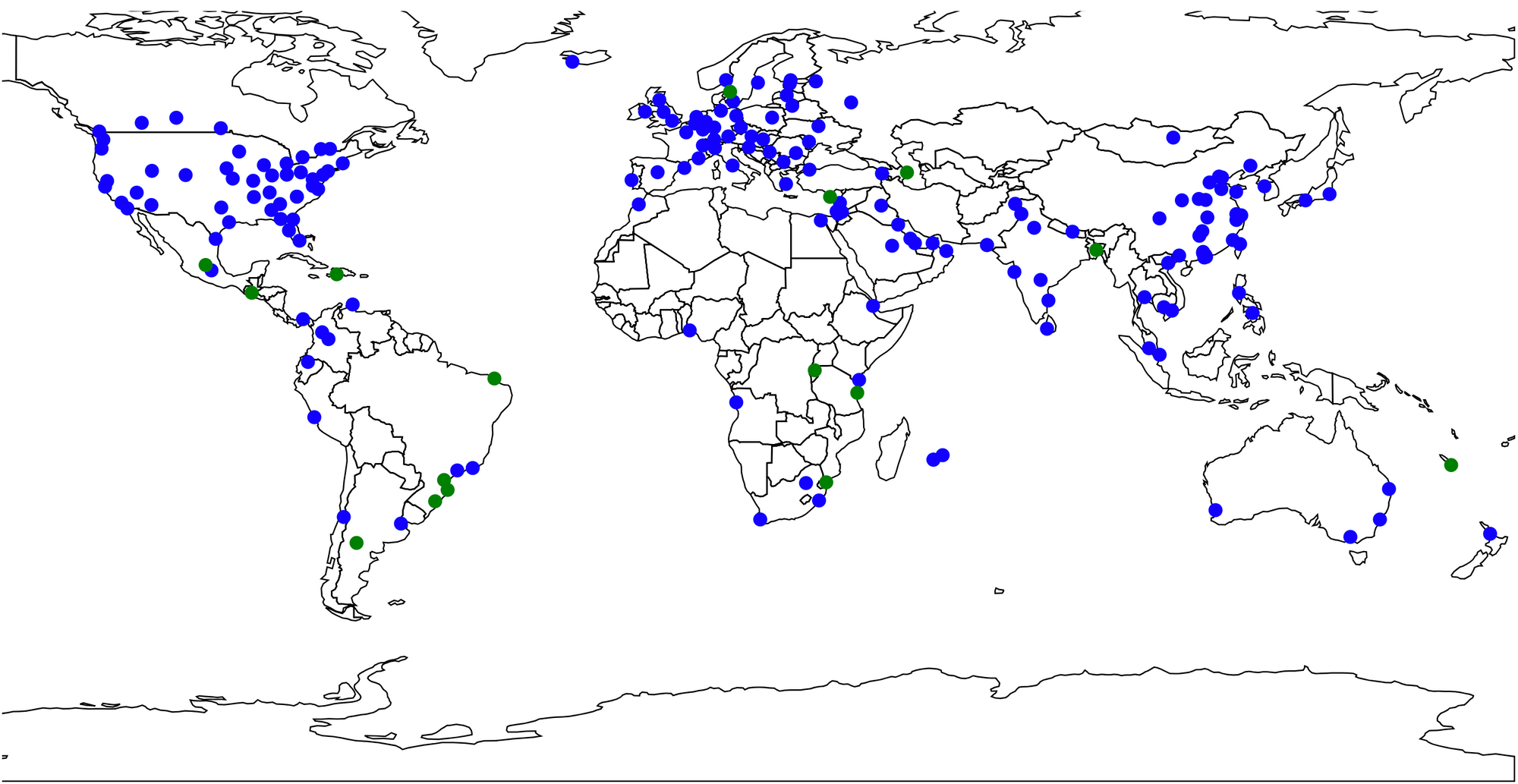
So what does this have to do with Serverless? Well, let’s think about where and how this map will need to operate: This will be going to Continue reading