Weekly Wrap Podcast: Nutanix Trumps VMware
 Sept. 28, 2018 — CenturyLink takes SD-WAN global; Vodafone and China Mobile tap ONAP; and more.

Sept. 28, 2018 — CenturyLink takes SD-WAN global; Vodafone and China Mobile tap ONAP; and more.
Our customers are accustomed to us launching new services, features, and functionality at a feverish pace, but recently, we’ve been especially active. This week we celebrated our 8th Birthday Week by announcing new offerings that benefit our customers and the global Internet community. Our mission is to help build a better Internet, and we’re convinced that launching new capabilities that benefit not only our customers, but also the broader Internet overall, is the best way to fulfill our mission.
As an organization, we could choose to celebrate Cloudflare’s birthday in lots of different ways (a press release, a company party, or fun gifts for all our employees). But at Cloudflare, we have a unique birthday tradition: we roll up our sleeves and give our customers and the Internet community a new capability (i.e. a gift) every day of our birthday week.
Some of this past week’s launches have been entirely new offerings, like providing key-value storage across Cloudflare’s global cloud network with Cloudflare Workers KV. Other birthday week launches help improve the overall Internet ecosystem: the Bandwidth Alliance reduces data transfer charges from major cloud hosts and Cloudflare Registrar Continue reading
In this Short Take, Russ shares some of the recent innovations around BGP peering and route exchange coming out of the standards bodies.


The post Short Take – BGP Peering Updates appeared first on Network Collective.
 The operator’s upcoming fixed 5G wireless service launch will likely face some significant challenges in terms of coverage, return on investment, and scalability.
 Good integrated CI/CD and an orchestrator like Kubernetes could negate the need for MANO.
 Vasona Networks gets purchased by ZephyrTel; Kubernetes releases its newest version; and news out of Microsoft Ignite.
 Sprint's Aaron Hinkle also weighed in on SDN: “When you move to the edge you have to be able to do a full SDN deployment.”
Today's Weekly Show is a roundtable discussion with network engineers on dealing with a lack of carrier diversity, equipment refresh cycles for the 100GbE data center, and more nerdy topics.
The post Weekly Show 409: The 100G Data Center And Other Roundtable Topics appeared first on Packet Pushers.
Hey, it's HighScalability time:

@danielbryantuk: "A LAMP stack is a good thing. Never inflict a distributed system on yourself unless you have too..." @mipsytipsy #CloudNativeLondon
Do you like this sort of Stuff? Please support me on Patreon and you'll get 100 free cloud credits in heaven. Know anyone looking for a simple book explaining the cloud? Then please recommend my well reviewed book: Explain the Cloud Like I'm 10. They'll love it and you'll be their hero forever.
As the topic of hacking back continues to resurface among elected officials, those of us in the cybersecurity community are scratching our heads over why this concept refuses to die. After digging deeper, one can see that there are many misperceptions regarding what the terms “hacking back” and “active cyber defense” (ACD) actually mean. General frustration and misinformation are driving the interest, but the mixing of Continue reading
 Since starting my journey using Ansible in 2013, I've built Ansible Playbooks to automate many things: SaaS products, a cluster of Raspberry Pi's, a home automation system, even my own computers!
In the years since, I've learned a lot of tricks to help ease the maintenance burden for my work. It's important to me to have maintainable projects, because many of my projects—like Hosted Apache Solr—have been in operation for over a decade! If it's hard to maintain the project or it's hard to make major architecture changes, then I can lose customers to more nimble competitors, I can lose money, and—most importantly—I can lose my sanity!
I'm presenting a session at AnsibleFest Austin this year, Make your Ansible Playbooks flexible, maintainable, and scalable, and I thought I'd summarize some of the major themes here.

I love photography and automation, and so I spend a lot of time building electronics projects that involve Raspberry Pis and cameras. Without the organization system I use (part of it pictured above), it would be very frustrating putting together the right components for my project.
Similarly, in Ansible, I like to have my tasks organized so I can compose them more Continue reading

How are you supposed to handle outages? What happens when everything around you goes upside down in an instant? How much communication is “too much”? Or “not enough”? And is all of this written down now instead of being figured out when the world is on fire?
You might have noticed this week that Webex Teams spent most of the week down. Hard. Well, you might have noticed if you used Microsoft Teams, Slack, or any other messaging service that wasn’t offline. Webex Teams went offline about 8:00pm EDT Monday night. At first, most people just thought it was a momentary outage and things would be back up. However, as the hours wore on and Cisco started updating the incident page with more info it soon became apparent that Teams was not coming back soon. In fact, it took until Thursday for most of the functions to be restored from whatever knocked them offline.
What happened? Well, most companies don’t like to admit what exactly went wrong. For every CloudFlare or provider that has full disclosures on their site of outages, there are many more companies that will eventually release a statement with the least amount of technical Continue reading
A group of countries will likely try to resurrect old battles on international control of Internet in the coming months, during upcoming meetings related to Internet Governance, some experts say.
The effort to relitigate unresolved debates on government control over the Internet will likely come up during the International Telecommunication Union’s Plenipotentiary Conference starting Oct. 29 in Dubai, said Robert Morgus, senior policy director focused on cybersecurity at U.S. think tank New America.
Morgus expects Russia, China, and other countries to renew their push for new internationally sanctioned controls over the Internet during the ITU meeting, he said Thursday at an Internet governance discussion hosted by New America and co-sponsored by the Internet Society’s Washington Chapter.
While the ITU has traditionally stayed away from Internet policy decisions, the group of authoritarian countries will likely push for a new World Conference on International Telecommunications (WCIT) meeting, Morgus said, where Internet control and governance issues have been hot topics.
The last WCIT meeting, in December 2012, ended with the United States, the U.K., Japan, and a handful of other countries declining to sign an agreement supported by 89 nations that called for international cooperation in fighting security problems Continue reading
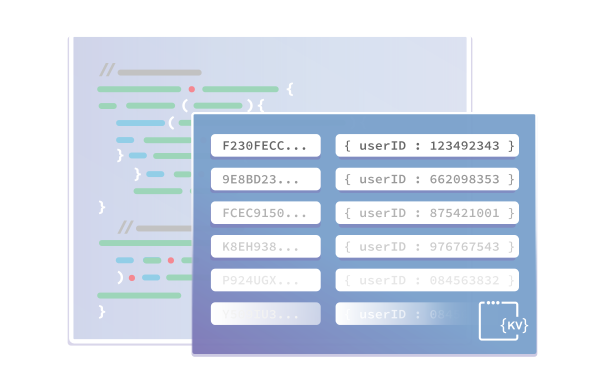
Your Workers now have access to a low-latency key-value data store which lives inside our network all around the world!
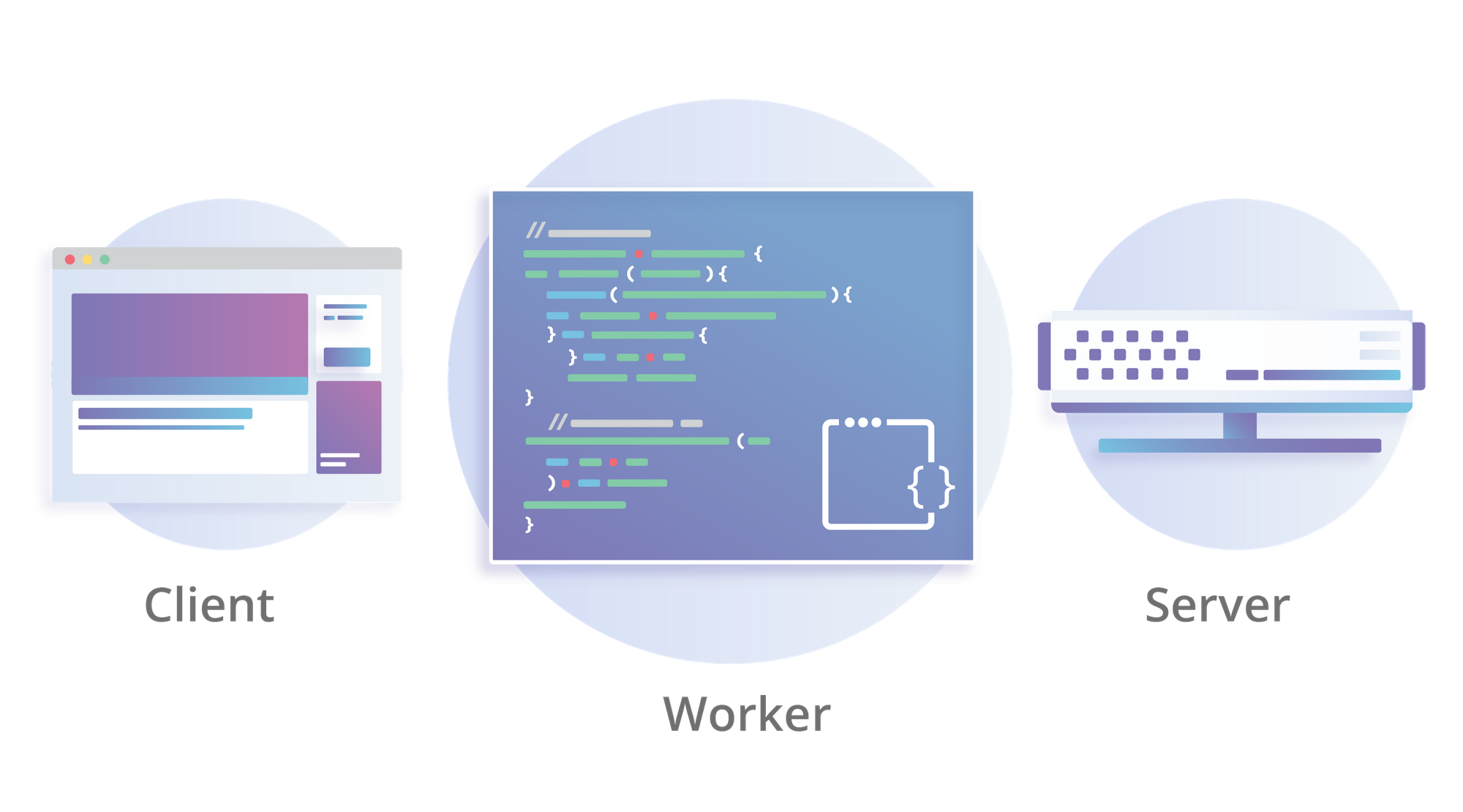
For those who don’t know, Cloudflare Workers is a new type of compute platform, built on top of our global network of 152+ data centers around the world. It allows you to write serverless code which runs in the fabric of the Internet itself, allowing you to engage with your users faster than other platforms can even get a packet to where your code is running. It’s built on a new architecture which eliminates cold starts and dramatically reduces the memory overhead of keeping your code running when compared to a platform like Amazon Lambda.
As powerful as this is, compute is just one component of what you need to build an application, you also need the ability to store data. We evaluated many of the available open source data stores on the market, but ultimately nothing was designed for a world with quite as many distributed nodes as our network. Instead, we have begun releasing our own vision for distributed storage, beginning today.
The Workers KV is a highly distributed, eventually-consistent, key value store. It will allow you to Continue reading

In 1864 British computer pioneer Charles Babbage described the first key-value store. It was meant to be part of his Analytical Engine. Sadly, the Analytical Engine, which would have been the first programmable computer, was never built. But Babbage lays out clearly the design for his key-value store in his autobiography. He imagined a read-only store implemented as punched cards. He referred to these as Tables:
I explained that the Tables to be used must, of course, be computed and punched on cards by the machine, in which case they would undoubtedly be correct. I then added that when the machine wanted a tabular number, say the logarithm of a given number, that it would ring a bell and then stop itself. On this, the attendant would look at a certain part of the machine, and find that it wanted the logarithm of a given number, say of 2303. The attendant would then go to the drawer containing the pasteboard cards representing its table of logarithms. From amongst these he would take the required logarithmic card, and place it in the machine.

Punched card illustration from Babbage’s autobiography showing an integer key (2303) and value representing the decimal part of Continue reading
The AWS cloud provider for Kubernetes enables a couple of key integration points for Kubernetes running on AWS; namely, dynamic provisioning of Elastic Block Store (EBS) volumes and dynamic provisioning/configuration of Elastic Load Balancers (ELBs) for exposing Kubernetes Service objects. Unfortunately, the documentation surrounding how to set up the AWS cloud provider with Kubernetes is woefully inadequate. This article is an attempt to help address that shortcoming.
More details are provided below, but at a high-level here’s what you’ll need to make the AWS cloud provider in Kubernetes work:
Let’s dig into these requirements in a bit more detail.
It’s important that the name of the Node object in Kubernetes matches the private DNS entry for the instance in EC2. You can use hostnamectl or a confiugration management tool (take your pick) to set the instance’s hostname to the FQDN that matches the EC2 Continue reading
As user demand for Wi-Fi connectivity grows, organizations need to get creative when it comes to where they deploy their access points.
At DockerCon Copenhagen we launched the Docker Pals program in order to connect attendees and help them make the most out of their trip to DockerCon. Attending a conference by yourself can be intimidating and we don’t want anyone to feel that way at DockerCon! Pals get matched with a few others who are new (the “Pals”), and someone who knows their way around (the “Guide”) so that you will know someone before you arrive at the conference. So, DockerCon veterans, please consider signing up to be a Guide and help welcome those newer to DockerCon to the amazing Docker community. Participating gives you the opportunity to learn even more, grow an even bigger network, and have even more fun!
“Docker Pals was an excellent opportunity to meet new Docker Captains and Community Leaders who are open to engaging with container enthusiasts of all skill levels, specialities and backgrounds. I would certainly take advantage of the program again, and volunteer to be a Guide next year.” – Jackie Liu
“I was able to learn and understand how Docker is used in real time and in production with my fellow Docker Pal.” – Continue reading
Columnstore and B+ tree – are hybrid physical designs important? Dziedzic et al., SIGMOD’18
Earlier this week we looked at the design of column stores and their advantages for analytic workloads. What should you do though if you have a mixed workload including transaction processing, decision support, and operational analytics? Microsoft SQL Server supports hybrid physical design combining both column store and B+ tree indexes in the same database.
It is generally understood that columnstores are crucial to achieving high performance for analytic queries and that B+ tree indexes are key to supporting transactional workloads efficiently. However, it is not well understood whether hybrid physical designs – both columnstore and B+ tree indices on the same database and potentially the same table – are important for any of the above workloads.
Through a series of benchmarks the authors show that hybrid physical designs can result in more than an order of magnitude lower execution costs for many workloads when compared to alternatives using B+ tree-only or columnstore-only. The Database Engine Tuning Advisor (DTA) for SQL Server is extended to analyze and recommend the appropriate indices for a given workload. Support for columnstore indices and the new DTA functionality was Continue reading

