KU052: Wasm is Not Here to Take Your Containers
Is WebAssembly (Wasm) here to replace containers? Not really, says guest Matt Butcher. Instead, Wasm is here for a specific kind of workload: One that needs to start super fast (under a millisecond), handle something, and then shutdown. Containers are still best for running very long, I/O intensive multithreaded workloads. Matt, Michael, and Kristina discuss... Read more »SASE Architecture: A Checklist for SASE-savvy Businesses
SASE can provide secure and efficient access to cloud-based services and resources for users, regardless of their location. Follow this checklist to attain this goal.Fulton County Schools: 4 Key Tactics for Building Platform Integration and Driving Departmental Collaboration
When undertaking a major technology project, nothing — not the most state-of-the-art technology, intelligent consultants, or newest strategies — matters as much as the people on your organization’s implementation team.Hedge 219: Are We There Yet?

We’ve been talking about many of the same things in networking since the late 1980s–autonomous, self-driving, autonomic, etc.–and yet … those things all still seem like some sort of Jetson’s cartoon episode. Why aren’t we there yet? Are these even the right goals?
BGP Labs: Advertise the Default Route
If you’re an Internet Service Provider running BGP with your customers, you might not want to send them the whole Internet routing table. Sending the regional prefixes and the default route is usually good enough.
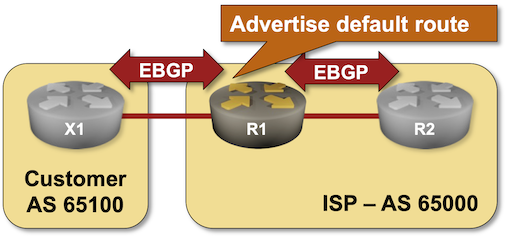
BGP Labs: Advertise the Default Route
If you’re an Internet Service Provider running BGP with your customers, you might not want to send them the whole Internet routing table. Sending the regional prefixes and the default route is usually good enough.
1000BASE-T Part 1 – Introduction
How does Ethernet detect that a link goes down? This, what I thought was a simple question, I asked myself a couple of weeks ago. I realized I didn’t have a very good answer. I realized I had more to learn about Ethernet and the physical layer and so does pretty much the entire networking industry. Through the graceful help of Peter Jones at Cisco, I got in touch with George Zimmerman, an independent professional with a PhD in electrical engineering, a history of teaching at Caltech, and that works within the IEEE on different standards. To answer my initial question, we first need to understand more about Ethernet, and especially the physical layer. As every version of Ethernet has slightly different PHY, I will be covering 1000BASE-T. This will be covered in a series of posts, this being the first.
Going back to the OSI model, most roles in networking puts the focus on layers two to four:
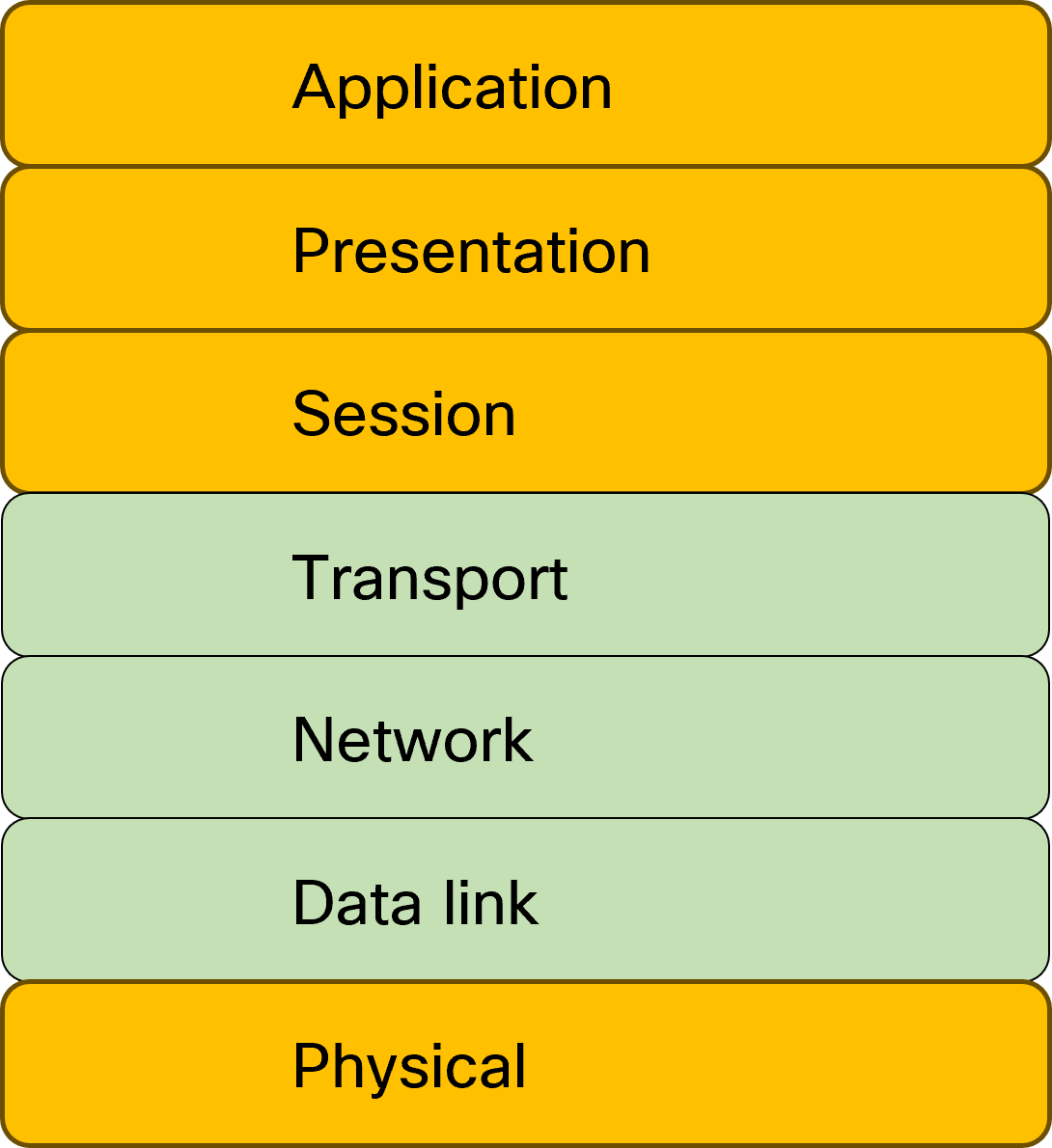
This is natural as most of our work relates to these layers.
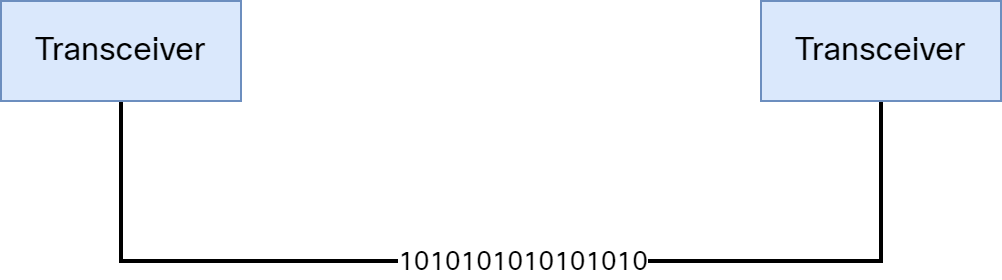
When we think of two hosts communicating, we imagine that the transceivers connect to each other and that there are ones and zeroes traveling across the cable:
Fiber to the Home (FTTH): The Great Wait Continues
Fiber to the Home (FTTH) delivers high-speed Internet connectivity directly to residences and businesses. Its rollout, however, has been something less than breathtaking.D2C238: Tech Hiring is Borked
Life isn’t easy for someone looking for a job in tech. There are lots of content mills pushing the idea that if you just pass this one six-month course, you’ll have a six-figure career in no time. There are lots of hiring companies who make job applicants jump through a ton of hoops, but often... Read more »On the ‘net: Networking Models
I’m writing a series on network models over at Packet Pushers; links to the first three are below.
Four Ways Your Network Team Can Help You Defeat Ransomware
Network teams can complement security teams by preventing ransomware from entering the enterprise and, should it enter, stopping it from propagating across the network.FRRouting Claims IBGP Loopbacks Are Inaccessible
Last week, I explained the differences between FRRouting and more traditional networking operating systems in scenarios where OSPF and IBGP advertise the same prefix:
- Traditional networking operating systems enter only the OSPF route into the IP routing table.
- FRRouting enters OSPF and IBGP routes into the IP routing table.
- On all platforms I’ve tested, only the OSPF route gets into the forwarding table1.
One could conclude that it’s perfectly safe to advertise the same prefixes in OSPF and IBGP. The OSPF routes will be used within the autonomous system, and the IBGP routes will be propagated over EBGP to adjacent networks. Well, one would be surprised 🤦♂️
FRRouting Claims IBGP Loopbacks Are Inaccessible
Last week, I explained the differences between FRRouting and more traditional networking operating systems in scenarios where OSPF and IBGP advertise the same prefix:
- Traditional networking operating systems enter only the OSPF route into the IP routing table.
- FRRouting enters OSPF and IBGP routes into the IP routing table.
- On all platforms I’ve tested, only the OSPF route gets into the forwarding table1.
One could conclude that it’s perfectly safe to advertise the same prefixes in OSPF and IBGP. The OSPF routes will be used within the autonomous system, and the IBGP routes will be propagated over EBGP to adjacent networks. Well, one would be surprised 🤦♂️
Getting Started With Juniper PyEZ Library

In this blog post, we're diving into how to use the PyEZ Python library to interact with Juniper devices. I'll be working with a Juniper vMX device as our example, but PyEZ can work with any other Junos-based device. So, whether you have a vMX, an SRX, or any other Junos device, you'll find this guide helpful.
What we will cover?
- What is Juniper PyEZ?
- Why do we need PyEZ?
- Prerequisites
- Getting facts from Juniper vMX
- Getting Interface Stats and Errors
- A few things to note
- Closing thoughts
What is Juniper PyEZ?
Junos PyEZ is a microframework for Python that enables you to manage and automate Junos devices. Junos PyEZ is designed to provide the capabilities that we would typically get from the CLI.
You can use Junos PyEZ to retrieve facts or operational information from a device, execute remote procedure calls (RPC) available through the Junos XML API and even install or upgrade the Junos software. But for the sake of this example, we will retrieve the facts from the vMX and then retrieve some interface statistics.
But, Why Do I need PyEZ?
If you're wondering why we need PyEZ, here's a straightforward reason from my experience. I often Continue reading
Recap: KubeCon + CloudNativeCon EU + CalicoCon 2024
Last week we had the pleasure of attending KubeCon + CloudNativeCon EU in Paris, France. It was a fantastic event where we once again had the opportunity to engage in meaningful conversations about Kubernetes, container security, and the latest developments in the open source ecosystem. We also hosted CalicoCon 2024, a co-located event, to talk about our favorite subject: Calico! Let’s take a look at some of the highlights from the conference.
CalicoCon 2024
A large group of KubeCon attendees joined us on March 19th for a full-day event to explore the trends, strategies, and technologies making waves in the Kubernetes networking, security, and observability world. The day included a keynote on Project Calico’s past, present, and future, plus multiple presentations and workshops delivered by Calico engineers that provided a deep dive into topics such as eBPF, Windows HNS, multi-cluster mesh, best practices for network policies, scale, performance, encryption, and compliance.
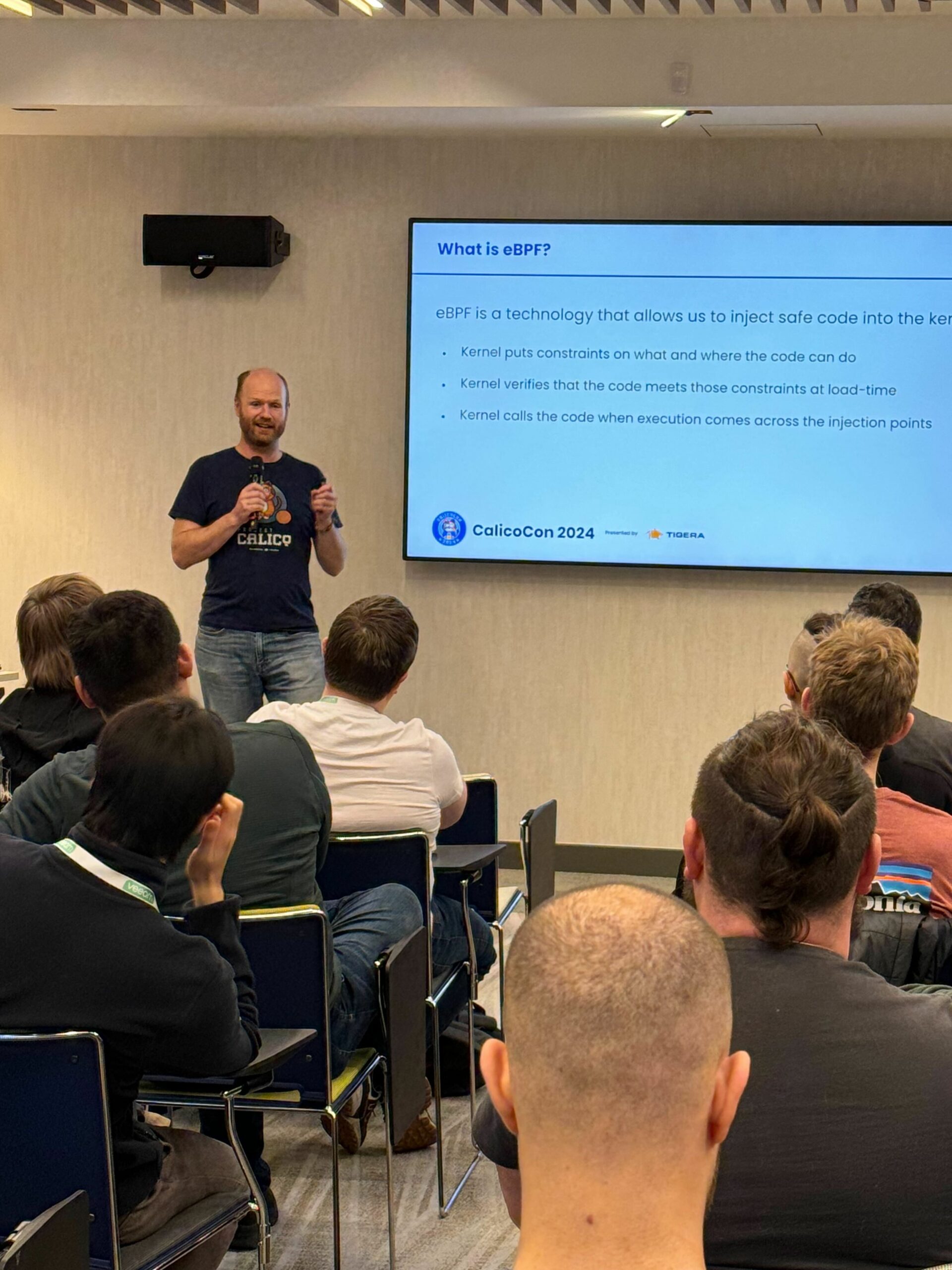
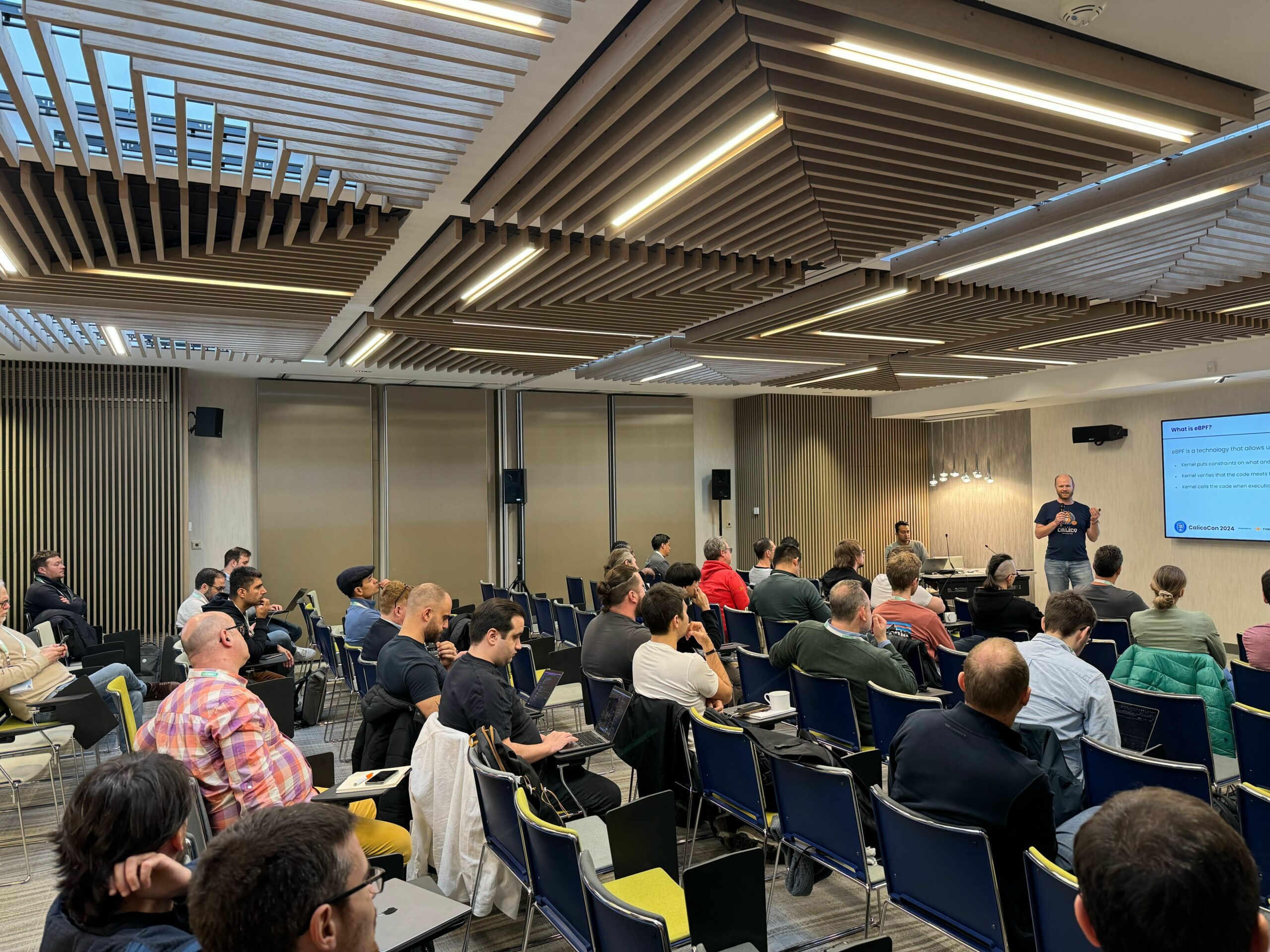
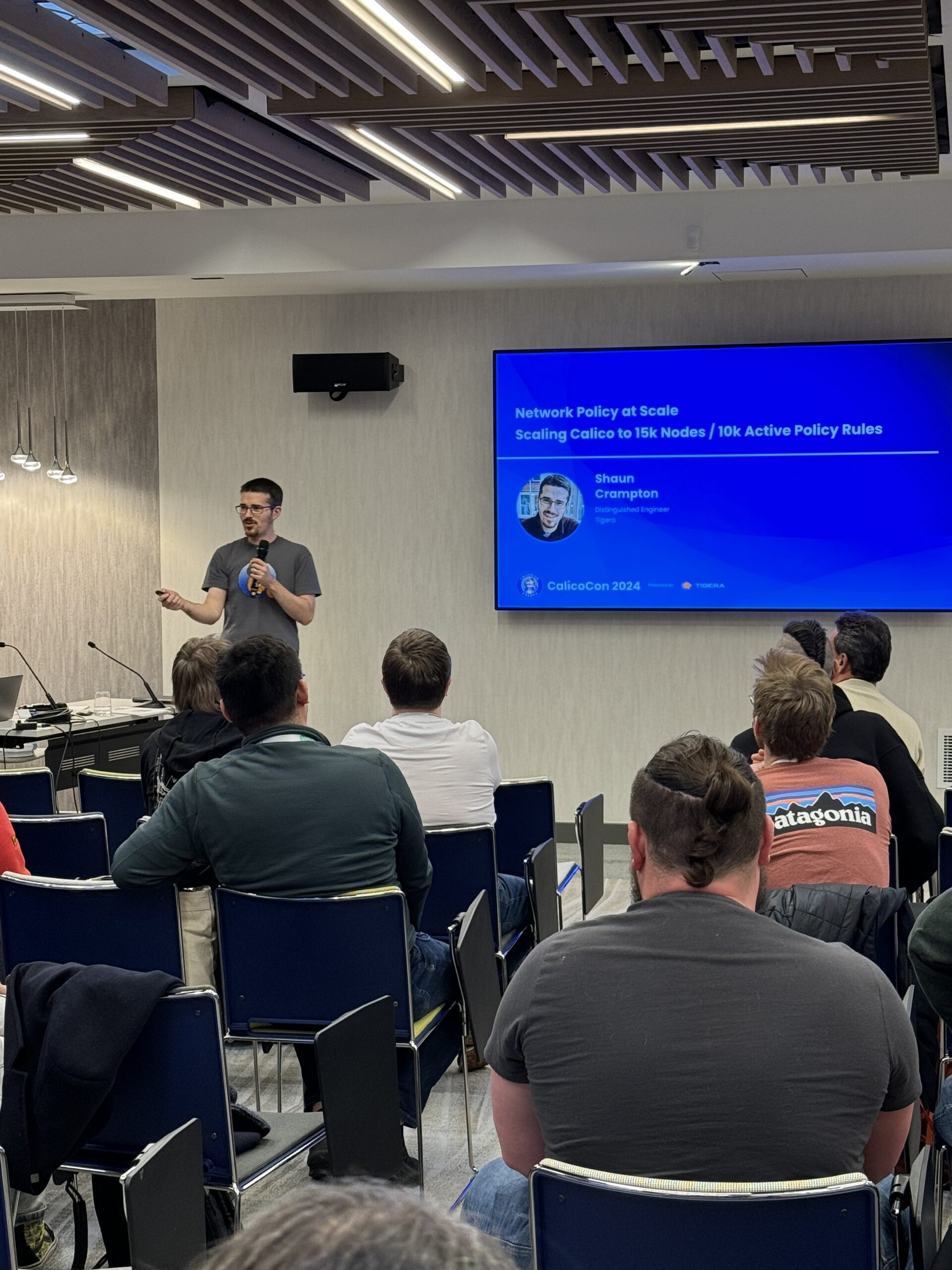
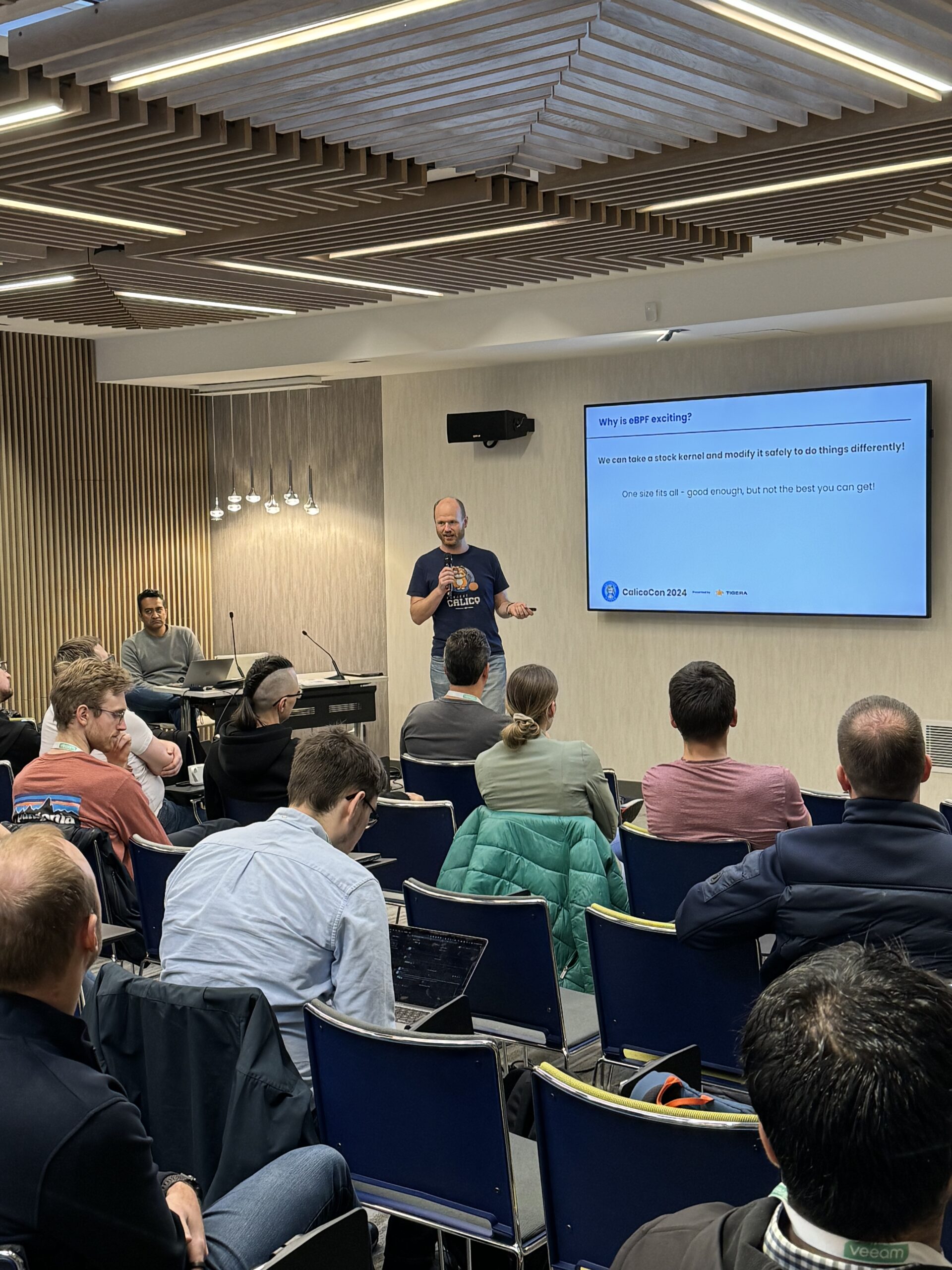
A good time was had by all in attendance, and two lucky winners of our raffles each took home a pair of AirPods! The day ended with happy hour and networking, where attendees had a chance to meet other Calico users as well as the engineers and leadership Continue reading
Packet Protector: IPv6 Security Essentials
Welcome to a crossover episode with the Packet Protector podcast! You’re already running IPv6, even if you don’t know it yet. Your remote users are using it at their homes, your printers come with it built into the kernel, your generals are using it on their mobile phones (check out our news headlines section). So... Read more »PP007: IPv6 Security Essentials
You’re already running IPv6, even if you don’t know it yet. Your remote users are using it at their homes, your printers come with it built into the kernel, your generals are using it on their mobile phones (check out our news headlines section). So let’s stop trying to disable it whack-a-mole style, and start... Read more »OSI Layers in Routing Protocols
Now and then, someone rediscovers that IS-IS does not run on top of CLNP or IP and claims that, therefore, it must be a layer-2 protocol. Even vendors’ documentation is not immune.
Interestingly, most routing protocols span the whole seven layers of the OSI stack, with some layers implemented internally and others offloaded to other standardized protocols.