Defining AI’s Role in Network Management
AI isn't going to put human network managers out of work. It will, however, help managers become more insightful and efficient.The Once And Future FPGA Maker Altera
Back in 2015, when we were launching The Next Platform, a lot of stuff was going on all at the same time, which is part of the zeitgeist that we were tapping into and that we wanted to chronical upon and participate within. …
The Once And Future FPGA Maker Altera was written by Timothy Prickett Morgan at The Next Platform.
polyfill.io now available on cdnjs: reduce your supply chain risk

Polyfill.io is a popular JavaScript library that nullifies differences across old browser versions. These differences often take up substantial development time.
It does this by adding support for modern functions (via polyfilling), ultimately letting developers work against a uniform environment simplifying development. The tool is historically loaded by linking to the endpoint provided under the domain polyfill.io.
In the interest of providing developers with additional options to use polyfill, today we are launching an alternative endpoint under cdnjs. You can replace links to polyfill.io “as is” with our new endpoint. You will then rely on the same service and reputation that cdnjs has built over the years for your polyfill needs.
Our interest in creating an alternative endpoint was also sparked by some concerns raised by the community, and main contributors, following the transition of the domain polyfill.io to a new provider (Funnull).
The concerns are that any website embedding a link to the original polyfill.io domain, will now be relying on Funnull to maintain and secure the underlying project to avoid the risk of a supply chain attack. Such an attack would occur if the underlying third party is compromised or Continue reading
Zaraz launches new pricing
In July, 2023, we announced that Zaraz was transitioning out of beta and becoming available to all Cloudflare users. Zaraz helps users manage and optimize the ever-growing number of third-party tools on their websites — analytics, marketing pixels, chatbots, and more — without compromising on speed, privacy, or security. Soon after the announcement went online, we received feedback from users who were concerned about the new pricing system. We discovered that in some scenarios the proposed pricing could cause high charges, which was not the intention, and so we promised to look into it. Since then, we have iterated over different pricing options, talked with customers of different sizes, and finally reached a new pricing system that we believe is affordable, predictable, and simple. The new pricing for Zaraz will take effect on April 15, 2024, and is described below.
Introducing Zaraz Events
One of the biggest changes we made was changing the metric we used for pricing Zaraz. One Zaraz Event is an event you’re sending to Zaraz, whether that’s a pageview, a zaraz.track event, or similar. You can easily see the total number of Zaraz Events you’re currently using under the Monitoring section in the Cloudflare Zaraz Continue reading
Remediating new DNSSEC resource exhaustion vulnerabilities

Cloudflare has been part of a multivendor, industry-wide effort to mitigate two critical DNSSEC vulnerabilities. These vulnerabilities exposed significant risks to critical infrastructures that provide DNS resolution services. Cloudflare provides DNS resolution for anyone to use for free with our public resolver 1.1.1.1 service. Mitigations for Cloudflare’s public resolver 1.1.1.1 service were applied before these vulnerabilities were disclosed publicly. Internal resolvers using unbound (open source software) were upgraded promptly after a new software version fixing these vulnerabilities was released.
All Cloudflare DNS infrastructure was protected from both of these vulnerabilities before they were disclosed and is safe today. These vulnerabilities do not affect our Authoritative DNS or DNS firewall products.
All major DNS software vendors have released new versions of their software. All other major DNS resolver providers have also applied appropriate mitigations. Please update your DNS resolver software immediately, if you haven’t done so already.
Background
Domain name system (DNS) security extensions, commonly known as DNSSEC, are extensions to the DNS protocol that add authentication and integrity capabilities. DNSSEC uses cryptographic keys and signatures that allow DNS responses to be validated as authentic. DNSSEC protocol specifications have certain requirements that prioritize availability at Continue reading
A Different View From The Edge
Sponsored Feature: With technology, as with real estate, location is everything. …
A Different View From The Edge was written by Joseph Martins at The Next Platform.
How to Export Large Traffic Logs from Palo Alto Firewall?

Recently, I faced a unique challenge, I needed to export a massive amount of traffic logs from a Palo Alto Firewall for analysis. Initially, I thought it would be straightforward, log into the GUI, apply the necessary traffic log filter, and export the logs as a CSV file. Easy peasy, right? Well, not exactly. I quickly ran into a roadblock that made me rethink my approach.
In this blog post, I'll share the hurdles I encountered and how I managed to find a workaround to export the logs and analyze them using Python Pandas.
The Problem
By default, Palo Alto only exports 65535 rows in the CSV file, which is not nearly enough. If you have a large network, that amount might only cover a few minutes of logs. Even if you change the value, the maximum it can support is 1048576, which might cover maybe an hour's worth of logs. But for my use case, I needed at least a month of logs. I couldn't get what I wanted from the built-in report options, so I was scratching my head. I then tried to export the logs via SCP on the CLI, but again encountered the same maximum row Continue reading
BGP Labs: Policy Templates
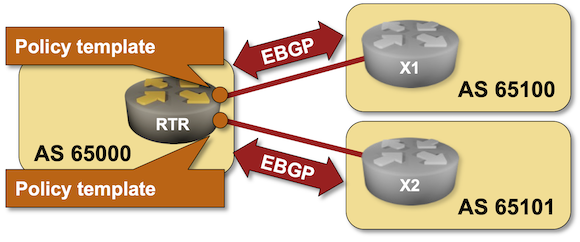
One of the previous BGP labs explained how you can use session templates to configure common TCP or BGP session parameters. Some BGP implementations have another templating mechanism: policy templates that you can use to apply consistent routing policy parameters to an EBGP neighbor. You can practice them in the next BGP lab exercise.
BGP Labs: Policy Templates
One of the previous BGP labs explained how you can use session templates to configure common TCP or BGP session parameters. Some BGP implementations have another templating mechanism: policy templates that you can use to apply consistent routing policy parameters to an EBGP neighbor. You can practice them in the next BGP lab exercise.
A Perfect Cyber Storm is Leading to Burnout
Meeting the cybersecurity demands of modern enterprises is incredibly stressful, causing burnout and leading many to contemplate leaving the field. Here’s how to address the problem.Unlocking new use cases with 17 new models in Workers AI, including new LLMs, image generation models, and more

On February 6th, 2024 we announced eight new models that we added to our catalog for text generation, classification, and code generation use cases. Today, we’re back with seventeen (17!) more models, focused on enabling new types of tasks and use cases with Workers AI. Our catalog is now nearing almost 40 models, so we also decided to introduce a revamp of our developer documentation that enables users to easily search and discover new models.
The new models are listed below, and the full Workers AI catalog can be found on our new developer documentation.
Text generation
- @cf/deepseek-ai/deepseek-math-7b-instruct
- @cf/openchat/openchat-3.5-0106
- @cf/microsoft/phi-2
- @cf/tinyllama/tinyllama-1.1b-chat-v1.0
- @cf/thebloke/discolm-german-7b-v1-awq
- @cf/qwen/qwen1.5-0.5b-chat
- @cf/qwen/qwen1.5-1.8b-chat
- @cf/qwen/qwen1.5-7b-chat-awq
- @cf/qwen/qwen1.5-14b-chat-awq
- @cf/tiiuae/falcon-7b-instruct
- @cf/defog/sqlcoder-7b-2
Summarization
- @cf/facebook/bart-large-cnn
Text-to-image
- @cf/lykon/dreamshaper-8-lcm
- @cf/runwayml/stable-diffusion-v1-5-inpainting
- @cf/runwayml/stable-diffusion-v1-5-img2img
- @cf/bytedance/stable-diffusion-xl-lightning
Image-to-text
- @cf/unum/uform-gen2-qwen-500m
New language models, fine-tunes, and quantizations
Today’s catalog update includes a number of new language models so that developers can pick and choose the best LLMs for their use cases. Although most LLMs can be generalized to work in any instance, there are many benefits to choosing models that are tailored for a specific use case. We are excited to bring you some new large language models (LLMs), small language models (SLMs), Continue reading
SambaNova Pits LLM Collective Against Monolithic AI Models
There is more than one way to get to a large language model with over 1 trillion parameters that can do lots of different things and enterprises can use to create AI training and inference infrastructure to extend and enrich their thousands of applications. …
SambaNova Pits LLM Collective Against Monolithic AI Models was written by Timothy Prickett Morgan at The Next Platform.
Another Ethernet VPN (EVPN) Introduction
Ethernet VPN (EVPN) Introduction
Instead of being a protocol, EVPN is a solution that utilizes the Multi-Protocol Border Gateway Protocol (MP-BGP) for its control plane in an overlay network. Besides, EVPN employs Virtual extensible Local Area Network (VXLAN) encapsulation for the data plane of the overlay network.
EVPN Control Plane: MP-BGP AFI: L2VPN, SAFI: EVPN
Multi-Protocol BGP (MP-BGP) is an extension of BGP-4 that allows BGP speakers to encode Network Layer Reachability Information (NLRI) of various address types, including IPv4/6, VPNv4, and MAC addresses, into BGP Update messages.
The MP_REACH_NLRI path attribute (PA) carried within MP-BGP update messages includes Address Family Identifier (AFI) and Subsequent Address Family Identifier (SAFI) attributes. The combination of AFI and SAFI determines the semantics of the carried Network Layer Reachability Information (NLRI). For example, AFI-25 (L2VPN) with SAFI-70 (EVPN) defines an MP-BGP-based L2VPN solution, which extends a broadcast domain in a multipoint manner over a routed IPv4 infrastructure using an Ethernet VPN (EVPN) solution.
BGP EVPN Route Types (BGP RT) carried in BGP update messages describe the advertised EVPN NLRIs (Network Layer Reachability Information) type. Besides publishing IP Prefix information with IP Prefix Route (EVPN RT 5), BGP EVPN uses MAC Advertisement Route Continue reading
D2C235: Building Modern Apps In GovCloud
Chances are, you’ve probably only heard of GovCloud because at the bottom of new feature releases from the Big 3 there’s usually an asterisk that says “not yet available in GovCloud.” So what is GovCloud? And why does it not get the newest shiny thing as fast as the rest of us? Chris Wahl has... Read more »Open sourcing Pingora: our Rust framework for building programmable network services

Today, we are proud to open source Pingora, the Rust framework we have been using to build services that power a significant portion of the traffic on Cloudflare. Pingora is released under the Apache License version 2.0.
As mentioned in our previous blog post, Pingora is a Rust async multithreaded framework that assists us in constructing HTTP proxy services. Since our last blog post, Pingora has handled nearly a quadrillion Internet requests across our global network.
We are open sourcing Pingora to help build a better and more secure Internet beyond our own infrastructure. We want to provide tools, ideas, and inspiration to our customers, users, and others to build their own Internet infrastructure using a memory safe framework. Having such a framework is especially crucial given the increasing awareness of the importance of memory safety across the industry and the US government. Under this common goal, we are collaborating with the Internet Security Research Group (ISRG) Prossimo project to help advance the adoption of Pingora in the Internet’s most critical infrastructure.
In our previous blog post, we discussed why and how we built Pingora. In this one, we will talk about why and how you might Continue reading
EVPN Terminology
Reading RFCs is a great source of information for understanding all the details of a protocol. Often they do require the reader to be quite technical and the terminology can be confusing if you aren’t used to the type of language and writing style used in RFCs. In this post, I go through some of the most important terminology in EVPN and VXLAN to help you build your understanding of the different forwarding constructs and how they interact.
The picture below shows some of the most important terminology in EVPN:
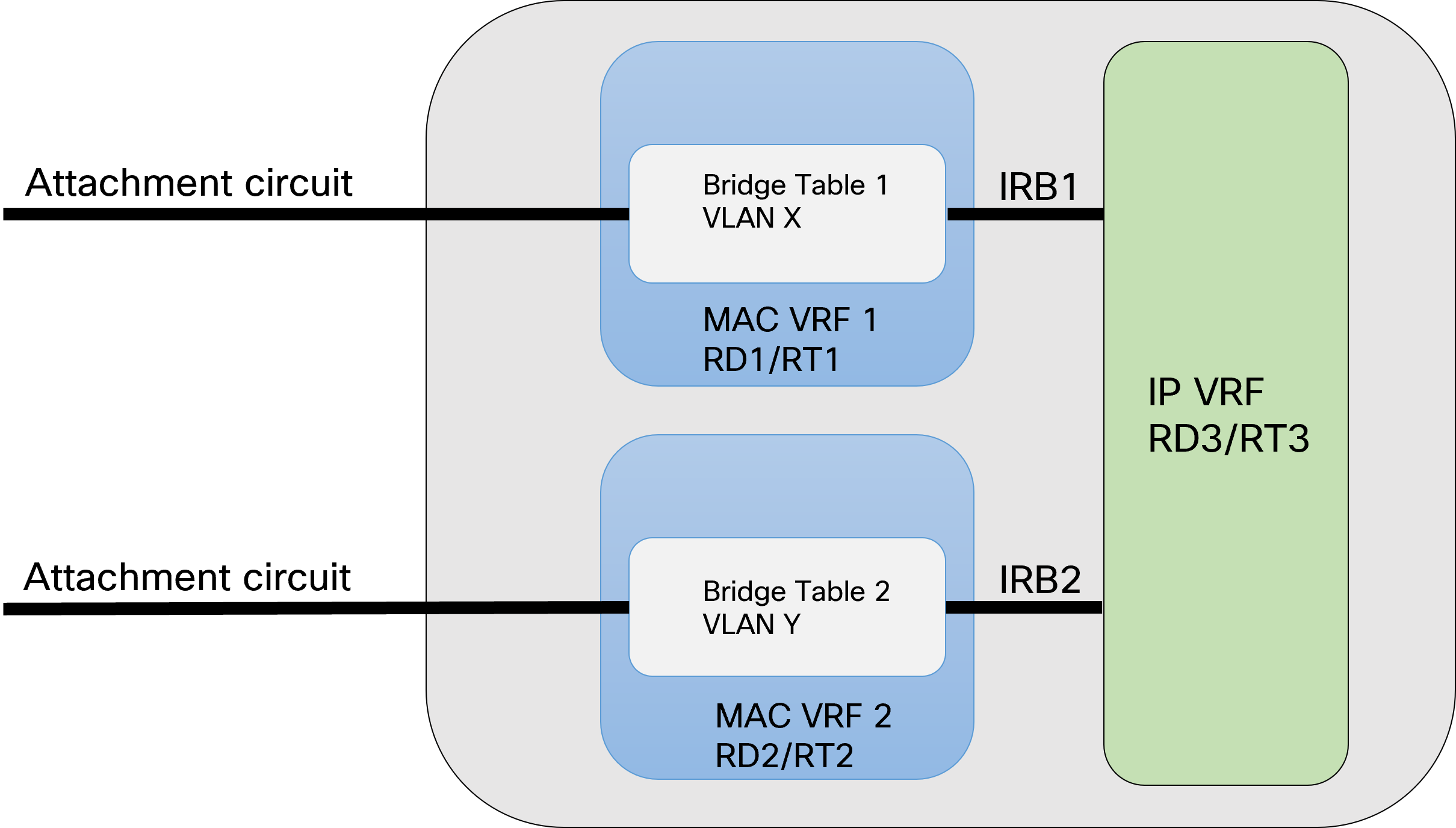
Let’s go through the terms used in the diagram and some additional ones:
- Attachment circuit – An interface that is associated with a bridge table. The AC that the packet arrived on is determined by examining the port, and optionally VLAN tag.
- Broadcast Domain – The Broadcast domain consists of all devices and hosts that would receive a broadcast frame when sent in that domain (assuming no ARP optimization features used). This is normally a VLAN, and it normally maps to one subnet. From a VXLAN perspective, it would be a L2 VNI. An EVI may contain one or more BDs depending on service model.
- Bridge Table – Bridge Table Continue reading
DHCP Relaying on a Linux Host
Markku Leiniö sent me an interesting observation after writing a series of DHCP-relaying-related blog posts:
I was first using VyOS, but it uses the ISC DHCP relay, and that software relays unicast packets. The DHCP procedures eventually worked fine, but getting sensible outputs and explanations was a nightmare.
I quickly reproduced the behavior, but it took me almost half a year to turn it into a blog post. Engaging in a round of yak shaving (I wanted to implement DHCP in netlab first) didn’t exactly help, either.
DHCP Relaying on a Linux Host
Markku Leiniö sent me an interesting observation after writing a series of DHCP-relaying-related blog posts:
I was first using VyOS, but it uses the ISC DHCP relay, and that software relays unicast packets. The DHCP procedures eventually worked fine, but getting sensible outputs and explanations was a nightmare.
I quickly reproduced the behavior, but it took me almost half a year to turn it into a blog post. Engaging in a round of yak shaving (I wanted to implement DHCP in netlab first) didn’t exactly help, either.
Open-source network simulation roundup 2024
I updated the status of the open-source network simulation and network emulation projects tracked in this blog. I found no new projects to add to my lists in 2023 or early 2024. I also did not have to delete any projects because they all seem to have an acceptable level of support in 2024.
Read the rest of this post for information about the latest open-source network simulator releases, as of the end of February, 2024.
Network Simulators
- cnet (No links; see below.)
- The development team is re-writing the cnet code base and the old version is no longer available to download. A new version will be released soon: in, or after, March 2024. I will update the links on my web site at that time.
- ns-3
- ns-3 continues to be a major, active project. The most recent release was ns-3.41 on February 9, 2024. The ns-3 source code is on GitLab. at
- OMNet++
- OMNeT++ also continues to be a major project that is actively maintained. Release 6.0.3 was made available on February 24, 2024. The OMNET++ source code is on GitHub.
- Shadow
- Shadow is actively maintained with many fixed and features added in 2023. The Continue reading