On the dangers of Intel’s frequency scaling
While I was writing the post comparing the new Qualcomm server chip, Centriq, to our current stock of Intel Skylake-based Xeons, I noticed a disturbing phenomena.
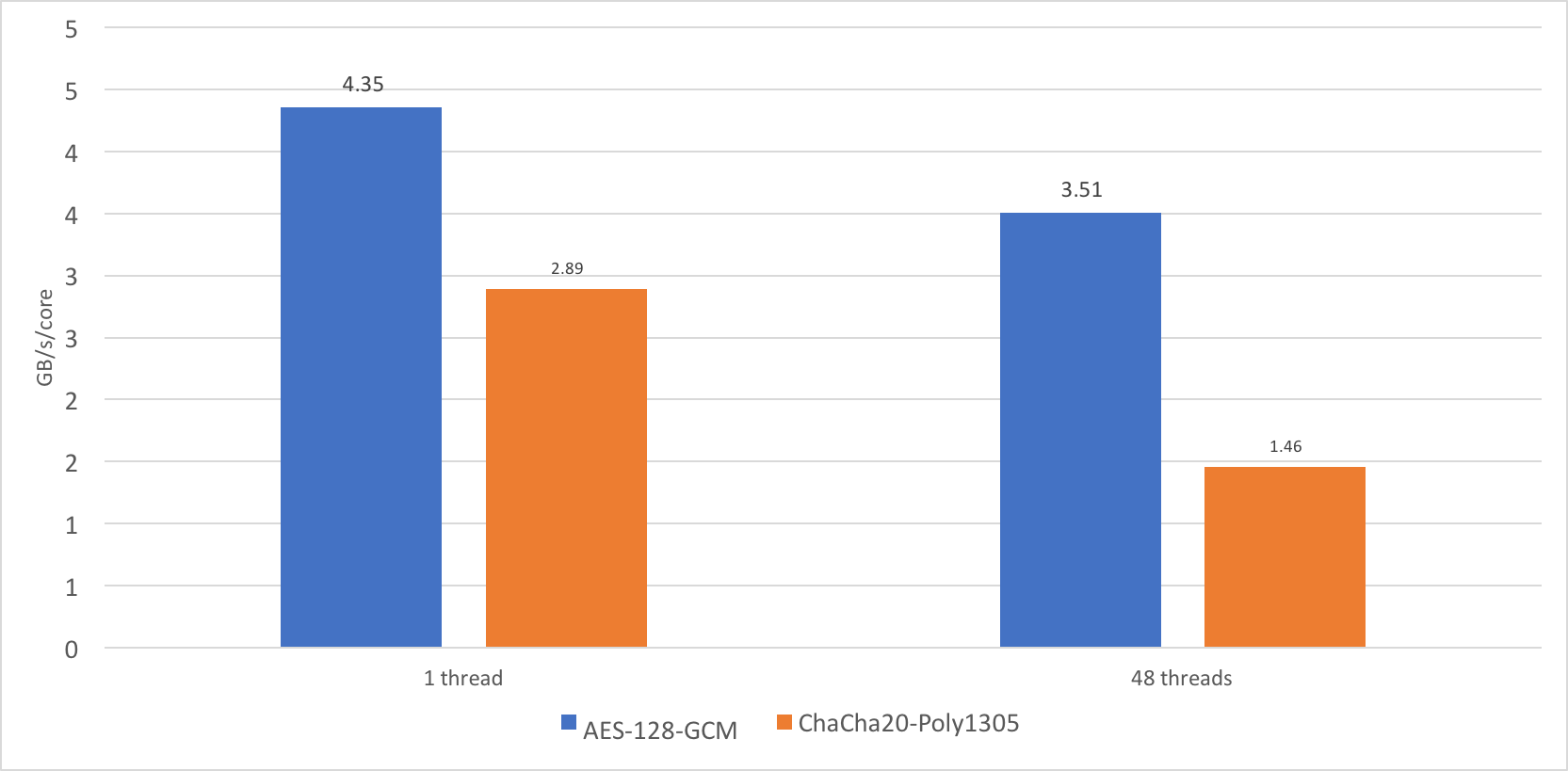
When benchmarking OpenSSL 1.1.1dev, I discovered that the performance of the cipher ChaCha20-Poly1305 does not scale very well. On a single thread, it performed at the speed of approximately 2.89GB/s, whereas on 24 cores, and 48 threads it performed at just over 35 GB/s.
 CC BY-SA 2.0 image by blumblaum
Now this is a very high number, but I would like to see something closer to 69GB/s. 35GB/s is just 1.46GB/s/core, or roughly 50% of the single core performance. AES-GCM scales much better, to 80% of single core performance, which is understandable, because the CPU can sustain higher frequency turbo on a single core, but not all cores.
Why is the scaling of ChaCha20-Poly1305 so poor? Meet AVX-512. AVX-512 is a new Intel instruction set that adds many new 512-bit wide SIMD instructions and promotes most of the existing ones to 512-bit. The problem with such wide instructions is that they consume power. A lot of power. Imagine a single instruction that does the work of 64 regular Continue reading

 By 2020 at least half of the integrated risk management products on the market will be SaaS.
 It added 6WIND’s vRouter to the NFV platform.
 New product targets include 5G pre-builds and IoT.
 Three new operators — BT, Telefonica, and Vodafone — joined the TIP board of directors.
 Customers often combine MPLS with SD-WAN.