Tech Bytes: Automating Network Administration At Scale With BackBox (Sponsored)
Today's Tech Bytes podcast gets into network automation with sponsor BackBox. BackBox’s approach to automation is to focus on network engineers and integrate automation with how they already do their jobs. BackBox works with more than 180 network and security vendors.
The post Tech Bytes: Automating Network Administration At Scale With BackBox (Sponsored) appeared first on Packet Pushers.
Geopolitics and Climate Change Heighten Undersea Cable Concerns
Global political unrest and climate change are bringing new attention to the fragility of the undersea cable networks that carry about 95% of international digital traffic.Network Break 421: Huawei Is Both In And Out Of German Networks; Hot-Desking Rubs Hybrid Workers Wrong
Take a Network Break! On today's episode we discuss a record quarter for switch sales, examine Germany's mixed signals about allowing Huawei gear in its networks, and debate whether employees' frustration over Google's desk-sharing plan is just entitled whining or a legitimate complaint. Plus more IT news.Network Break 421: Huawei Is Both In And Out Of German Networks; Hot-Desking Rubs Hybrid Workers Wrong
Take a Network Break! On today's episode we discuss a record quarter for switch sales, examine Germany's mixed signals about allowing Huawei gear in its networks, and debate whether employees' frustration over Google's desk-sharing plan is just entitled whining or a legitimate complaint. Plus more IT news.
The post Network Break 421: Huawei Is Both In And Out Of German Networks; Hot-Desking Rubs Hybrid Workers Wrong appeared first on Packet Pushers.
Enhancing/Maximizing your Scaling capability with Automation Controller 2.3
Red Hat Ansible Automation Platform 2 is the next generation automation platform from Red Hat’s trusted enterprise technology experts. We are excited to announce that the Ansible Automation Platform 2.3 release includes automation controller 4.3.
In the previous blog, we saw that automation controller 4.1 provides significant performance improvements as compared to Red Hat Ansible Tower 3.8. Automation controller 4.3 is taking that one step further. We will elaborate on an important change with callback receiver workers in automation controller 4.3 and how it can have an impact on the performance.
Callback Receiver
The callback receiver is the process in charge of transforming the standard output of Ansible into serialized objects in the automation controller database. This enables reviewing and querying results from across all your infrastructure and automation. This process is I/O and CPU intensive and requires performance considerations.
Every control node in automation controller has a callback receiver process. It receives job events that result from Ansible jobs. Job events are JSON structures, created when Ansible calls the runner callback plugin hooks. This enables Ansible to capture the result of a playbook run. The job event data structures contain Continue reading
Top 50 most impersonated brands in phishing attacks and new tools you can use to protect your employees from them
Someone in your organization may have just submitted an administrator username and password for an internal system to the wrong website. And just like that, an attacker is now able to exfiltrate sensitive data.
How did it all happen? A well crafted email.
Detecting, blocking, and mitigating the risks of phishing attacks is arguably one of the hardest challenges any security team is constantly facing.
Starting today, we are opening beta access to our new brand and anti-phishing tools directly from our Security Center dashboard, allowing you to catch and mitigate phishing campaigns targeting your organization even before they happen.
The challenge of phishing attacks
Perhaps the most publicized threat vector over the past several months has been phishing attacks. These attacks are highly sophisticated, difficult to detect, becoming more frequent, and can have devastating consequences for businesses that fall victim to them.
One of the biggest challenges in preventing phishing attacks is the sheer volume and the difficulty of distinguishing legitimate emails and websites from fraudulent ones. Even when users are vigilant, it can be hard to spot the subtle differences that attackers use to make their phishing emails and websites look convincing.
For example, last July our Cloudflare Continue reading
How to stay safe from phishing


As you wake up in the morning feeling sleepy and preoccupied, you receive an urgent email from a seemingly familiar source, and without much thought, you click on a link that you shouldn't have. Sometimes it’s that simple, and this more than 30-year-old phishing method means chaos breaks loose – whether it’s your personal bank account or social media, where an attacker also begins to trick your family and friends; or at your company, with what could mean systems and data being compromised, services being disrupted, and all other subsequent consequences. Following up on our “Top 50 Most Impersonated Brands in phishing attacks” post, here are some tips to catch these scams before you fall for them.
We’re all human, and responding to or interacting with a malicious email remains the primary way to breach organizations. According to CISA, 90% of cyber attacks begin with a phishing email, and losses from a similar type of phishing attack, known as business email compromise (BEC), are a $43 billion problem facing organizations. One thing is for sure, phishing attacks are getting more sophisticated every day thanks to emerging tools like AI chatbots and the expanded usage of various communication Continue reading
Mutual TLS now available for Workers


In today’s digital world, security is a top priority for businesses. Whether you’re a Fortune 500 company or a startup just taking off, it’s essential to implement security measures in order to protect sensitive information. Security starts inside an organization; it starts with having Zero Trust principles that protect access to resources.
Mutual TLS (mTLS) is useful in a Zero Trust world to secure a wide range of network services and applications: APIs, web applications, microservices, databases and IoT devices. Cloudflare has products that enforce mTLS: API Shield uses it to secure API endpoints and Cloudflare Access uses it to secure applications. Now, with mTLS support for Workers you can use Workers to authenticate to services secured by mTLS directly. mTLS for Workers is now generally available for all Workers customers!
A recap on how TLS works
Before diving into mTLS, let’s first understand what TLS (Transport Layer Security) is. Any website that uses HTTPS, like the one you’re reading this blog on, uses TLS encryption. TLS is used to create private communications on the Internet – it gives users assurance that the website you’re connecting to is legitimate and any information passed to it is encrypted.
TLS is enforced Continue reading
Cloudflare Aegis: dedicated IPs for Zero Trust migration


Realizing the goals of Zero Trust is a journey: moving from a world of static networking and hardware concepts to organization-based access and continuous validation is not a one-step process. This challenge is never more real than when dealing with IP addresses. For years, companies on the Internet have built hardened systems based on the idea that only users with certain IP addresses can access certain resources. This implies that IP addresses are tied with identity, which is a kluge and can actually open websites up to attack in some cases. For large companies with many origins and applications that need to be protected in a Zero Trust model, it’s important to be able to support their transition to Zero Trust using mTLS, Access, or Tunnel. To make the transition some organizations may need dedicated IP addresses.
Today we’re introducing Cloudflare Aegis: dedicated IPs that we use to send you traffic. This allows you to lock down your services and applications at an IP level and build a protected environment that is application aware, protocol aware, and even IP-aware. Aegis is available today through Early Access for Enterprise customers, and you can talk to your account team if you want Continue reading
Using Cloudflare Access with CNI


We are thrilled to introduce an innovative new approach to secure hosted applications via Cloudflare Access without the need for any installed software or custom code on your application server. But before we dive into how this is possible, let's review why Access previously required installed software or custom code on your application server.
Protecting an application with Access
Traditionally, companies used a Virtual Private Network (VPN) to access a hosted application, where all they had to do was configure an IP allowlist rule for the VPN. However, this is a major security threat because anyone on the VPN can access the application, including unauthorized users or attackers.
We built Cloudflare Access to replace VPNs and provide the option to enforce Zero Trust policies in hosted applications. Access allows you to verify a user's identity before they even reach the application. By acting as a proxy in front of your application's hostname (e.g. app.example.com), Cloudflare enables strong verification techniques such as identity, device posture, hardkey MFA, and more. All without having to directly add SSO or Authentication logic directly into your applications.
However, since Access enforces at a hostname level, there is still a potential Continue reading
Locking down your JavaScript: positive blocking with Page Shield policies


Web development teams are tasked with delivering feature-rich applications at lightning speeds. To help them, there are thousands of pre-built JavaScript libraries that they can integrate with little effort.
Not always, however, are these libraries backed with hardened security measures to ensure the code they provide is not tampered with by malicious actors. This ultimately leads to an increased risk of an application being compromised.
Starting today, tackling the risk of external JavaScript libraries just got easier. We are adding a new feature to our client side security solution: Page Shield policies. Using policies you can now ensure only allowed and vetted libraries are executed by your application by simply reviewing a checklist.
Client side libraries
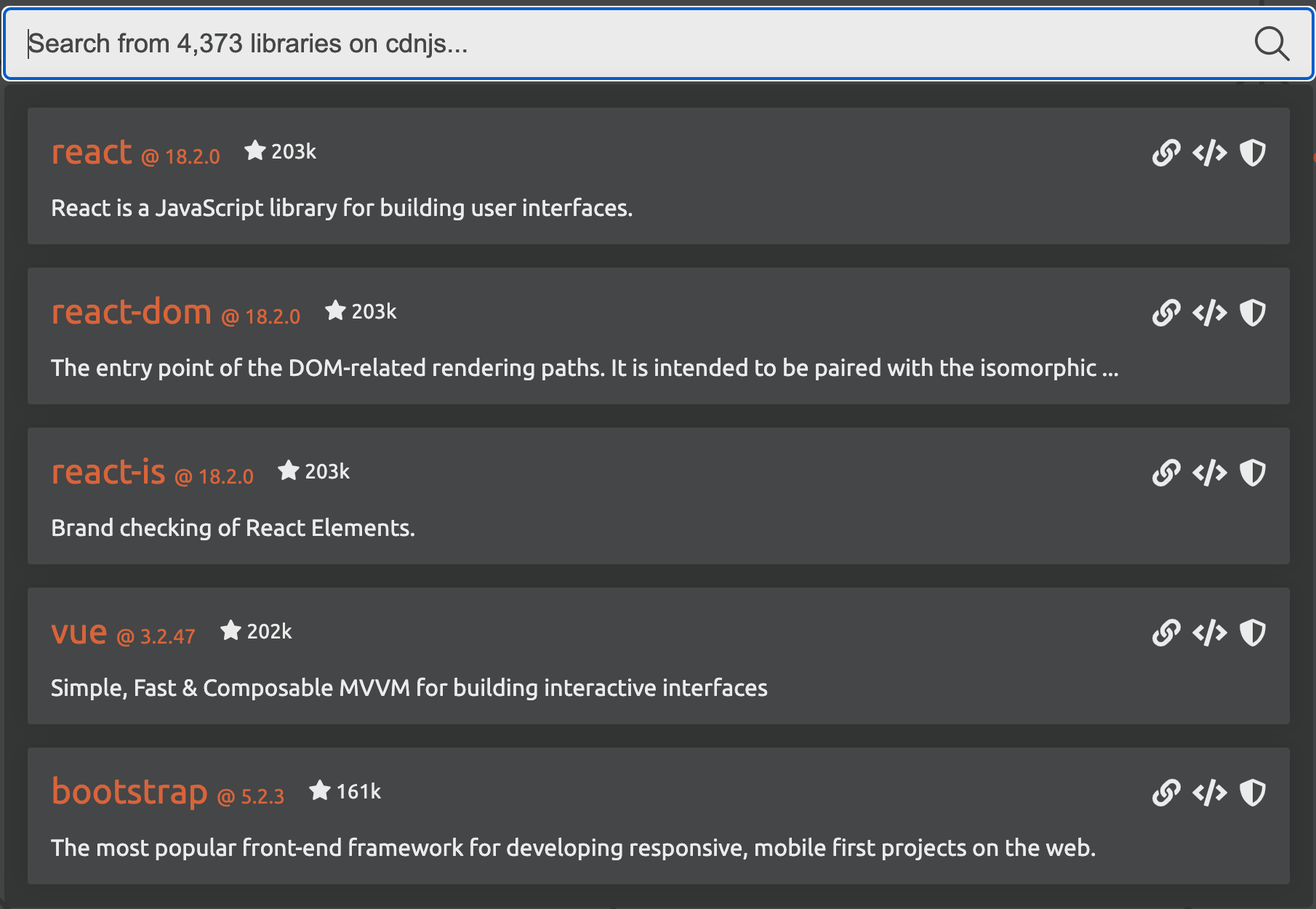
There are more than 4,373 libraries available on cdnjs, a popular JavaScript repository, at the time of writing. These libraries provide access to pre-built functionality to build web applications. The screenshot below shows the most popular on the platform such as React, Vue.js and Bootstrap. Bootstrap alone, according to W3Techs, is used on more than 20% of all websites.
In addition to library repositories like cdnjs, there are thousands of plugins provided directly by SaaS platforms including from names such as Continue reading
Test DHCP Relaying with netlab
After figuring out how DHCP relaying works, I decided to test it out in a lab. netlab has no DHCP configuration module (at the moment); the easiest way forward seemed to be custom configuration templates combined with a few extra attributes.
Lab Topology
This is how I set up the lab:
Test DHCP Relaying with netlab
After figuring out how DHCP relaying works, I decided to test it out in a lab. netlab has no DHCP configuration module (at the moment); the easiest way forward seemed to be custom configuration templates combined with a few extra attributes.
Lab Topology
This is how I set up the lab:
Cloud Notes: AWS EC2
https://codingpackets.com/blog/cloud-notes-aws-ec2
Deploying Redhat Openshift and Juniper CN2 Cloud Native SDN Controller
https://github.com/kashif-nawaz/RHOCP_CN2_AI_NMState_Redfish_API
Installing RHOCP+CN2 via Assisted Installer , adding network config with NMStat and Managing Infrastructure via Redfish API & Sushi Emulator
Welcome to Security Week 2023


Last month I had the chance to attend a dinner with 56 CISOs and CSOs across a range of banking, gaming, ecommerce, and retail companies. We rotated between tables of eight people and talked about the biggest challenges those in the group were facing, and what they were most worried about around the corner. We talk to customers every day at Cloudflare, but this was a unique opportunity to listen to customers (and non-customers) talk to each other. It was a fascinating evening and a few things stood out.
The common thread that dominated the discussions was “how do I convince my business and product teams to do the things I want them to”. Surprisingly little time was spent on specific technical challenges. No one brought up a concern about recent advanced mage cart skimmers, or about protecting their new GraphQL APIs, or how to secure two different cloud vendors at once, or about the size of DDoS attacks consistently getting larger. Over and over again the conversation came back to struggles with getting humans to do the secure thing, or to not do the insecure thing.
This instantly brought to mind a major phishing attack that Cloudflare was Continue reading
Upcoming Training: How the Internet Really Works Part 1
I’m teaching How the Internet Really Works over on Safari Books Online on the 24th of March—in a couple of weeks. From the description:
This live training will provide an overview of the systems, providers, and standards bodies important to the operation of the global Internet, including the Domain Name System (DNS), the routing and transport systems, standards bodies, and registrars. For DNS, the process of a query will be considered in some detail, who pays for each server used in the resolution process, and tools engineers can use to interact DNS. For routing and transport, the role of each kind of provider will be considered, along with how they make money to cover their costs, and how engineers can interact with the global routing table (the Default Free Zone, of DFZ). Finally, registrars and standards bodies will be considered, including their organizational structure, how they generate revenue, and how to find their standards.