Cloudflare Access is the fastest Zero Trust proxy


During every Innovation Week, Cloudflare looks at our network’s performance versus our competitors. In past weeks, we’ve focused on how much faster we are compared to reverse proxies like Akamai, or platforms that sell serverless compute that compares to our Supercloud, like Fastly and AWS. This week, we’d like to provide an update on how we compare to other reverse proxies as well as an update to our application services security product comparison against Zscaler and Netskope. This product is part of our Zero Trust platform, which helps secure applications and Internet experiences out to the public Internet, as opposed to our reverse proxy which protects your websites from outside users.
In addition to our previous post showing how our Zero Trust platform compared against Zscaler, we also have previously shared extensive network benchmarking results for reverse proxies from 3,000 last mile networks around the world. It’s been a while since we’ve shown you our progress towards being #1 in every last mile network. We want to show that data as well as revisiting our series of tests comparing Cloudflare Access to Zscaler Private Access and Netskope Private Access. For our overall network tests, Cloudflare is #1 in Continue reading
Introducing custom pages for Cloudflare Access


Over 10,000 organizations rely on Cloudflare Access to connect their employees, partners, and contractors to the applications they need. From small teams on our free plan to some of the world’s largest enterprises, Cloudflare Access is the Zero Trust front door to how they work together. As more users start their day with Cloudflare Access, we’re excited to announce new options to customize how those users experience our industry-leading Zero Trust solution. We’re excited to announce customizable Cloudflare Access pages including login, blocks and the application launcher.
Where does Cloudflare Access fit in a user’s workflow today?
Most teams we work with start their Zero Trust journey by replacing their existing virtual private network (VPN) with Cloudflare Access. The reasons vary. For some teams, their existing VPN allows too much trust by default and Access allows them to quickly build segmentation based on identity, device posture, and other factors. Other organizations deploy Cloudflare Access because they are exhausted from trying to maintain their VPN and dealing with end user complaints.
When those administrators begin setting up Cloudflare Access, they connect the resources they need to protect to Cloudflare’s network. They can deploy a Cloudflare Tunnel to create a secure, outbound-only, Continue reading
Cloudflare partners with KnowBe4 to equip organizations with real-time security coaching to avoid phishing attacks
Today, we are very excited to announce that Cloudflare’s cloud email security solution, Area 1, now integrates with KnowBe4, a leading security awareness training and simulated phishing platform. This integration allows mutual customers to offer real-time coaching to their employees when a phishing campaign is detected by Cloudflare’s email security solution.
We are all aware that phishing attacks often use email as a vector to deliver the fraudulent message. Cybercriminals use a range of tactics, such as posing as a trustworthy organization, using urgent or threatening language, or creating a sense of urgency to entice the recipient to click on a link or download an attachment.
Despite the increasing sophistication of these attacks and the solutions to stop them, human error remains the weakest link in this chain of events. This is because humans can be easily manipulated or deceived, especially when they are distracted or rushed. For example, an employee might accidentally click on a link in an email that looks legitimate but is actually a phishing attempt, or they might enter their password into a fake login page without realizing it. According to the 2021 Verizon Data Breach Investigations Report, phishing was the most common form of social Continue reading
How we built DMARC Management using Cloudflare Workers
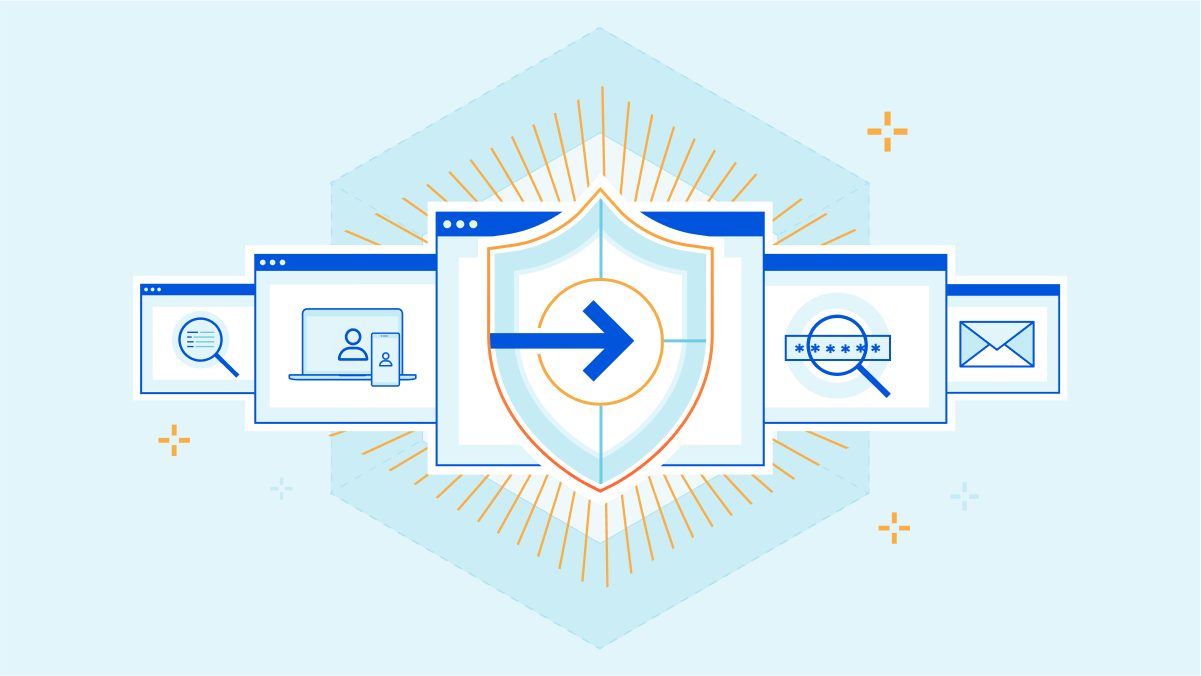
What are DMARC reports
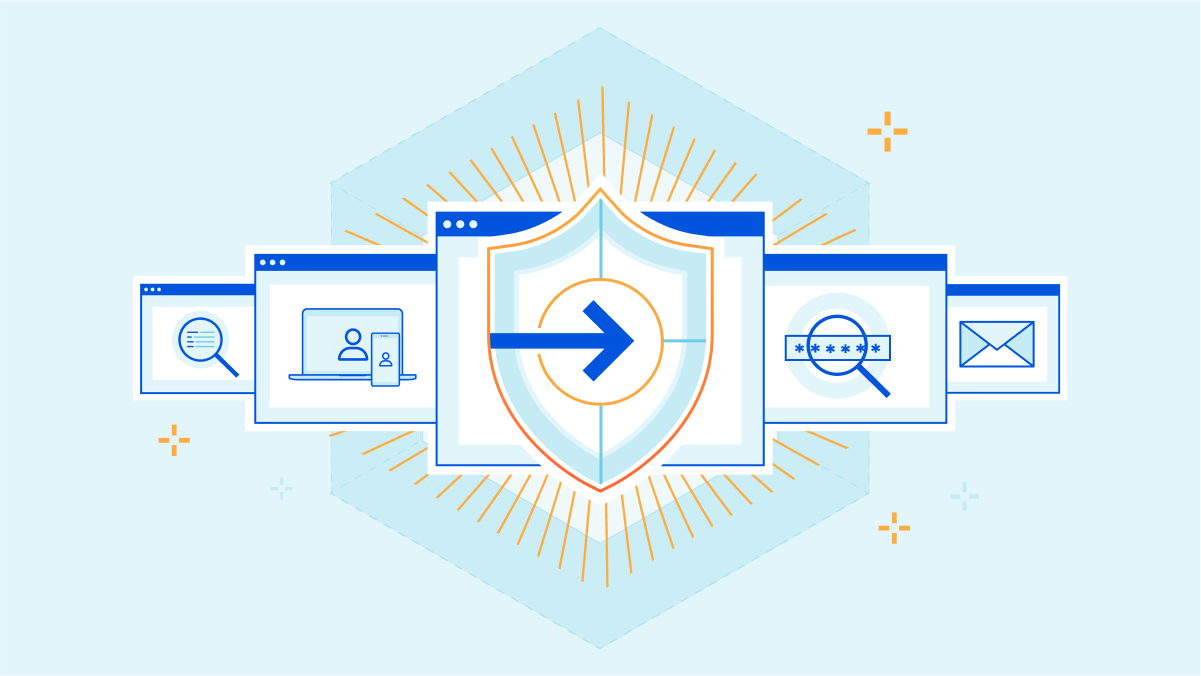
DMARC stands for Domain-based Message Authentication, Reporting, and Conformance. It's an email authentication protocol that helps protect against email phishing and spoofing.
When an email is sent, DMARC allows the domain owner to set up a DNS record that specifies which authentication methods, such as SPF (Sender Policy Framework) and DKIM (DomainKeys Identified Mail), are used to verify the email's authenticity. When the email fails these authentication checks DMARC instructs the recipient's email provider on how to handle the message, either by quarantining it or rejecting it outright.
DMARC has become increasingly important in today's Internet, where email phishing and spoofing attacks are becoming more sophisticated and prevalent. By implementing DMARC, domain owners can protect their brand and their customers from the negative impacts of these attacks, including loss of trust, reputation damage, and financial loss.
In addition to protecting against phishing and spoofing attacks, DMARC also provides reporting capabilities. Domain owners can receive reports on email authentication activity, including which messages passed and failed DMARC checks, as well as where these messages originated from.
DMARC management involves the configuration and maintenance of DMARC policies for a domain. Effective DMARC management requires ongoing monitoring and analysis Continue reading
Stop brand impersonation with Cloudflare DMARC Management
At the end of 2021 Cloudflare launched Security Center, a unified solution that brings together our suite of security products and unique Internet intelligence. It enables security teams to quickly identify potential security risks and threats to their organizations, map their attack surface and mitigate these risks with just a few clicks. While Security Center initially focused on application security, we are now adding crucial zero trust insights to further enhance its capabilities.
When your brand is loved and trusted, customers and prospects are looking forward to the emails you send them. Now picture them receiving an email from you: it has your brand, the subject is exciting, it has a link to register for something unique — how can they resist that opportunity?
But what if that email didn’t come from you? What if clicking on that link is a scam that takes them down the path of fraud or identity theft? And what if they think you did it? The truth is, even security minded people occasionally fall for well crafted spoof emails.
That poses a risk to your business and reputation. A risk you don’t want to take - no one does. Brand impersonation is a Continue reading
Case Study: Site Local NGINX
A while ago I rolled out an important change to the IPng Networks design: I inserted a bunch of [Centec MPLS] and IPv4/IPv6 capable switches underneath [AS8298], which gave me two specific advantages:
-
The entire IPng network is now capable of delivering L2VPN services, taking the form of MPLS point-to-point ethernet, and VPLS, as shown in a previous [deep dive], in addition to IPv4 and IPv6 transit provided by VPP in an elaborate and elegant [BGP Routing Policy].
-
A new internal private network becomes available to any device connected IPng switches, with addressing in 198.19.0.0/16 and 2001:678:d78:500::/56. This network is completely isolated from the Internet, with access controlled via N+2 redundant gateways/firewalls, described in more detail in a previous [deep dive] as well.
Overview

After rolling out this spiffy BGP Free [MPLS Core], I wanted to take a look at maybe conserving a few IP addresses here and there, as well as tightening access and protecting the more important machines that IPng Networks runs. You see, most enterprise networks will include a bunch of internal services, like databases, network attached storage, backup servers, network monitoring, Continue reading
Video: vPC Fabric Peering with EVPN Multihoming
After implementing MLAG functionality with EVPN and having a VXLAN-like fabric transport path between MLAG members, it becomes possible to get rid of the MLAG peer link.
Not surprisingly, most implementations of virtual MLAG peer link remain proprietary. Lukas Krattiger described the details of Cisco’s vPC Fabric Peering implementation in the EVPN Deep Dive webinar.
You need Free ipSpace.net Subscription to watch the video. To watch the whole webinar, buy Standard or Expert ipSpace.net Subscription.
HPC in the cloud for FEA
HOT SEAT INTERVIEW: Will your smartphone break if you drop it? …
HPC in the cloud for FEA was written by Martin Courtney at The Next Platform.
Critical Thinking: The Overlooked IT Management Skill
Have you given much thought to critical thinking? It’s a talent that can make you a stronger, more effective leaderWAF is woefully insufficient in today’s container-based applications: Here’s why
According to the Cloud Security Alliance, the average large enterprise has 946 custom applications deployed. Traditionally, organizations deployed Web Application Firewalls (WAF), which provide visibility and enforce security controls on external traffic that passes through them, at the perimeter to protect these applications against external attacks.
However, WAF-secured container-based applications have a high likelihood of being breached, as the concept of a perimeter does not exist in these architectures. A new approach is needed to address both external threats and threats from lateral movement inside the cluster. In a world where successful exploits may be inevitable, relying on a perimeter WAF for application security leaves your entire environment vulnerable unless adequate security tools and policies are implemented at the workload level.
WAF’s weak security
Security techniques for traditional container-based application architectures are analogous to medieval castles, where everything important to running an application is consolidated within castle walls. In this analogy, WAF played the role of the wall and gate, only letting in friendly traffic.
WAF provides additional capabilities in these traditional architectures. It actively parses through valid requests and threats and provides alerts when it receives suspicious log requests. These alerts keep the security team apprised of threats Continue reading
The workload-first approach to CPU innovation
Sponsored Post: As in so many other aspects of life, not all compute workloads are created equal – they need a more subtle approach to getting the best out of them which brings a more potent balance of hardware and software into the mix. …
The workload-first approach to CPU innovation was written by Martin Courtney at The Next Platform.
Kubernetes Unpacked 021: Catching Up With Windows Containers On Kubernetes
On today's Kubernetes Unpacked, Michael and guests explore Windows containers. A few years ago there was a lot of hype around Nano, which then morphed into Nano Server. We look at the current state of containerized Windows, using Windows containers with Kubernetes, customer scenarios for container adoption, and Microsoft's approach to the container space.Kubernetes Unpacked 021: Catching Up With Windows Containers On Kubernetes
On today's Kubernetes Unpacked, Michael and guests explore Windows containers. A few years ago there was a lot of hype around Nano, which then morphed into Nano Server. We look at the current state of containerized Windows, using Windows containers with Kubernetes, customer scenarios for container adoption, and Microsoft's approach to the container space.
The post Kubernetes Unpacked 021: Catching Up With Windows Containers On Kubernetes appeared first on Packet Pushers.
Los Alamos Taps Seagate To Put Compute On Spinning Rust
High performance computing workloads simulating all manner of things can produce a veritable mountain of data that has to be sifted through. …
Los Alamos Taps Seagate To Put Compute On Spinning Rust was written by Tobias Mann at The Next Platform.
IBM Cloud works with Cloudflare to help clients modernize and deliver secured cloud infrastructure


In this blog post, we wanted to highlight some ways that Cloudflare and IBM Cloud work together to help drive product innovation and deliver services that address the needs of our mutual customers. On our blog, we often discuss exciting new product developments and how we are solving real-world problems in our effort to make the internet better and many of our customers and partners play an important role.
IBM Cloud and Cloudflare have been working together since 2018 to integrate Cloudflare application security and performance products natively into IBM Cloud. IBM Cloud Internet Services (CIS) has customers across a wide range of industry verticals and geographic regions but they also have several specialist groups building unique service offerings.
The IBM Cloud team specializes in serving clients in highly regulated industries, aiming to ensure their resiliency, performance, security and compliance needs are met. One group that we’ve been working with recently is IBM Cloud for Financial Services. This group extends the capabilities of IBM Cloud to help serve the complex security and compliance needs of banks, financial institutions and fintech companies.
Bot Management
As malicious bot attacks get more sophisticated and manual mitigations become more onerous, a dynamic and adaptive Continue reading
Protect your key server with Keyless SSL and Cloudflare Tunnel integration
Today, we’re excited to announce a big security enhancement to our Keyless SSL offering. Keyless SSL allows customers to store their private keys on their own hardware, while continuing to use Cloudflare’s proxy services. In the past, the configuration required customers to expose the location of their key server through a DNS record - something that is publicly queryable. Now, customers will be able to use our Cloudflare Tunnels product to send traffic to the key server through a secure channel, without publicly exposing it to the rest of the Internet.
A primer on Keyless SSL
Security has always been a critical aspect of online communication, especially when it comes to protecting sensitive information. Today, Cloudflare manages private keys for millions of domains which allows the data communicated by a client to stay secure and encrypted. While Cloudflare adopts the strictest controls to secure these keys, certain industries such as financial or medical services may have compliance requirements that prohibit the sharing of private keys.In the past, Cloudflare required customers to upload their private key in order for us to provide our L7 services. That was, until we built out Keyless SSL in 2014, a feature that allows customers Continue reading