Video: Kubernetes SDN Architecture
Stuart Charlton started the Kubernetes Networking Deep Dive webinar with an overview of basic concepts including the networking model and services. After covering the fundamentals, it was time for The Real Stuff: Container Networking Interface, starting with an overview of Kubernetes SDN architecture.
Parts of Kubernetes Networking Deep Dive webinar (including this video) are available with Free ipSpace.net Subscription.
Video: Kubernetes SDN Architecture
Stuart Charlton started the Kubernetes Networking Deep Dive webinar with an overview of basic concepts including the networking model and services. After covering the fundamentals, it was time for The Real Stuff: Container Networking Interface, starting with an overview of Kubernetes SDN architecture.
Parts of Kubernetes Networking Deep Dive webinar (including this video) are available with Free ipSpace.net Subscription.
Migrating Cisco FabricPath and Classic Ethernet Environments to VXLAN BGP/EVPN over a 400Gb-based Clos Topology, part 1 – the why
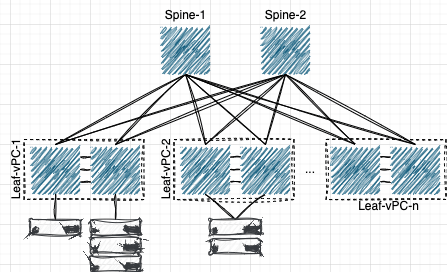
During the past three years, I have spent a good portion of my time testing, planning, designing, and then migrating our DC network from Cisco FabricPath and Classic Ethernet environments…
The post Migrating Cisco FabricPath and Classic Ethernet Environments to VXLAN BGP/EVPN over a 400Gb-based Clos Topology, part 1 – the why appeared first on JTnetwork.io.
Migrating Cisco FabricPath and Classic Ethernet Environments to VXLAN BGP/EVPN over a 400Gb-based Clos Topology, part 1 – the why
During the past three years, I have spent a good portion of my time testing, planning, designing, and then migrating our DC network from Cisco FabricPath and Classic Ethernet environments to VXLAN BGP/EVPN. And simultaneously, from a hierarchical classic two-tier architecture to a more modern Clos 400Gb-based topology. The migration is not yet 100% completed, but it is well underway. And I have gained significant experience on the subject, so I think it’s time to share my knowledge and experiments with our community. This is my first post on this…
The post Migrating Cisco FabricPath and Classic Ethernet Environments to VXLAN BGP/EVPN over a 400Gb-based Clos Topology, part 1 – the why appeared first on AboutNetworks.net.
Hedge 165: Low Earth Orbit with Dan York

Have you ever wondered about Starlink and similar Low Earth Orbit (LEO) satellite systems? How are they different from geosynchronous satellites? What about the delay of sending traffic through satellites? And the future of satellites? Join Tom Ammon, Dan York, and Russ White as we discuss the ins and outs of satellite technologies.
IPv6 Buzz 119: Operational Issues With IPv6 Neighbor Discovery
In today's IPv6 Buzz podcast we discuss IPv6 Neighbor Discovery and some of the operational issues that can happen when configuring and operating IPv6, and what can help listeners understand and resolve those issues.IPv6 Buzz 119: Operational Issues With IPv6 Neighbor Discovery
In today's IPv6 Buzz podcast we discuss IPv6 Neighbor Discovery and some of the operational issues that can happen when configuring and operating IPv6, and what can help listeners understand and resolve those issues.
The post IPv6 Buzz 119: Operational Issues With IPv6 Neighbor Discovery appeared first on Packet Pushers.
The MITRE ATT&CK framework explained: Discerning a threat actor’s mindset
This is part 2 of the blog series on the MITRE ATT&CK framework for container security, where I explain and discuss the MITRE ATT&CK framework. For those who are not familiar with what the MITRE framework is, I encourage you to read part 1.
In my previous blog post, I explained the first four stages of the MITRE ATT&CK framework and the tactics used by adversaries to gain a foothold in the network or the environment within a containerized application. What happens next?
Imagine a military battalion trying to invade its enemy’s territory. What would a soldier do once they’ve infiltrated the opposition? They would take cover and wait for the right opportunity to attack. Similarly, in cyber crime, an attacker will take time to make sure they evade any type of defense that has been put in place. This is the fifth stage in the MITRE ATT&CK framework. In this article, I will explore this fifth stage, along with stages six through nine, and look at how Calico can help mitigate the attack techniques used in these stages.
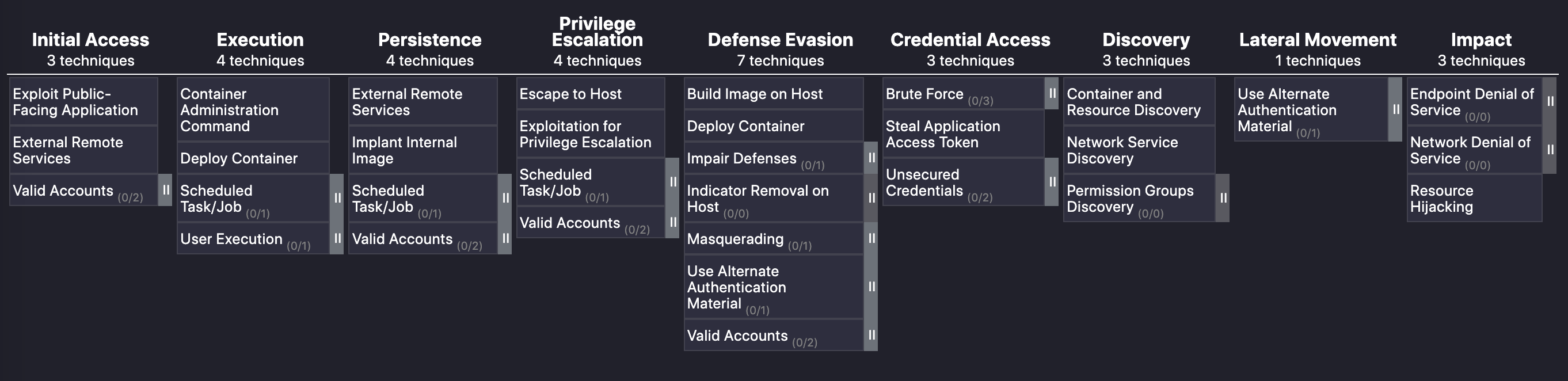
Delivery and exploitation tactics
Defense evasion
Many security solutions offer Continue reading
How Digital Transformation Is Eroding NetOps Visibility And Control
The following post is by Jeremy Rossbach, Chief Technical Evangelist, Broadcom. We thank Broadcom for being a sponsor. When it comes to cloud adoption, hybrid approaches are the reality for the vast majority of large organizations today. While some may solely be running workloads in a legacy on-premises data center and others may run 100% […]
The post How Digital Transformation Is Eroding NetOps Visibility And Control appeared first on Packet Pushers.
Hybrid Cloud Should Benefit You, Not Bezos
We have always been convinced, and remain so, that there is no way that the largest organizations in the world will move their computing to one of the big cloud builders. …
Hybrid Cloud Should Benefit You, Not Bezos was written by Timothy Prickett Morgan at The Next Platform.
Project Escalation Is Good! How To Identify Stakeholders And Escalate Well
When tackling technical projects, every organization needs a system to make decisions, resolve conflicts, and chart alternative paths when plans go awry. Effective escalation is key, but the prospect of escalation can make engineers anxious. We need to reframe our view of escalation as a tool to help move a project forward.
The post Project Escalation Is Good! How To Identify Stakeholders And Escalate Well appeared first on Packet Pushers.
A Deep Dive into the Recent Microsoft Cloud Services Outage
Configuration changes and DNS issues have been the source of multiple major outages over the last two years. And everyone knows there will be more to come.Stage Manager is Incomplete
I’ve been using macOS Stage Manager off and on for a little while now. In Stage Manager, I can see the beginnings of what might be a very useful paradigm for desktop computing. Unfortunately, in its current incarnation, I believe Stage Manager is incomplete.
Note that I haven’t yet tried Stage Manager on my iPad; my comments here apply only to the macOS implementation.
For those of you who haven’t yet tried Stage Manager yet, here’s a screenshot of my desktop, taken while I was writing this blog post:

I’ll draw your attention to the list of “recently used applications” on the left side of the screen. That’s the “Cast” (a term used by Howard Oakley in his great introductory article on Stage Manager). As you can see in this screenshot, the Cast supports application groups—like having Slack and Mail grouped together—as well as single applications. This allows you to easily switch between groups of applications simply by clicking on the preview in the Cast (which, using Howard’s terminology, moves the application or applications to the Stage).
This is the glimmer of a useful paradigm that I see in Stage Manager: being able to assemble groups of applications that Continue reading