Search engine and cloud computing juggernaut Google is hosting its Google Cloud Next ’21 conference this week, and one of the more interesting things that the company unveiled is several layers of software that makes its Spanner globally distributed relational database look and feel like the popular open source PostgreSQL relational database. …
Marvell has begun to sample the Octeon 10, a server microprocessor aimed at intelligent network management that has up to 24 Arm-compatible cores, making it as powerful as any server processor.Marvell refers to the Octeon processor line as data processing units (DPUs). They are designed to run high-throughput data in the cloud and on-premises. The DPU is more commonly called the SmartNIC because it can offload non-computational tasks from the CPU like network packet processing, data encryption and compression. That frees up CPU cores to run general-purpose applications.The Octeon 10 has a few firsts. It's the first processor made by TSMCs 5nm manufacturing process and the first processor to feature Arm’s Neoverse N2 core. The N2 core uses the new Armv9 architecture that the company claims can deliver 40% more single-threaded performance for a variety of workloads vs. the N1, but still retains the same level of power and area efficiency as N1.To read this article in full, please click here
Ethan Banks & Ned Bellavance have a tech discussion with CEO Doug Murray and CTO Vishal Jain about multi-cloud security startup Valtix. Along the way, we find out that Valtix is a cloud-delivered security control-plane paired with a data-plane of enforcement points (sort of firewalls, but not exactly) delivered between any two points in the cloud you need them. Engineers should walk away from this chat with a solid idea of Valtix architecture and how it fits into their cloud design.
Ethan Banks & Ned Bellavance have a tech discussion with CEO Doug Murray and CTO Vishal Jain about multi-cloud security startup Valtix. Along the way, we find out that Valtix is a cloud-delivered security control-plane paired with a data-plane of enforcement points (sort of firewalls, but not exactly) delivered between any two points in the cloud you need them. Engineers should walk away from this chat with a solid idea of Valtix architecture and how it fits into their cloud design.
The third-placed cloud vendor has announced a new set of options for customers that need to keep certain workloads in self-hosted environments or out at the edge.
Axway CTIO Vince Padua believes the best path forward is to master growing API complexity, rather than attempt to simplify or consolidate IT ecosystems.
The Internet, far from being just a series of tubes, is a huge, incredibly complex, decentralized system. Every action and interaction in the system is enabled by a complicated mass of protocols woven together to accomplish their task, each handing off to the next like trapeze artists high above a virtual circus ring. Stop to think about details, and it is a marvel.
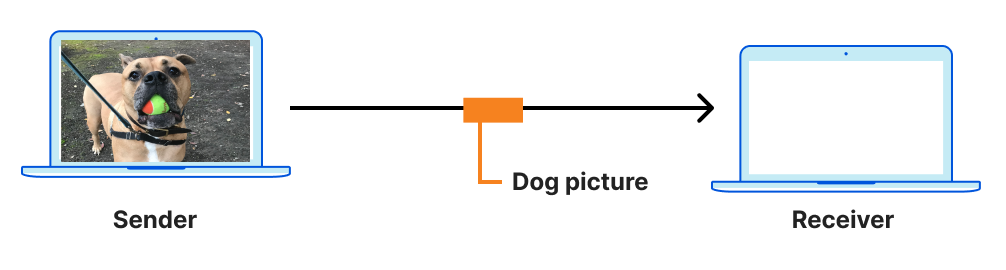
Consider one of the simplest tasks enabled by the Internet: Sending a message from sender to receiver.
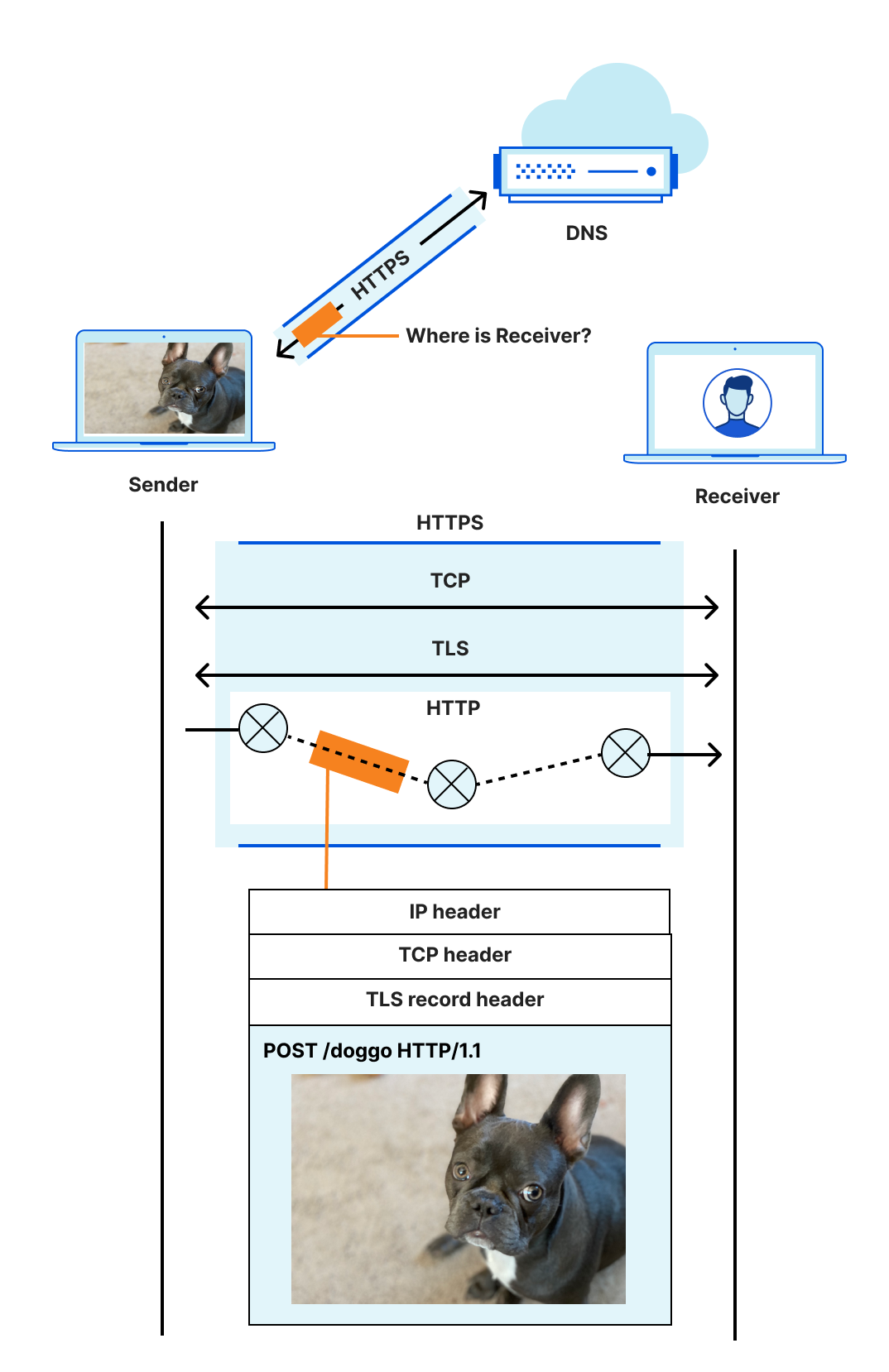
The location (address) of a receiver is discovered using DNS, a connection between sender and receiver is established using a transport protocol like TCP, and (hopefully!) secured with a protocol like TLS. The sender's message is encoded in a format that the receiver can recognize and parse, like HTTP, because the two disparate parties need a common language to communicate. Then, ultimately, the message is sent and carried in an IP datagram that is forwarded from sender to receiver based on routes established with BGP.
Even an explanation this dense is laughably oversimplified. For example, the four protocols listed are just the start, and ignore many others with acronyms of their own. The truth is that things are complicated. Continue reading
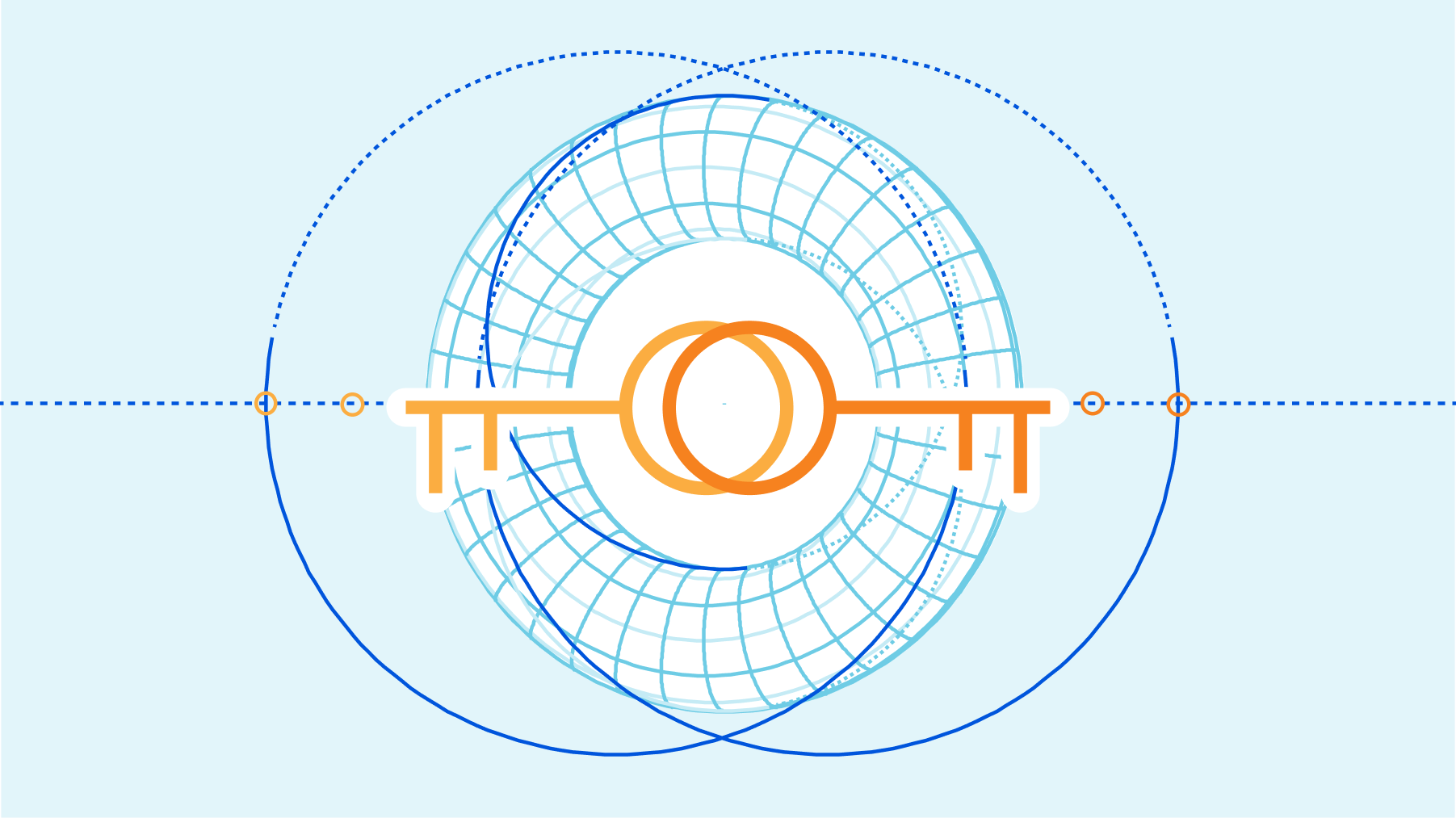
In 2019, we announced the release of CIRCL, an open-source cryptographic library written in Go that provides optimized implementations of several primitives for key exchange and digital signatures. We are pleased to announce a major update of our library: we have included more packages for elliptic curve-based cryptography (ECC), pairing-based cryptography, and quantum-resistant algorithms.
In this blog post we’re going to focus on pairing-based cryptography and give you a brief overview of some properties that make this topic so pleasant. If you are not so familiar with elliptic curves, we recommend this primer on ECC.
Otherwise, let’s get ready, pairings have arrived!
What are pairings?
Elliptic curve cryptography enables an efficient instantiation of several cryptographic applications: public-key encryption, signatures, zero-knowledge proofs, and many other more exotic applications like oblivious transfer and OPRFs. With all of those applications you might wonder what is Continue reading
Our earlier blog post talked in general terms about how we work with the IETF. In this post we’re going to talk about a particular IETF project we’ve been working on, Exported Authenticators (EAs). Exported Authenticators is a new extension to TLS that we think will prove really exciting. It unlocks all sorts of fancy new authentication possibilities, from TLS connections with multiple certificates attached, to logging in to a website without ever revealing your password.
Now, you might have thought that given the innumerable hours that went into the design of TLS 1.3 that it couldn’t possibly be improved, but it turns out that there are a number of places where the design falls a little short. TLS allows us to establish a secure connection between a client and a server. The TLS connection presents a certificate to the browser, which proves the server is authorised to use the name written on the certificate, for example blog.cloudflare.com. One of the most common things we use that ability for is delivering webpages. In fact, if you’re reading this, your browser has already done this for you. The Cloudflare Blog is delivered over TLS, and by presenting a Continue reading
Web pages typically have a large number of embedded subresources (e.g., JavaScript, CSS, image files, ads, beacons) that are fetched by a browser on page loads. Requests for these subresources can prompt browsers to perform further DNS lookups, TCP connections, and TLS handshakes, which can have a significant impact on how long it takes for the user to see the content and interact with the page. Further, each additional request exposes metadata (such as plaintext DNS queries, or unencrypted SNI in TLS handshake) which can have potential privacy implications for the user. With these factors in mind, we carried out a measurement study to understand how we can leverage Connection Coalescing (aka Connection Reuse) to address such concerns, and study its feasibility.
Background
The web has come a long way and initially consisted of very simple protocols. One of them was HTTP/1.0, which required browsers to make a separate connection for every subresource on the page. This design was quickly recognized as having significant performance bottlenecks and was extended with HTTP pipelining and persistent connections in HTTP/1.1 revision, which allowed HTTP requests to reuse the same TCP connection. But, yet again, this was no Continue reading
VMware is in the process of spinning out from Dell Technologies, but the working relationship remains as strong as ever with a bunch of announcements from VMworld.All told, the pair made four significant announcements at the show, the first being that VMware Cloud will be sold on systems acquired through Dell's Apex pay-as-you-go program. The new Apex offering gives customers the ability to move workloads across multiple cloud environments and scale resources quickly with predictable pricing and costs.The new offering combines Dell’s hyperconverged infrastructure VxRail with VMware Cloud, VMware Tanzu for building cloud-native applications, and VMware HCX for application migration. Businesses can deploy the offering in their data center, at an edge location or a colocation facility with partners like Equinix.To read this article in full, please click here
VMware is in the process of spinning out from Dell Technologies, but the working relationship remains as strong as ever with a bunch of announcements from VMworld.All told, the pair made four significant announcements at the show, the first being that VMware Cloud will be sold on systems acquired through Dell's Apex pay-as-you-go program. The new Apex offering gives customers the ability to move workloads across multiple cloud environments and scale resources quickly with predictable pricing and costs.The new offering combines Dell’s hyperconverged infrastructure VxRail with VMware Cloud, VMware Tanzu for building cloud-native applications, and VMware HCX for application migration. Businesses can deploy the offering in their data center, at an edge location or a colocation facility with partners like Equinix.To read this article in full, please click here
In case you missed it, there’s a new season of Lack of DHCPv6 on Android soap opera on v6ops mailing list. Before going into the juicy details, I wanted to look at the big picture: why would anyone care about lack of DHCPv6 on Android?
Please note that I’m not a DHCPv6 fan. DHCPv6 is just a tool not unlike sink plunger – nobody loves it (I hope), but when you need it, you better have it handy.
The requirements for DHCPv6-based address allocation come primarily from enterprise environments facing legal/compliance/other layer 8-10 reasons to implement policy (are you allowed to use the network), control (we want to decide who uses the network) and attribution (if something bad happens, we want to know who did it).
In case you missed it, there’s a new season of Lack of DHCPv6 on Android soap opera on v6ops mailing list. Before going into the juicy details, I wanted to look at the big picture: why would anyone care about lack of DHCPv6 on Android?
Please note that I’m not a DHCPv6 fan. DHCPv6 is just a tool not unlike sink plunger – nobody loves it (I hope), but when you need it, you better have it handy.
The requirements for DHCPv6-based address allocation come primarily from enterprise environments facing legal/compliance/other layer 8-10 reasons to implement policy (are you allowed to use the network), control (we want to decide who uses the network) and attribution (if something bad happens, we want to know who did it).
Congratulations to the Kubespray team on the release of 2.17! This release brings support for two of the newer features in Calico: support for the eBPF data plane, and also for WireGuard encryption.
Let’s dive into configuring Kubespray to enable these new features.
If you’re interested in getting started with Kubespray and Calico, you can refer to Using Calico with Kubespray, which covers some of the settings you might want to use, as well as how to enable Calico in several of the quick start guides.
To configure Calico options when using Kubespray to deploy a cluster, you’ll need to configure some variables. If you’re using the examples in the Kubespray repository, those files are under inventory/…/group_vars/k8s_cluster/, with the Calico options residing in k8s-net-calico.yml.
eBPF data plane
Calico offers several different data planes, ensuring that end users can choose the technology that’s right for their particular use case. eBPF is a relatively new set of facilities in the Linux kernel that lets developers write code to modify its functionality at runtime in a way that is safe and efficient.
Calico’s eBPF data plane offers increased efficiency, as well as functionality like providing source IP preservation Continue reading
In 2018, after finding a dearth of information on setting up Kubernetes with AWS integration/support, I set out to try to establish some level of documentation on this topic. That effort resulted in a few different blog posts, but ultimately culminated in this post on setting up an AWS-integrated Kubernetes cluster using kubeadm. Although originally written for Kubernetes 1.15, the process described in that post is still accurate for newer versions of Kubernetes. With the release of Kubernetes 1.22, though, the in-tree AWS cloud provider—which is what is used/described in the post linked above—has been deprecated in favor of the external cloud provider. In this post, I’ll show how to set up an AWS-integrated Kubernetes cluster using the external AWS cloud provider.
In addition to the post I linked above, there were a number of other articles I published on this topic:
Most of the information in these posts, if not all of it, is found in the latest iteration, but I wanted to include these links here for some additional context. Also, Continue reading
Today on the Tech Bytes podcast we’re talking Zero Trust Network Access, or ZTNA, with sponsor Fortinet. As organizations grapple with controlling end user access to applications and services, particularly when those end users and applications could be anywhere, Fortinet is here to make the case that it’s the right platform for ZTNA. Our guest... Read more »
Today on the Tech Bytes podcast we’re talking Zero Trust Network Access, or ZTNA, with sponsor Fortinet. As organizations grapple with controlling end user access to applications and services, particularly when those end users and applications could be anywhere, Fortinet is here to make the case that it’s the right platform for ZTNA. Our guest […]
With visibility into your network, cloud services, product development, and your users, you can make significant gains across your security and compliance risks and your budget.