Hybrid Computing Sharpens Its Edge
Computing has become more complex as the digital age has progressed. …
Hybrid Computing Sharpens Its Edge was written by Timothy Prickett Morgan at The Next Platform.
Computing has become more complex as the digital age has progressed. …
Hybrid Computing Sharpens Its Edge was written by Timothy Prickett Morgan at The Next Platform.
In the IT sector, there is a constant flow of little changes to hardware and software that culminate in progress. …
The Tectonic Shift To Virtual Distributed Routing was written by Timothy Prickett Morgan at The Next Platform.
If you missed it, take a look at MikroTik’s video on RouterOS v7 routing performance and changes.
One of the long awaited benefits of RouterOS version 7 is a new routing protocol stack that enables new capabilities and fixes limitations in RouterOSv6 caused by the use of a very old Linux kernel.
The new routing stack in v7 has created quite a buzz in the MikroTik community as lab tests have shown that it’s significantly more efficient in processing large numbers of BGP routes.
The ability to use MikroTik’s new generation of CCR routers with ARM64 to quickly process BGP routes is a blog post all to itself and we’ll tackle that in the future – however, the information below provides a quick look into the performance comparison between ROS v6 and v7.
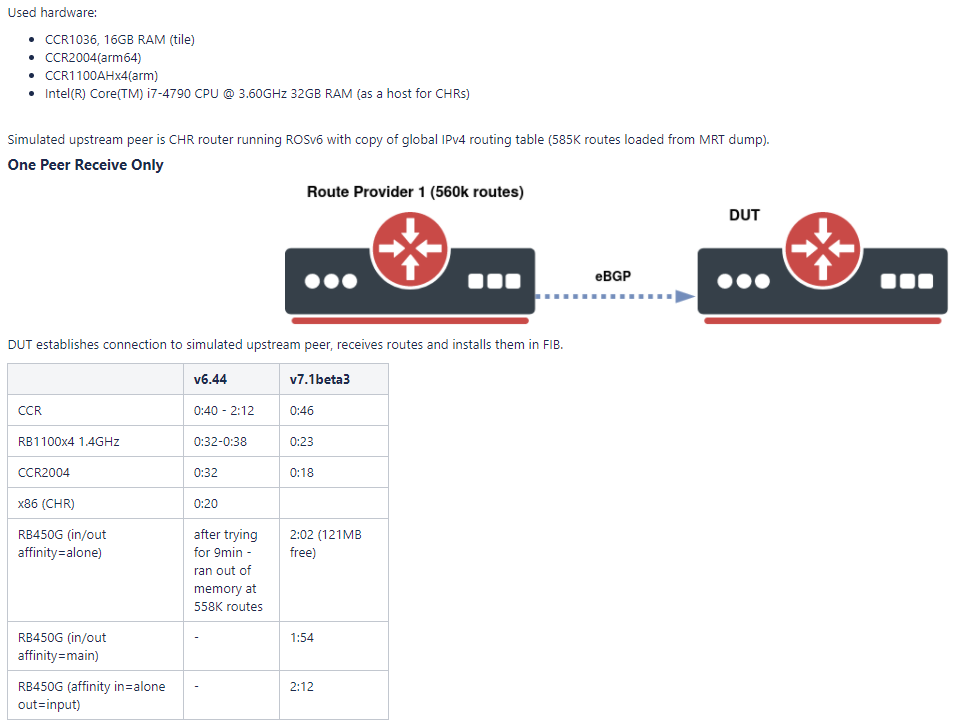
The new routing stack also paves the way to add a number of features that have been needed for a long time like RPKI and large community support.
Using a lab based on EVE-NG, we’ll take a look at configuration changes and iBGP using the IPv6 AFI with OSPFv3 as the IGP for loopback/next hop reachability. Prior to 7.1beta2, this has been nonfunctional for years Continue reading

It’s end of year round up time! The first post in this series covered the number 10-6 most viewed Docker blog posts. If you were wondering what the #1 most viewed blog post of the year was, then keep reading. The suspense will soon be over…
5) How to Develop Inside a Container Using Visual Studio Code Remote Containers
VS Code is another beloved tool. This guest post from Docker Community Leader Jochen Zehnder included some handy tricks for the Visual Studio Code Remote Containers extension that allows you to develop inside a container.
4) How to deploy on remote Docker hosts with docker-compose
There was some solid Compose momentum this year. This how-to post showed an example of how to access remote docker hosts via SSH and tcp protocols in hopes to cover a large number of use-cases.
3) How To Use the Official NGINX Docker Image
NGINX is super popular, so naturally so was this tutorial that took a look at the NGINX Official Docker Image and how to use it.
2) Containerized Python Development – Part 1
This post contained tips for how to containerize a Python service/tool and the best practices for it. Fun Continue reading

The Internet has radically transformed our lives for the better, and the year 2020 has shown us it will play an increasingly crucial role in our daily lives. This year, we embarked on a project to analyze what makes the Internet so useful for those with access, and work with partners worldwide to advocate for a strong Internet that will benefit many generations to come.
Among the many collaborations on the Internet Way of Networking (IWN), our work in Latin America was a clear highlight. Thanks to the community’s massive support, we produced meaningful outcomes that will form a strong base for our future work. As we take stock of the year, we would like to celebrate the achievements and look to reaching greater heights in 2021.
Mapping the Regulatory Landscape
Engaging the community in the first half of the year, we asked experts in the region to help us map and monitor the regulatory regimes that applied to Internet intermediaries in their respective countries. Following a survey conducted between March and June, we produced (through the outstanding work of Paula Côrte Real) a map of the regulatory landscape in eight countries in the region. The exercise helped us Continue reading

I don’t know about you but I am eagerly looking forward to the new year erasing all the negativity and losses that 2020 brought to our broader lives, health and the global economy. Today I digress to make some predictions on the post-pandemic era that are likely to change the way we live, learn, work and play, blending the lines between those distinct functions we had once partitioned.


I don’t know about you but I am eagerly looking forward to the new year erasing all the negativity and losses that 2020 brought to our broader lives, health and the global economy. Today I digress to make some predictions on the post-pandemic era that are likely to change the way we live, learn, work and play, blending the lines between those distinct functions we had once partitioned.

AWS Serverless Application Model (SAM) is a framework for building serverless applications on AWS. One of the components of SAM is a template specification. SAM templates would look and feel familiar to anyone who has used AWS CloudFormation to define their infrastructure as code, however they are not completely interchangeable. There are multiple reasons why you might want to convert from SAM to native CloudFormation:
AWS::Serverless
transform
in its templates and transforms are not supported by stack sets.This post will show you how to take an existing SAM application and convert it to a CloudFormation template (CFT). As a CFT, the challenges listed above can be avoided.
Calico and Kubernetes go hand-in-hand. Kubernetes is the de facto standard for deploying and managing container-based applications at scale, both on-premises and in the cloud. Calico continues to be the most popular open-source networking and network security solution for Kubernetes. Despite the cataclysmic events that occurred in 2020, the Calico community, supported by the team at Tigera, remained focused and achieved several major successes. We are excited to share these highlights.
Since the beginning of 2020, we have experienced a 50% increase in the number of Calico Users. As of this writing, it is estimated that Calico is running on…
That’s an 85% year-to-year increase in the number of clusters running Calico.
Alex Ducastel published an independent benchmark comparison of Kubernetes CNIs in August which showed that among all of the CNI’s tested, Calico was the clear winner, excelling in nearly every category and delivering superlative results which are summarized in the chart below. In fact, Calico is the CNI of choice in the primary use cases presented by the author in the report’s summary.

The exceptional Continue reading
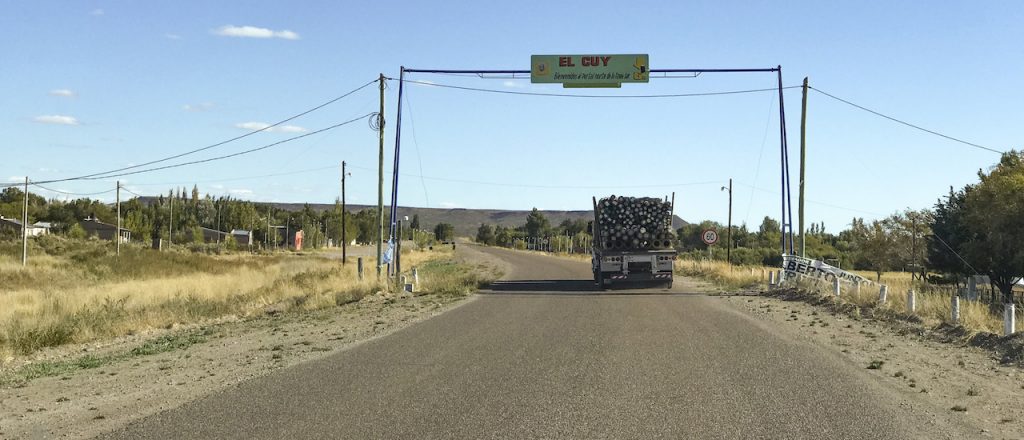
Community networks connect people, helping to close the global digital divide one community at a time. At the Internet Society, we believe so much in this vision, we made ambitious goals for 2020.
We set out to support new networks, give people the training they need to deploy and manage them, bring people together to build a stronger community, and create and promote policies that support community networks (CNs), enabling more people to start or improve existing networks.
COVID-19 made this work especially pressing. Almost overnight, the Internet had become a lifeline to many, helping them to stay connected to friends and family, work and study from home, and access vital information and public services.
As the world saw the digital divide clearer than it ever has, the pandemic made working with communities harder. We had to adapt, change plans, and look for creative solutions to help people access the opportunities the Internet provides. It was one of the most challenging years in recent history, but through long-standing and new partnerships we were able to achieve our goals. Thank you to all our partners who made it possible!
Together, we trained over 300 people in skills for creating, operating, Continue reading
Lorem ipsum dolor sit amet, consectetur adipiscing elit, sed do eiusmod tempor incididunt ut labore et dolore magna aliqua. Ut enim ad minim veniam, quis nostrud exercitation ullamco laboris nisi ut aliquip ex ea commodo consequat. Duis aute irure dolor in reprehenderit in voluptate velit esse cillum dolore eu fugiat nulla pariatur. Excepteur sint occaecat […]
The post Sollicitudin ac orci phasellus egestas appeared first on Noction.
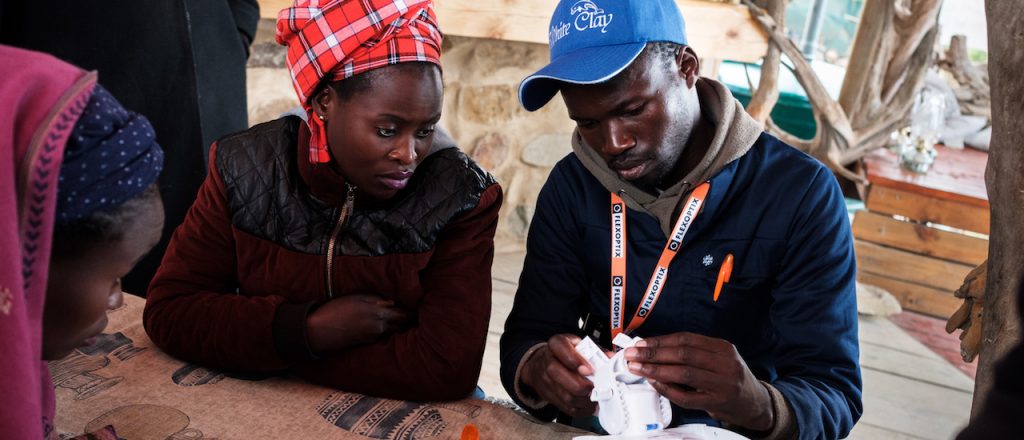
At the Virtual Summit on Community Networks in Africa over 200 local connectivity network operators learn better ways to bring affordable and reliable connectivity to underserved communities.
Every year since 2016, community network operators, allies, partners, policymakers, and regulators in the region gather for the Summit on Community Networks in Africa. The gathering enables them to learn, share experiences, collaborate, and find solutions to connect the unconnected.
Last year’s summit was held in Dodoma, Tanzania under the theme Towards Resilient Community Networks. Fantsuam Foundation, one of the oldest community networks in Africa, who after building a vast network lost everything due to sectarian violence, inspired this theme.
This year’s event built on 2019’s theme but focused on navigating new challenges community networks faced in 2020 as they grappled with the impact of the COVID-19 pandemic.
Although the global pandemic prevented a physical gathering for the community networks, it presented an opportunity to reimagine the summit and find ways to promote collaboration, engagement, and learning among community network operators as well as the supporting ecosystem.
During the pandemic, access to the Internet has become a lifeline with day-to-day activities shifting online and responses to curb the spread of the virus with Continue reading

Docker Captains are select members of the community that are both experts in their field and are passionate about sharing their Docker knowledge with others. “Docker Captains Take 5” is a regular blog series where we get a closer look at our Captains and ask them the same broad set of questions ranging from what their best Docker tip is to whether they prefer cats or dogs (personally, we like whales and turtles over here). Today, we’re interviewing Gianluca Arbezzano who has been a Docker Captain since 2016. He is a Senior Software Staff Engineer at Equinix Metal and is based in Italy.
How/when did you first discover Docker?
At this point, it is not easy to pick a date. Four years ago I was in Dublin away from my home town near Turin. The Docker Meetup along with many other meetups were a great opportunity for nerds like me looking for new friends and to grab free pizza while having a good time. Back then I was working for a company that helps businesses move to the cloud. I saw that Docker was a powerful tool to master. Not only was Docker a useful tool and led me Continue reading