0
The
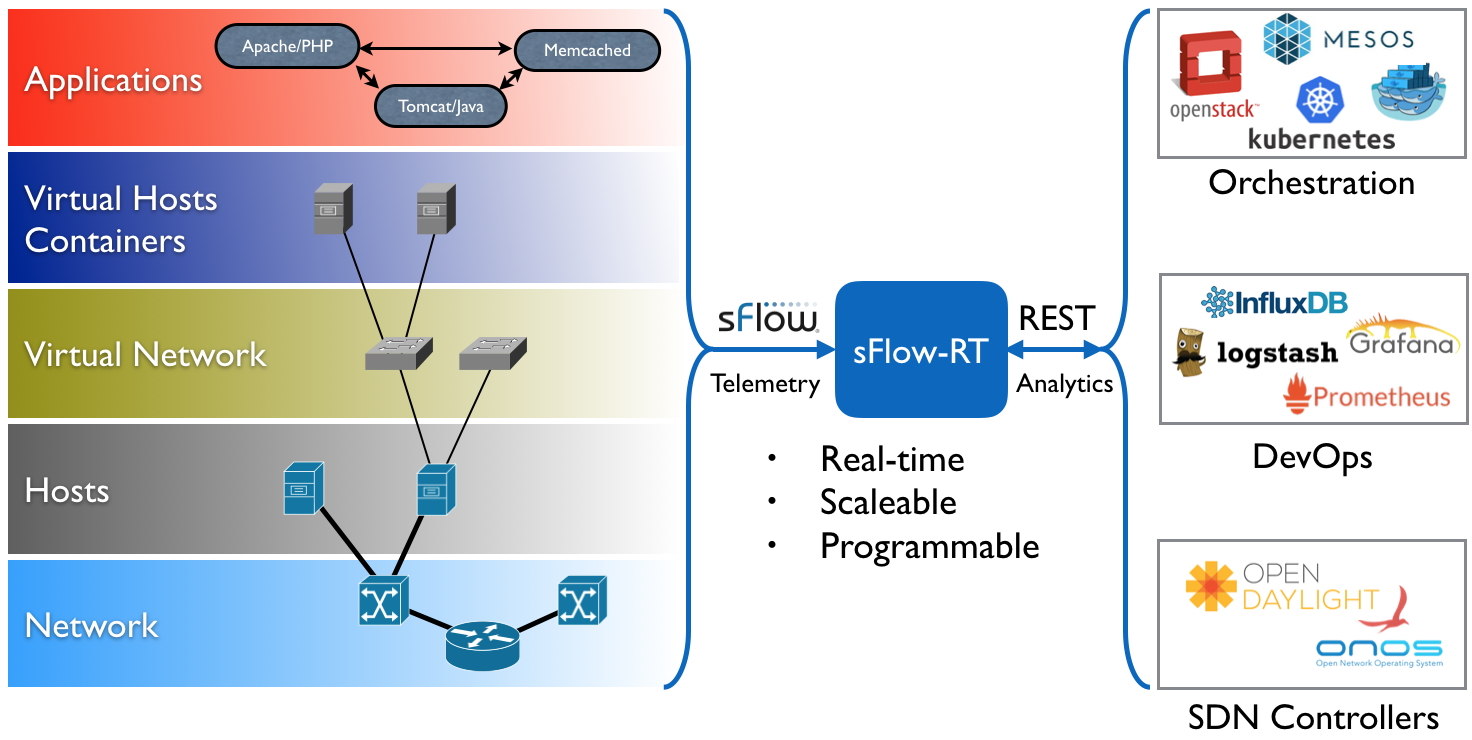
sFlow-RT real-time analytics platform receives a continuous telemetry stream from
sFlow Agents embedded in network devices, hosts and applications and converts the raw measurements into actionable metrics, accessible through open APIs, see
Writing Applications.
Application development is greatly simplified if you can emulate the infrastructure you want to monitor on your development machine.
Mininet flow analytics,
Mininet dashboard, and
Mininet weathermap describe how to use the open source
Mininet network emulator to simulate networks and generate a live stream of standard
sFlow telemetry data.
This article describes how to use
Docker containers as a development platform.
Docker Desktop provides a convenient method of running Docker on Mac and Windows desktops. These instructions assume you have already installed Docker.
Start a
Host sFlow agent using the pre-built
sflow/host-sflow image:
docker run --rm -d -e "COLLECTOR=host.docker.internal" -e "SAMPLING=10" \
--net=host -v /var/run/docker.sock:/var/run/docker.sock:ro \
--name=host-sflow sflow/host-sflow
Note: Host, Docker, Swarm and Kubernetes monitoring describes how to deploy Host sFlow agents to monitor large scale container environments.
Start an
iperf3 server using the pre-built
sflow/iperf3 image:
docker run --rm -d -p 5201:5201 --name iperf3 sflow/iperf3 -s
In a separate terminal window, run the following command to start sFlow-RT:
Continue reading