We’ll start with the basics, explore the ways to automate cloud deployments (after all, you wouldn’t want to repeat the past mistakes and configure everything with a GUI, would you?), touch on compute and storage infrastructure, and the focus on the networking aspects of public cloud deployments including:
After the release of the previous article outlining the data and control plane security for IPv4 in Cisco, Nokia and Mellanox/Cumulus (link) I’ve got several requests about the security in IPv6. The requests were fair enough and with this article we close this gap.
1
2
3
4
5
No part of this blogpost could be reproduced, stored in a

retrieval system, or transmitted in any form or by any

means, electronic, mechanical or photocopying, recording,

or otherwise, for commercial purposes without the

prior permission of the author.
The importance of the security for the network in terms of the control and data plane protection was explained in the previous article Continue reading
Arista this week rolled out software it hopes will help customers more easily fuse enterprise-class networking with on-premises and hybrid-cloud services.The company rolled out two new packages. One, CloudEOS Multi Cloud, normalizes the network connectivity to and between private clouds or public clouds. The package sets up a virtual machine and can redirect traffic across the most effective and efficient networking path using real-time topology, in-band telemetry and other attributes, the company said. It also automatically encrypts all traffic on those paths as well. To read this article in full, please click here
Space communications start-up Swarm Technologies will begin delivering commercial, bi-directional Internet of Things (IoT) data early next year, according to the company, which has just received its regulatory go-ahead to launch its satellites and transmit.“Swarm will begin rolling out its commercial, two-way data offerings in early 2020,” Sara Spangelo, co-founder and CEO told me in a recent e-mail. The company aims to deploy 150 satellites before the end of 2020, she says. The FCC, in October, granted Part 25 approval for the startup to deploy and operate 150 non-geostationary, Low Earth Orbit (LEO) satellites, for non-voice purposes.To read this article in full, please click here
The Spirent Test Center is one of the traffic generation tools I use in my job. I am creating a youtube series on varying use cases and aspects with it. Kinda a “how to” and “lessons learned over the years”... Read More ›
There is much at stake in the world of datacenter inference and while the market has not yet decided its winners, there are finally some new metrics in the bucket to aid decision-making. …
Run Kubeflow natively on Docker Desktop for Mac or Windows
This is a guest post by Alex Iankoulski, Docker Captain and full stack software and infrastructure architect at Shell New Energies.The views expressed here are his own and are neither opposed or endorsed by Shell or Docker.
In this blog, I will show you how to use Docker Desktop for Mac or Windows to run Kubeflow. To make this easier, I used my Depend on Docker project, which you can find on Github.
Rationale
Even though we are experiencing a tectonic shift of development workflows in the cloud era towards hosted and remote environments, a substantial amount of work and experimentation still happens on developer’s local machines. The ability to scale down allows us to mimic a cloud deployment locally and enables us to play, learn quickly, and make changes in a safe, isolated environment. A good example of this rationale is provided by Kubeflow and MiniKF.
Overview
Since Kubeflow was first released by Google in 2018, adoption has increased significantly, particularly in the data science world for orchestration of machine learning pipelines. There are various ways to deploy Kubeflow both on desktops and servers as described in Continue reading
In a bid to improve digital accessibility in Pakistan – a country with about 30 million persons with disability (PWDs), according to the World Health Organization – we recently partnered with the Ministry of IT (MoIT) and the National IT Board (NITB) so that more existing government websites could include accessibility features and future websites could incorporate such designs. We set out to make five websites more accessible – as a start – and are already seeing encouraging results.
According to local study and research paper, a majority of websites in Pakistan, including government, are not accessible for PWDs. PWDs face various challenges in using websites based on their impairment.
The Day Two Cloud podcast is getting a new co-host, Ethan Banks; and becoming a weekly show! Now you can get deep dives on cloud and infrastructure topics including Kubernetes, cloud security, design and deployment, and more every week.
The Day Two Cloud podcast is getting a new co-host, Ethan Banks; and becoming a weekly show! Now you can get deep dives on cloud and infrastructure topics including Kubernetes, cloud security, design and deployment, and more every week.
For much of the decade, a debate around Arm was whether it would fulfill its promise to become a silicon designer with suppliers of any significance to datacenter hardware. …
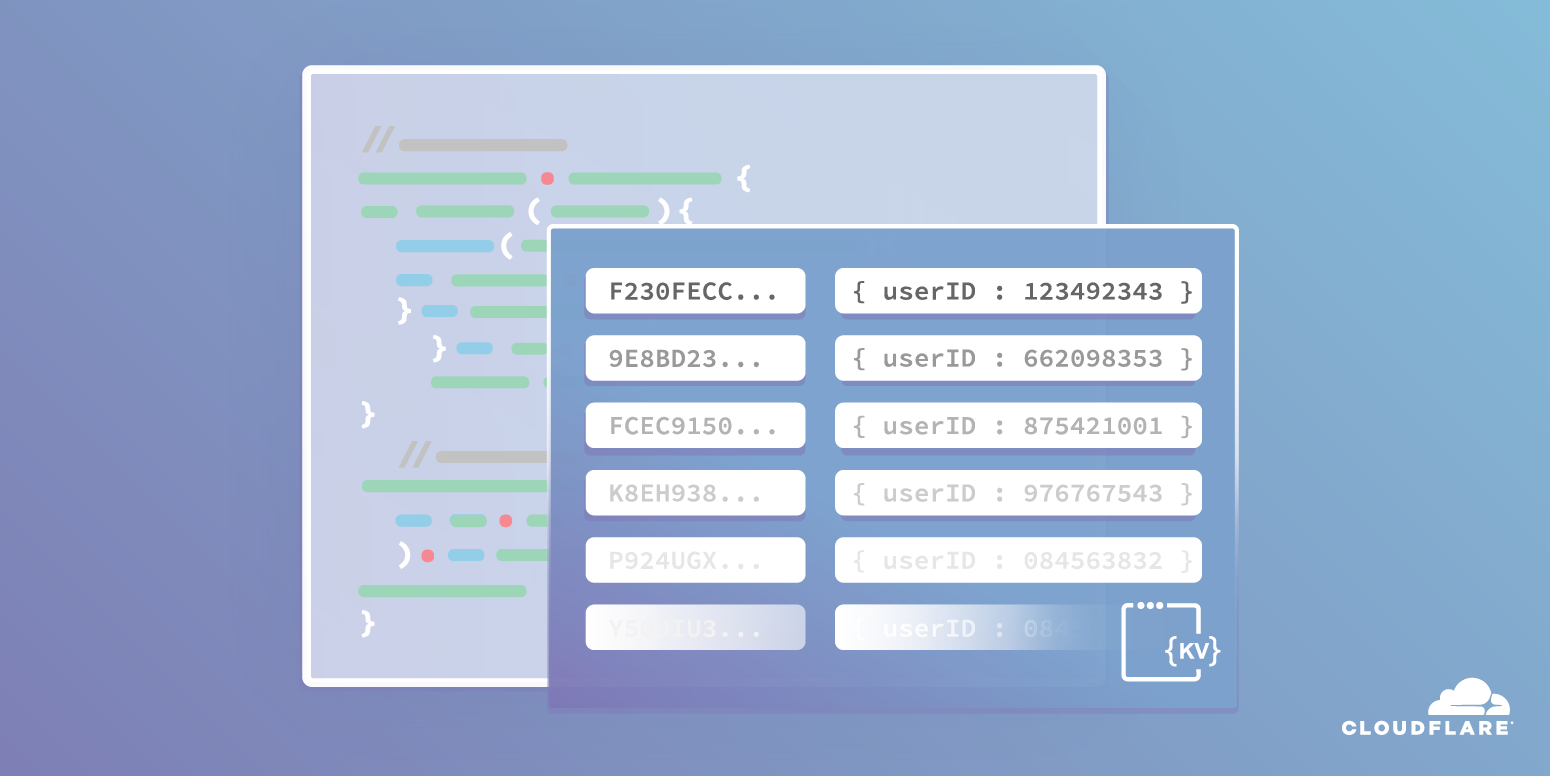
The Storage team here at Cloudflare shipped Workers KV, our global, low-latency, key-value store, earlier this year. As people have started using it, we’ve gotten some feature requests, and have shipped some new features in response! In this post, we’ll talk about some of these use cases and how these new features enable them.
New KV APIs
We’ve shipped some new APIs, both via api.cloudflare.com, as well as inside of a Worker. The first one provides the ability to upload and delete more than one key/value pair at once. Given that Workers KV is great for read-heavy, write-light workloads, a common pattern when getting started with KV is to write a bunch of data via the API, and then read that data from within a Worker. You can now do these bulk uploads without needing a separate API call for every key/value pair. This feature is available via api.cloudflare.com, but is not yet available from within a Worker.
For example, say we’re using KV to redirect legacy URLs to their new homes. We have a list of URLs to redirect, and where they should redirect to. We can turn this list into JSON that Continue reading