Nutanix Reports Strong Revenue, Buys Minjar, Plans Hyperconverged Cloud Domination
 Minjar sells a service that compares costs across public clouds.
Minjar sells a service that compares costs across public clouds.
There was concern in some scientific quarters last year that President Trump’s election could mean budget cuts to the Department of Energy (DoE) that could cascade down to the country’s exascale program at a time when China was ramping up investments in its own initiatives.
The worry was that any cuts that could slow down the work of the Exascale Computing Project would hand the advantage to China in this critical race that will have far-reaching implications in a wide range of scientific and commercial fields like oil and gas exploration, financial services, high-end healthcare, national security and the military. …
U.S. Exascale Efforts Benefit in FY 2019 Budget was written by Jeffrey Burt at The Next Platform.
In my previous post, NSX Layer 2 VPN: Migrating workloads between Datacentres, I described the process and theory behind using an NSX Layer 2 VPN (L2VPN) to migrate workloads from a soon-to-be-retired VLAN backed datacentre, to an NSX Managed logical switch backed datacentre. In this post I will take you through the deployment of the L2VPN in my lab environment, following these high-level steps:
The Lab environment I am using currently reflects the diagram below, with two VMs deployed onto VLAN 20 within my “remote” site (my remote site is actually just a separate cluster from my “NSX Managed Site”, which is my workload cluster). In my NSX Managed site I have a Provider Logical Router (PLR) and Distributed Logical Router (DLR) configured.

Current lab layout
To prepare the NSX Managed Site the L2VPN-Server needs to be connected to a “trunk” interface, which allows multiple VLAN or Logical Switches to be configured as sub-interfaces, rather than having an interface in each VLAN/Logical Switch.
The Continue reading
On today’s episode of “The Interview” with The Next Platform we talk with Doug Miles who runs the PGI compilers and tools team at Nvidia about the past, present, and future of OpenACC with an emphasis on what lies ahead in the next release.
Over the last few years we have described momentum with OpenACC in a number of articles covering everything from what it means in the wake of new memory options to how it pushes on OpenMP to develop alongside. Today, however, we take a step back with an HPC code veteran for the bigger picture and …
OpenACC Developments: Past, Present, and Future was written by Nicole Hemsoth at The Next Platform.
Peter Welcher examines the pros and cons of Network Address Translation and describes design scenarios.
 Resource savings with containers is pegged at around 40 percent.
Hey, it's HighScalability time:
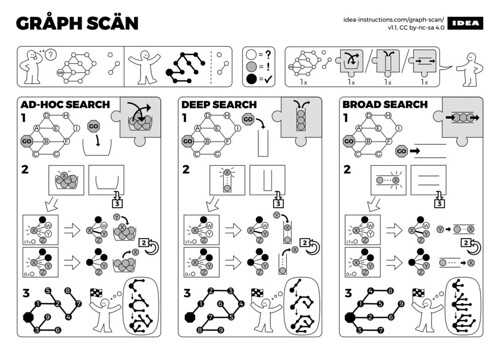
Algorithms described like IKEA instructions. Can anyone assemble these? (Algorithms and data structures)
If you like this sort of Stuff then please support me on Patreon. And please consider recommending my new book—Explain the Cloud Like I'm 10—to whole entire world.
In my latest short take over at the Network Collective, I explain the difference between engineering and metaengineering.
 Thanks to all who joined us for the first of The Modern Telco is Open Series, The Open Telco Framework. During the webinar, we saw how Red Hat’s open 5G architecture foundation helps modern telcos deploy new services (MEC apps, vRAN, IoT) – faster, economically and at massive scale. After the webinar, we had a live Q&A with... Read more →
 Cisco forms IoT, 5G, and smart city partnerships; Softbank and Affirmed Networks strike an IoT agreement; VMware launches edge technology.
This is the last article from the series of the articles discussing configuration of the enterprise network. The article explains the configuration of Demilitarized Zone (DMZ). Our DMZ consists of three devices - ASAv-DMZ-I, a multilayer switch vIOS-DMZ-I and Serv-DMZ-I. All the devices in DMZ are run by Qemu hypervisor. The ASAv_DMZ-I device is Cisco Adaptive Security Appliance Software version 9.6.1 and it has assigned 2048 MB RAM by GNS3. The device vIOS-DMZ-I is Cisco vIOS-L2 version 15.2 and it has assigned 512 MB RAM by GNS3. And finally, the device Serv-DMZ-I is Linux Ubuntu 16.04.3 LTS with 1024 MB RAM assigned by GNS3. The server Serv-DMZ-I provides DNS, NTP, Syslog services for devices in DMZ and a public web service for all hosts in the Internet.

Picture 1 - Demilitarized Zone - DMZ
All devices located in DMZ have their IP addresses assigned from the subnet 195.1.1.128/25. The subnet 195.1.1.128/27 is further divided with /30 mask, creating 8 subnets suitable for point-to-point link configuration . Servers located in DMZ are assigned to different VLANs. Currently, there is only server Serv-DMZ-I deployed in DMZ and configured with the IP addresses Continue reading
This is the last article from the series of the articles discussing configuration of the enterprise network. The article explains the configuration of Demilitarized Zone (DMZ). Our DMZ consists of three devices - ASAv-DMZ-I, a multilayer switch vIOS-DMZ-I and Serv-DMZ-I. All the devices in DMZ are run by Qemu hypervisor. The ASAv_DMZ-I device is Cisco Adaptive Security Appliance Software version 9.6.1 and it has assigned 2048 MB RAM by GNS3. The device vIOS-DMZ-I is Cisco vIOS-L2 version 15.2 and it has assigned 512 MB RAM by GNS3. And finally, the device Serv-DMZ-I is Linux Ubuntu 16.04.3 LTS with 1024 MB RAM assigned by GNS3. The server Serv-DMZ-I provides DNS, NTP, Syslog services for devices in DMZ and a public web service for all hosts in the Internet.
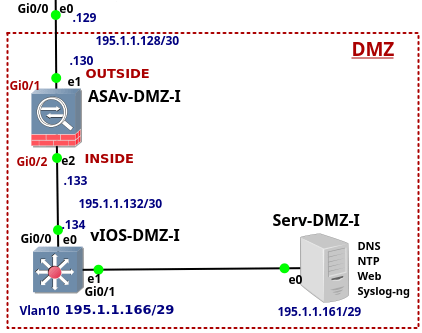
Picture 1 - Demilitarized Zone - DMZ
All devices located in DMZ have their IP addresses assigned from the subnet 195.1.1.128/25. The subnet 195.1.1.128/27 is further divided with /30 mask, creating 8 subnets suitable for point-to-point link configuration . Servers located in DMZ are assigned to different VLANs. Currently, there is only server Serv-DMZ-I deployed in DMZ and configured with the IP addresses Continue reading
What’s the difference between being an engineer or a metaengineer? In this Network Collective Short Take, Russ White differentiates between the two and explores when it makes sense to be one or the other.


The post Short Take – Metaengineering appeared first on Network Collective.

In case you haven’t heard, there’s a new vector for Distributed Denial of Service (DDoS) attacks out there right now and it’s pretty massive. The first mention I saw this week was from Cloudflare, where they details that they were seeing a huge influx of traffic from UDP port 11211. That’s the port used by memcached, a database caching system.
Surprisingly, or not, there were thousands of companies that had left UDP/11211 open to the entire Internet. And, by design, memcached responds to anyone that queries that port. Also, carefully crafted packets can be amplified to have massive responses. In Cloudflare’s testing they were able to send a 15 byte packet and get a 134KB response. Given that this protocol is UDP and capable of responding to forged packets in such a way as to make life miserable for Cloudflare and, now, Github, which got blasted with the largest DDoS attack on record.
How can you fix this problem in your network? There are many steps you can take, whether you are a system admin or a network admin:
Computing used to be far away.
It was accessed via remote command terminals, through time sliced services. It was a pretty miserable experience. During the personal computing revolution, computing once again became local. It would fit under your desk, or in a small dedicated “computer rooms”. You could touch it. It was once more, a happy and contented time for computer users. The computer was personal again. There was a clue in the name.
However, as complexity grew, and as networks improved, computing was effectively taken away again and placed in cold dark rooms once more far, far away for …
Hardware as a Service: The New Missing Middle? was written by James Cuff at The Next Platform.
Hyperscale companies like AWS have led the way on automation, but enterprise IT can close the gap by following these steps.