Python Quick Reference
Best Practices Python Style Guide Comment Doc String Variable String Integer Boolean List Tuple Dictionary For Loop While Loop If, Elif, Else Function Class Using Modules continue reading
Best Practices Ruby Style Guide Rails Testing Best Practices Comment Variable String Stings are mutable in Ruby HERE Doc HERE are used for multi-line strings Symbol Symbols are similar to strings except they are immutable Integer Boolean Array Hash # New syntax - Ruby >= 1.9 For Loop #...continue reading
![]() |
| Fig 1.1- Cisco Continue reading |
At Cloudflare we're extensively using the Go programming language to build a better Internet. Go is a free and open source programming language created by Google in 2007 and open sourced in 2009. Earlier this year, Go made news when it entered the list of top 10 programming languages on the TIOBE Index.
Recently we launched an internal monthly Go Hack Night at our San Francisco office, open to anyone who works at Cloudflare regardless of their department or position. Anyone from newbie programmers to our most experienced Go engineers are encouraged to attend, and experienced engineers are asked to throw on a mentor badge and help guide colleagues with installing and learning Go.
We had over 30 attendees at our inaugural Go Hack Night, and our survey reveals some great stats:
We actively encourage an inclusive learning culture and we're super excited to make the Go programming language more accessible to our entire company.
If you're interested in working with Go and helping to build a better Internet, we're hiring!
P.S. if Continue reading
![]() |
| Fig 1.1- Basic POE Switch connected with IP Cameras |
![]() |
| Fig 1.2- POE switch with IP-Phones |
October is European Cybersecurity Month, an annual advocacy campaign to raise awareness of cyber risks among citizens and businesses, and to share best practices in cybersecurity. This year’s campaign was launched at an event in Estonia, a country which both holds the current Presidency seat of the European Council and is well known as being highly cyber aware and digitally savvy.
It is fitting, therefore, that it is under Estonia’s Presidency that the European Commission announced a number of initiatives last month aimed at stepping up the European Union’s cybersecurity capacity and response to cyber attacks, while laying the foundations for increased cyber awareness and better cyber hygiene overall.
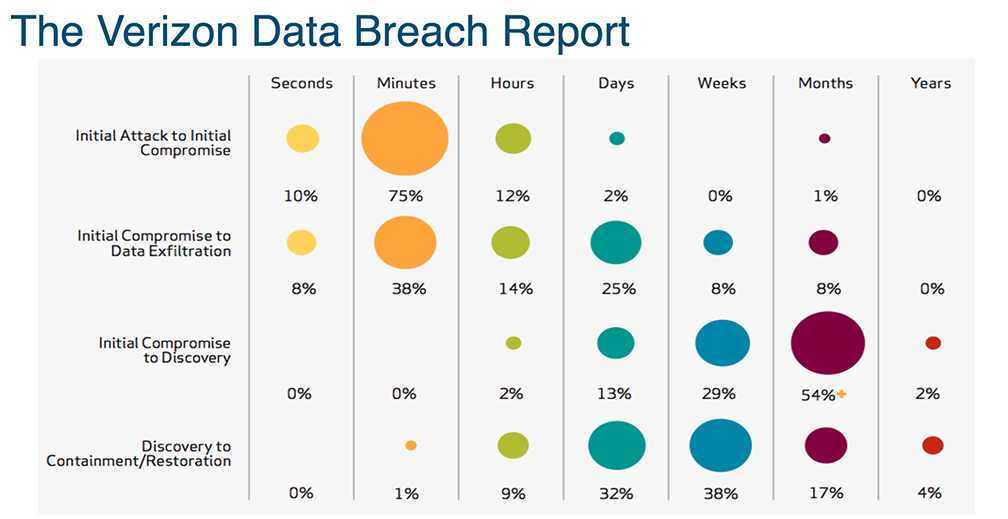
This EU’s Cybersecurity Strategy is a welcome initiative, as we already know that the overall cyber threat level is rising. At Cloudflare, we deal with a new type of DDoS attack every 3 minutes, and it has been that way for the last 6 months. This year alone, we've seen a DDoS attack that peaked at 300 Mpps and another at 480 Gbps. Furthermore, as DDoS mitigation companies like Cloudflare have become adept at handling 'traditional' DDoS attacks, the attackers have also adapted and increasingly try out new techniques.
Here’s a catalog of all the media I produced (or helped produce) in September 2017.
I closed down the Hot Aisle newsletter after months of struggling to know what to do with it. Originally, the Hot Aisle was a way for me to express my individual voice about networking, design, emerging trends, and the IT industry without necessarily having that opinion attached to Packet Pushers, my company. It was also an unsponsored newsletter, which I felt was a nice thing to be able to Continue reading
Here’s a catalog of all the media I produced (or helped produce) in September 2017.
I closed down the Hot Aisle newsletter after months of struggling to know what to do with it. Originally, the Hot Aisle was a way for me to express my individual voice about networking, design, emerging trends, and the IT industry without necessarily having that opinion attached to Packet Pushers, my company. It was also an unsponsored newsletter, which I felt was a nice thing to be able to Continue reading
In just over two months it will be time for the Juniper customer summit known as NXTWORK 2017. This is an …
The post Juniper NXTWORK 2017 appeared first on Fryguy's Blog.
Arista is largely known for its operating system, best known as EOS. Arista has been known to deploy new features at a more rapid pace than other vendors and to have a more open OS–since EOS was the first production-grade network network operating system to expose any form of Linux to end users.
Because of this, I believe it’s perceived Arista has a better programmability strategy than other vendors. From what I can tell, it is not the case. However, given a few features Arista has in EOS, it makes programming EOS a bit easier than other platforms. Let’s take a look.
At Network Field Day 16, Arista reviewed their programmability strategy. There were 5 core components reviewed:
Before diving into each of these, I’ll first point out that when I look at “OS programmability,” what is important [to me] is device-level programmability (not controllers or streaming capabilities–those are important topics, but should be covered on their own). Programmability is the ability to program change on a device, isn’t it? Now let’s look at the 5 components in Arista’s strategy.
EAPI - it’s a great API for learning to program an EOS switch. This Continue reading
Arista is largely known for its operating system, best known as EOS. Arista has been known to deploy new features at a more rapid pace than other vendors and to have a more open OS–since EOS was the first production-grade network network operating system to expose any form of Linux to end users.
Because of this, I believe it’s perceived Arista has a better programmability strategy than other vendors. From what I can tell, it is not the case. However, given a few features Arista has in EOS, it makes programming EOS a bit easier than other platforms. Let’s take a look.
At Network Field Day 16, Arista reviewed their programmability strategy. There were 5 core components reviewed:
Before diving into each of these, I’ll first point out that when I look at “OS programmability,” what is important [to me] is device-level programmability (not controllers or streaming capabilities–those are important topics, but should be covered on their own). Programmability is the ability to program change on a device, isn’t it? Now let’s look at the 5 components in Arista’s strategy.
EAPI - it’s a great API for learning to program an EOS switch. This Continue reading
If you are one of the thousands that will be in San Francisco for JavaOne Oct 1-5th, don’t miss the opportunity to level-up your knowledge around container technology and Docker Community and Enterprise Edition. We’ve listed our must-attend sessions below:
Monday, Oct 02, 11:00 a.m. – 11:45 a.m. | Java in a World of Containers [CON4429]
Speakers: Paul Sandoz and Mikael Vidstedt, Oracle
This session explains how OpenJDK 9 fits into the world of containers, specifically how it fits with Docker images and containers. The first part of the session focuses on the production of Docker images containing a JDK. It introduces technologies, such as J-Link, that can be used to reduce the size of the JDK and discusses the inclusion of class-data-sharing (CDS) archives and ahead-of-time (AOT) shared object libraries. The second part describes how the Java process can be a good citizen when running within a Java container and obeying resource limits. The presentation also covers the role of CDS archives and AOT shared object libraries that can be shared across running containers to reduce startup time or memory usage.
8:30 a.m. – 10:30 a.m. | Continue reading
Address resolution protocol (ARP) is a method for mapping IPv4 addresses to MAC addresses. There are a few different flavours of ARP that have evolved over the years. ARP Regular ARP maps an unknown MAC address to a known IPv4 address and is defined in RFC826. ARP Operation ...continue reading
Dynamic host configuration protocol (DHCP) is used to automatically assign IP addresses to hosts in a network. DHCP is defined in rfc2131. DHCP DHCP uses UDP as its transport protocol. Messages are passed on ports 67 (client to server) and 68 (server to client). There are four...continue reading