Strange Error with the Azure CLI
Over the last week or so, I’ve been trying to spend more time with Microsoft Azure; specifically, around some of the interesting things that Azure is doing with containers and Kubernetes. Inspired by articles such as this one, I thought it would be a pretty straightforward process to use the Azure CLI to spin up a Kubernetes cluster and mess around a bit. Simple, right?
Alas, it turned out not to be so simple (if it had been simple, this blog post wouldn’t exist). The first problem I ran into was the upgrading the Azure CLI from version 2.0.13 to version 2.0.20 (which is, to my understanding, the minimum version needed to do what I was trying to do). I’d installed the Azure CLI using this process, so pip install azure-cli --upgrade should take care of it. Unfortunately, on two out of three systems on which I attempted this, the Azure CLI failed to work after the upgrade. I was only able to fix the problem by completely removing the Azure CLI (which I’d installed into a virtualenv), and then re-installing it. First hurdle cleared!
With the Azure CLI upgraded, I proceeded to Continue reading
Enterprise Networks and Telco Clouds on a Collision Course
The internet of things will move more processing to telecom suppliers' facilities.
Enterprise Networks and Telco Clouds on a Collision Course
The internet of things will move more processing to telecom suppliers' facilities.
Worth Reading: Contrarian View on NAT
I love reading well-argued contrarian views, and Geoff Huston’s Opinion in Defense of NAT is definitely worth the time it will take you to read it.
TL&DR: Geoff argues that with all the wastage going on in IPv6 land (most bizarre: let’s give a /48 to every residential subscriber) the number of bits available for IPv6 endpoint addressing gets close to what we can squeeze out of IPv4 NAT.
Modernizing Applications from PoC to Production with Docker Enterprise Edition
Containerizing a single legacy application with Docker Enterprise Edition (EE) can be quite simple and immediately makes the application more portable, scalable, and easier to manage and update. Taking this application to production requires additional planning and collaboration with security teams, performance testing and likely requires detailed operations and disaster recovery plans. This part of the process often has little to do with the technology but with the changes to the organization and governance model.
At DockerCon Europe, I presented a talk on the best practices and processes for taking a containerized legacy app or set of apps from a proof of concept (PoC) to production with these changes in mind. You can watch the full talk here:
A Prescriptive and Repeatable Methodology
The Modernize Traditional Apps [MTA] Program is the result of working with hundreds of companies over the years with deploying and using Docker Enterprise Edition [EE]. Those experiences have been transformed into a prescriptive methodology with best practices and considerations to help you get successfully from PoC to production.
After the PoC there is a short assessment phase of the existing organization, tools, and processes and then choosing the pilot application that is representative of the application Continue reading
Firewalls Checkpoint : Check Point 1100 Security Appliances Introduction
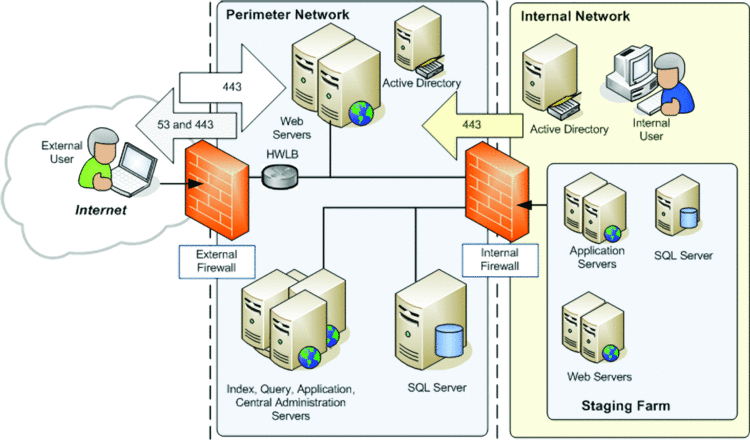 |
| Fig 1.1- Basic Firewall deployment in the Network |
Cisco Access Points- Basics, Comparison with Aruba and Ruckus
 |
| Fig 1.1- Cisco Aironet Network Topology |
 |
| Fig 1.2- Cisco Aironet Models |
- The industry's first wireless access point with integrated 802.11ac Wave 1 radio to support a 4x4 MIMO with Continue reading
Introduction to Cloud Computing : Private, Public and Hybrid Cloud Models
RONOG4 meeting in Bucharest, Romania
 The 4th edition of Romanian NOG (RONOG) is being held today, 31 October 2017, in Bucharest, Romania, and as the largest meeting of Internet technology professionals in Romania it is expecting to hit over 170 attendees.
As specified in the meeting agenda, I’ll deliver my talk about NAT64 experiments in the go6lab and also one very useful tool that came out of this testing – NAT64Check. I also have the honour of chairing the IPv6/IOT session.
I’m looking forward to being back in Bucharest and if you happen to be at RONOG4, please come and find me in the hallways as I’m always happy to chat about technology, IPv6, DNSSEC, DANE and everything else that makes our Internet a bit of a better place!
The post RONOG4 meeting in Bucharest, Romania appeared first on Internet Society.
How GlaxoSmithKline is Accelerating Science with Docker Enterprise Edition
GlaxoSmithKline is a global pharmaceutical company headquartered in the United Kingdom. Their company mission is “to help people do more, feel better, and live longer”. One way they are doing that is by using data science to find new drug formulations that can improve lives. At DockerCon Europe, Ranjith Raghunath, the director of Big Data Solutions and Lindsay Edwards, the head of Respiratory Data Sciences at GlaxoSmithKline presented how Docker Enterprise Edition (Docker EE) is helping them accelerate drug discovery through a project called Edge Node On Demand.
Letting Science Drive Technology at GlaxoSmithKline
Leveraging Data Science for Improved Outcomes
The biggest challenge in pharmaceutical research is that hundreds of drugs formulations need to be created to take one successfully to market only 3% of formulated molecules actually become medicine. Lindsay Edwards heads a Data Science group that is focused on respiratory illnesses like Chronic Obstructive Pulmonary Disease (COPD) and asthma. His group uses big data analytics to mine research data and previous patient trial data to arrive at results more rapidly.
However, data science is a new and emerging field. There are new software tools and open source data analytics solutions coming to market all the time and different hardware Continue reading