Protecting data on Apple devices with Cloudflare and Jamf
Today we’re excited to announce Cloudflare’s partnership with Jamf to extend Cloudflare’s Zero Trust Solutions to Jamf customers. This unique offering will enable Jamf customers to easily implement network Data Loss Prevention (DLP), Remote Browser Isolation (RBI), and SaaS Tenancy Controls from Cloudflare to prevent sensitive data loss from their Apple devices.
Jamf is a leader in protecting Apple devices and ensures secure, consumer-simple technology for 71,000+ businesses, schools and hospitals. Today Jamf manages ~30 million Apple devices with MDM, and our partnership extends powerful policy capabilities into the network.
“One of the most unforgettable lines I’ve heard from an enterprise customer is their belief that ‘Apple devices are like walking USB sticks that leave through the business’s front door every day.’ It doesn’t have to be that way! We are on a mission at Jamf to help our customers achieve the security and compliance controls they need to confidently support Apple devices at scale in their complex environments. While we are doing everything we can to reach this future, we can’t do it alone. I’m thrilled to be partnering with Cloudflare to deliver a set of enterprise-grade compliance controls in a novel way that leverages our Continue reading
Worth Reading: Eyes Like Saucers
Gerben Wierda published a nice description of common reactions to new unicorn-dust-based technologies:
- Eyes that glaze over
- Eyes like saucers
- Eyes that narrow
He uses generative AI as an example to explain why it might be a bad idea that people in the first two categories make strategic decisions, but of course nothing ever stops people desperately believing in vendor fairy tales, including long-distance vMotion, SDN or intent-based networking.
Worth Reading: Eyes Like Saucers
Gerben Wierda published a nice description of common reactions to new unicorn-dust-based technologies:
- Eyes that glaze over
- Eyes like saucers
- Eyes that narrow
He uses generative AI as an example to explain why it might be a bad idea that people in the first two categories make strategic decisions, but of course nothing ever stops people desperately believing in vendor fairy tales, including long-distance vMotion, SDN or intent-based networking.
The Value Of Thinking And Creating On The Asymptote To Zero
The introduction of writing and agriculture were watershed events for humanity, and are forever interlinked. …
The post The Value Of Thinking And Creating On The Asymptote To Zero first appeared on The Next Platform.
The Value Of Thinking And Creating On The Asymptote To Zero was written by Timothy Prickett Morgan at The Next Platform.
Hammering Out A Logical File System And A DNS For Data
Data is by its nature a messy beast, and it has only become more so as workloads have found their way out of the datacenter and into the cloud and even all the way out to the edge. …
The post Hammering Out A Logical File System And A DNS For Data first appeared on The Next Platform.
Hammering Out A Logical File System And A DNS For Data was written by Tobias Mann at The Next Platform.
Kubernetes Components: The Basics
Whether you run Kubernetes on-prem, in the cloud, or a combination of the two, one thing holds true – there is always a Control Plane element and a Worker Node element. Without them, Kubernetes wouldn’t exist. This post looks at the Control Plane and the Worker Node, including which components are in each, why each […]
The post Kubernetes Components: The Basics appeared first on Packet Pushers.
Cloudflare Zaraz steps up: general availability and new pricing

This post is also available in Deutsch, Français.
Cloudflare Zaraz has transitioned out of beta and is now generally available to all customers. It is included under the free, paid, and enterprise plans of the Cloudflare Developer Platform. Visit our docs to learn more on our different plans.
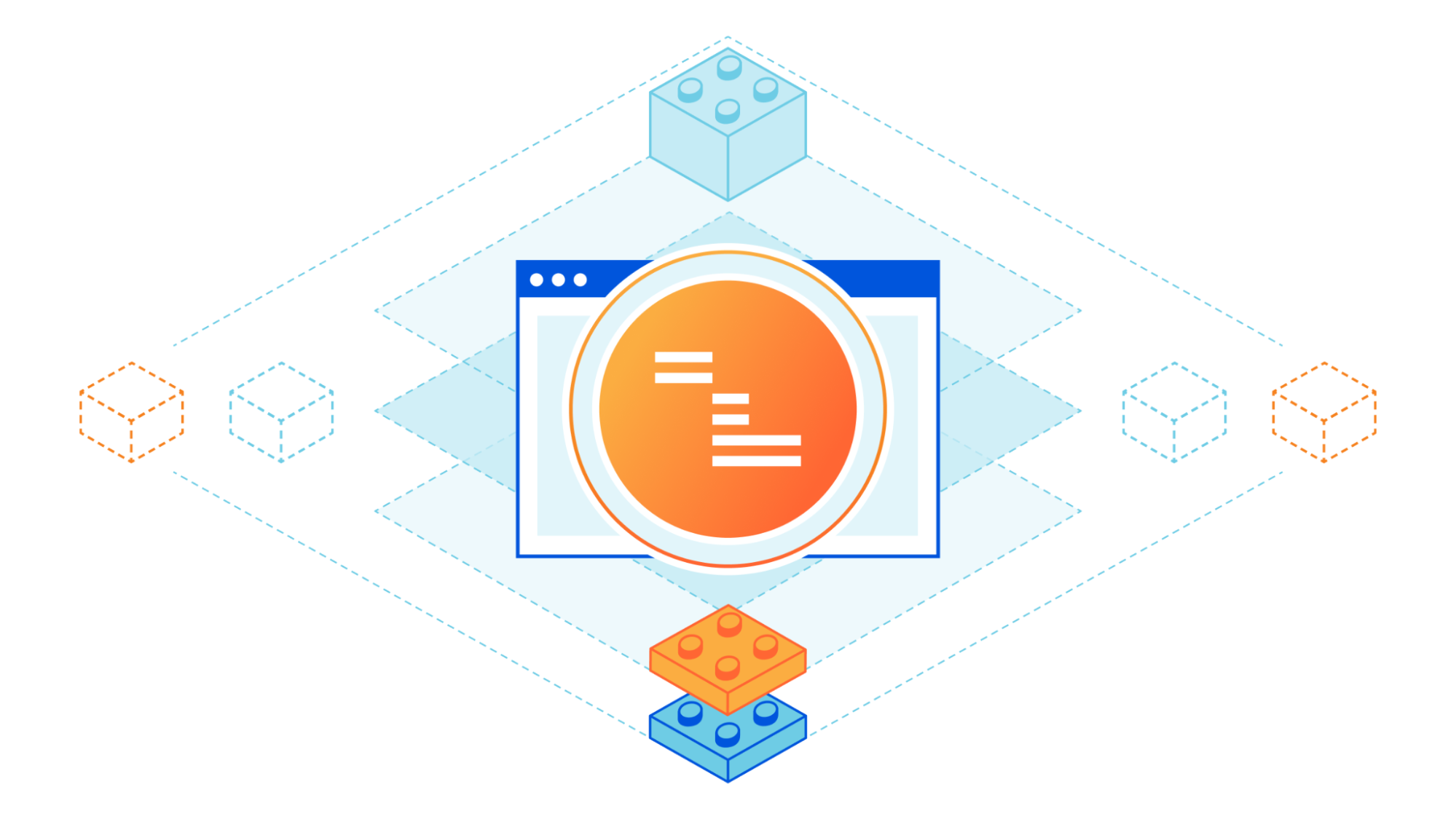
Zaraz is part of the Cloudflare Developer Platform
Cloudflare Zaraz is a solution that developers and marketers use to load third-party tools like Google Analytics 4, Facebook CAPI, TikTok, and others. With Zaraz, Cloudflare customers can easily transition to server-side data collection with just a few clicks, without the need to set up and maintain their own cloud environment or make additional changes to their website for installation. Server-side data collection, as facilitated by Zaraz, simplifies analytics reporting from the server rather than loading numerous JavaScript files on the user's browser. It's a rapidly growing trend due to browser limitations on using third-party solutions and cookies. The result is significantly faster websites, plus enhanced security and privacy on the web.
We've had Zaraz in beta mode for a year and a half now. Throughout this time, we've dedicated our efforts to meeting as many customers as we could, gathering feedback, and Continue reading
Day Two Cloud 203: Becoming An SRE – It’s More Than Just Software Skills
If you want to be a Site Reliability Engineer (SRE) you need strong software skills. You also have to be versed in observability, incident response, capacity planning, change management, performance, even security. But wait, there's more! Our guest on today's Day Two Cloud argues you need strong communication skills, emotional intelligence, personal resilience, and the ability to work with a team. Our guest is Amin Astaneh.Day Two Cloud 203: Becoming An SRE – It’s More Than Just Software Skills
If you want to be a Site Reliability Engineer (SRE) you need strong software skills. You also have to be versed in observability, incident response, capacity planning, change management, performance, even security. But wait, there's more! Our guest on today's Day Two Cloud argues you need strong communication skills, emotional intelligence, personal resilience, and the ability to work with a team. Our guest is Amin Astaneh.
The post Day Two Cloud 203: Becoming An SRE – It’s More Than Just Software Skills appeared first on Packet Pushers.
Is Neutral Host the Killer App for Private Wireless?
A more modern approach to lowering the cost and complexity of extending cellular signals indoors is driving a new generation of private cellular wireless within the enterprise.Unlocking efficiency: Harnessing the capabilities of ansible-builder 3.0
.png?width=1200&height=675&name=image%20(1).png)
We recently announced the general availability of Red Hat Ansible Automation Platform 2.4, This blog outlines the features of execution environment builder (ansible-builder) 3.0 that was included with this latest release.
With the introduction of Ansible Automation Platform 2, we introduced the concept of automation execution environments. A key part of enabling our customers to create, manage, and scale their automation, they are portable Ansible runtime environments which enable us to truly decouple the control and execution planes in Ansible Automation Platform. Automation execution environments replace the traditional virtual environments in Ansible Tower by providing a powerful dependency management solution. Customers can also improve their automation run efficiency, as they are lightweight Ansible runtime environments.
In general, an automation execution environment includes:
- Base UBI 8/9 image.
- A version of Python
- A version of ansible-core
- Python modules/dependencies
- Ansible Content Collections (optional)
The execution environment builder tool was built to aid in the creation of execution environments for Ansible customers and users. It provides a definition schema that is based on the above execution environment requirements.
Ansible-builder 3.0 enhancements
ansible-builder version 3.0 introduces some major changes in the definition schema to help customers Continue reading
The Arrival of Open AI Networking

Recently I attended the 50th golden anniversary of Ethernet at the Computer History Museum. It was a reminder of how familiar and widely deployed Ethernet is and how it has evolved by orders of magnitude. Since the 1970s, it has progressed from a shared collision network at 2.95 megabits in the file/print/share era to the promise of Terabit Ethernet switching in the AI/ML era. Legacy Ethernot* alternatives such as Token Ring, FDDI, and ATM generally get subsumed by Ethernet. I believe history is going to repeat itself for AI networks.
