tips berkendara aman, berkendara di tanjakan, cara mengemudi di jalan menanjak, tips mengemudi di jalan turunan, keselamatan berkendara di jalan curam

Berkendara di jalan menanjak dan turunan memerlukan teknik khusus agar tetap aman dan nyaman. Baik bagi pengendara motor maupun mobil, kondisi jalan seperti ini seringkali menantang konsentrasi dan keterampilan. Artikel ini akan membahas tips aman berkendara di jalan menanjak dan turunan yang wajib Anda ketahui untuk menghindari risiko kecelakaan dan menjaga keselamatan selama perjalanan.

Mengapa Perlu Hati-Hati Berkendara di Tanjakan dan Turunan?

Jalan menanjak dan turunan memiliki karakteristik yang berbeda dari jalan datar. Pada tanjakan, mesin kendaraan bekerja lebih keras untuk mengatasi medan yang lebih berat. Sedangkan di turunan, kendaraan cenderung melaju lebih cepat karena gravitasi, sehingga rem bekerja lebih intensif.

Kesalahan kecil seperti salah menginjak pedal gas atau rem bisa berakibat fatal. Oleh karena itu, penting untuk memahami teknik berkendara yang benar agar tetap aman.

Tips Aman Berkendara di Tanjakan (Berkendara di Tanjakan)

1. Pastikan Kendaraan dalam Kondisi Prima

Sebelum berkendara di tanjakan yang curam, pastikan kondisi kendaraan Anda optimal, terutama:

  • Sistem pengereman harus berfungsi dengan baik.
  • Transmisi dan kopling harus responsif.
  • Ban dalam kondisi cukup tekanan dan tidak aus.

2. Gunakan Gigi Rendah

Saat menghadapi jalan menanjak, gunakan gigi rendah agar tenaga mesin lebih besar. Hal ini membuat kendaraan tidak cepat kehilangan tenaga dan memudahkan pengendalian.

3. Jaga Continue reading

sejarah lagu kebangsaan, indonesia raya, makna lagu indonesia raya, lagu nasional indonesia, sejarah lagu indonesia raya

Lagu kebangsaan menjadi simbol persatuan dan identitas suatu bangsa. Bagi Indonesia, lagu Indonesia Raya bukan hanya sekadar lagu, tetapi juga merupakan representasi dari semangat dan cita-cita kemerdekaan. Artikel ini akan membahas sejarah lagu Indonesia Raya serta makna yang terkandung di dalamnya.

Asal Usul Lagu Indonesia Raya

Lagu Indonesia Raya diciptakan oleh Wage Rudolf Supratman pada tahun 1928. Saat itu, Indonesia masih berada di bawah penjajahan Belanda, dan lagu ini mengobarkan semangat perjuangan kemerdekaan di kalangan pemuda dan rakyat Indonesia.

Saksi Bisu Sumpah Pemuda

Lagu ini pertama kali diperdengarkan pada Kongres Pemuda II yang digelar pada 28 Oktober 1928, bertepatan dengan momen bersejarah Sumpah Pemuda. Lagu Indonesia Raya menjadi lambang persatuan bangsa yang beraneka ragam suku, budaya, dan bahasa. Melalui lagu ini, para pemuda menyuarakan tekad untuk bersatu dalam satu tanah air, satu bangsa, dan satu bahasa: Indonesia.

Peran Indonesia Raya dalam Perjuangan Kemerdekaan

Setelah diciptakan, lagu Indonesia Raya menjadi alat mobilisasi yang kuat dalam memperjuangkan kemerdekaan. Lagu ini sering dinyanyikan dalam berbagai kesempatan rahasia untuk mengobarkan semangat nasionalisme.

Namun, karena dianggap berbahaya oleh pemerintah kolonial Belanda, lagu ini sempat dilarang untuk diperdengarkan secara luas. Walaupun demikian, lagu ini tetap hidup di hati para pejuang kemerdekaan hingga akhirnya Indonesia meraih kemerdekaan Continue reading

Meet NFA v26.02, featuring BGP visibility tools, extended threshold matching, and SNMP reporting enhancements.

We’re excited to announce the release of Noction Flow Analyzer v26.02. This version includes a focused set of improvements that enhance BGP visibility, expand threshold-monitoring options, improve flow-processing performance, and refine the SNMP reporting experience. This update builds on the foundation of v26.01 and introduces new tools for network engineers who rely on real-time routing intelligence and traffic analysis.

BGP diagnostics and visibility tools

The biggest addition in v26.02 is a complete set of BGP diagnostics and visibility tools. These give network administrators new insights into routing behavior directly within NFA. The new BGP diagnostics panel introduces ping and traceroute checks, allowing engineers to run connectivity and path diagnostics without leaving the NFA interface. Additionally, a BGP Data Lookup feature enables direct queries against NFA’s internal BGP tables, supporting exact-match and more-specific match modes for precise prefix investigations. Finally, BGP History Lookup provides access to historical route events, including key attributes such as prefix, next-hop, AS path, and more. This makes it easier to trace routing changes over time and connect them with traffic events.

NFA 26.02
We’re excited to announce the release of Noction Flow Analyzer v26.02. This version includes a focused set of improvements that enhance Continue reading

Pytest for Automated Network Testing (II)

Pytest for Automated Network Testing (II)

In part one, we covered the basics of pytest and wrote our first network tests. We tested BGP and OSPF on a single device, then extended it to multiple devices. We also looked at parametrization and how it helps treat each device and each neighbour as an independent test.

In this part, we will cover inventory management with Nornir and pytest fixtures.

Pytest for Automated Network Testing
Pytest gives you full control. You write the test, you decide exactly what to check, and you get a clear pass or fail result. You can test one device
Pytest for Automated Network Testing (II)

Nornir Introduction

Nornir is a Python automation framework designed for network engineers. Instead of writing your own logic to connect to devices, manage inventory, and run tasks in parallel, Nornir handles all of that for you. We have a dedicated series on Nornir, which you can check out here, so we are not going to do a deep dive in this post.

The reason we are using Nornir here is for inventory and task management. Instead of hardcoding a list of IP addresses in our collection file, we define our devices in a hosts file with groups, credentials, and Continue reading

PP109: ThreatLocker Enforces Zero Trust With Strict Application Control (Sponsored)

ThreatLocker takes an opinionated approach to Zero Trust. The company, our sponsor for today’s episode, starts with application control. It uses endpoint software that runs on PCs and servers to allow or deny applications to run. It can also monitor and control the behavior of allowed applications. ThreatLocker has extended its platform to include network... Read more »

When “idle” isn’t idle: how a Linux kernel optimization became a QUIC bug

CUBIC, standardized in RFC 9438, is the default congestion controller in Linux, and as a result governs how most TCP and QUIC connections on the public Internet probe for available bandwidth, back off when they detect loss, and recover afterward. At Cloudflare, our open-source implementation of QUIC, quiche, uses CUBIC as its default congestion controller, meaning this code is in the critical path for a significant share of the traffic we serve.

In this post, we’ll tell the story of a bug in which CUBIC's congestion window (cwnd) gets permanently pinned at its minimum and never recovers from a congestion collapse event.

The story starts with a Linux kernel change aimed at bringing CUBIC into line with the app-limited exclusion described in RFC 9438 §4.2-12 — a fix to a real problem in TCP that, when ported to our QUIC implementation, surfaced unexpected behaviors in quiche. It has a happy ending: an elegant (near-)one-line fix that broke the cycle.

CUBIC's logic in a nutshell

Before we dive into the core problem, a quick refresher on Congestion Control Algorithms (CCAs) may help to set the stage.

The central knob a CCA turns is the congestion window (cwnd Continue reading

Reorganized ipSpace.net Segment Routing Resources

I created nine sample SR-MPLS topologies for the ITNOG 10 SR-MPLS workshop, and of course, we ran out of time. I plan to cover those topologies and resulting printouts in a series of blog posts; to prepare for those, I cleaned up and reorganized the Segment Routing blog category, which is now split into two:

Hope you’ll find them useful! Also, if you know of other non-vendor Segment Routing resources, please leave a comment, email me, or submit a pull request.

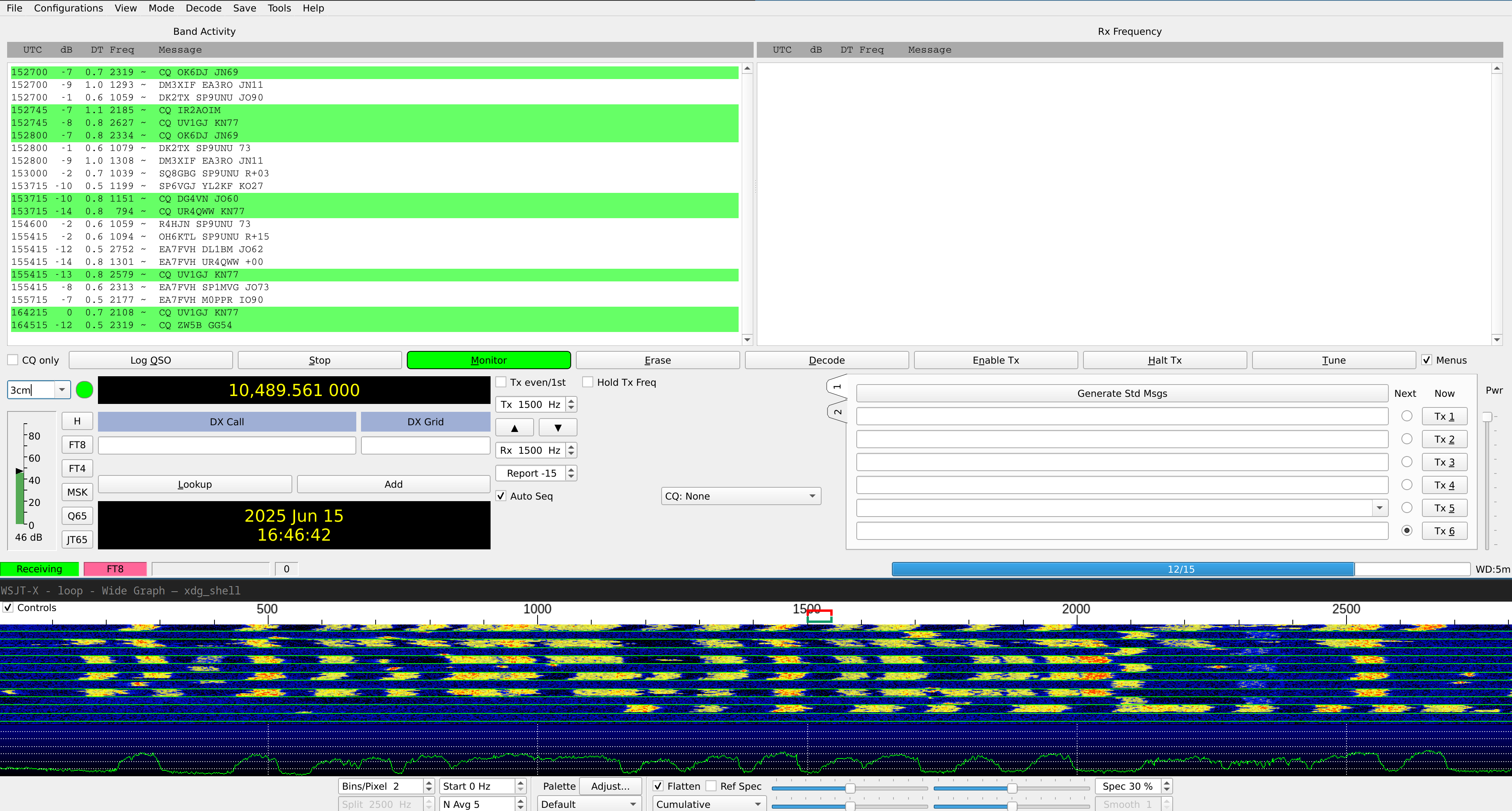
Quantum safe amateur radio secure shell

I’ve previously pointed out that the AX.25 implementation in the kernel is pretty poor. It’s not really being maintained, and even when it gets fixes after I reported it, with people running LTS OSs it can take like 5 years before before the fix actually reaches users, if ever. So when writing applications, you still have to work around kernel bugs from a decade ago. This makes it kind of pointless to upstream patches.

The exception is security patches, and reading between the lines of why the AX.25 code is now being removed from the kernel, it sounds like maybe some LLM (like the looming “Mythos” and the related Glasswing) may have found some severe problems. But even if there aren’t any known security problems yet, having code is now more of a liability than ever. Code needs to be removed, or taken responsibility of. (tangent about ffmpeg at the bottom of this post)

With the kernel code removed, say goodbye to the old walkthrough.

The new API

Well, not “new”, per se, but “replacement”.

With the socket based API about to be gone, we need some other way for applications to send packets and Continue reading