HN744: How BackBox Helps You Mitigate CVEs for Network Devices (Sponsored)
Today we explore a network automation use case for configuration compliance in the face of never-ending common vulnerabilities and exposures, or CVEs. If you can automate that compliance, you have a shot at keeping pace with the bots and attackers attempting to exploit those CVEs and breaching your network. Our guest is Rekha Shenoy, CEO... Read more »Setting Up Palo Alto Firewall in VMWare Workstation

Hi all, welcome back to another Palo Alto Firewall blog post. In this post, we will explore how to add a VM-Series Firewall into VMWare Workstation, set up the interfaces, and make initial configurations. This guide is designed for beginners who want to try the Palo Alto Firewall in their home lab but aren’t sure where to start.
Download the Image from the Palo Alto Portal
The first step is to download the image from the Palo Alto Customer Support Portal. To do this, you will need a valid support contract, as sharing the image with others is not allowed. I understand this can be frustrating, as it may seem like vendors make it difficult for users to access and use their products. However, if you use Palo Alto products at work, you might be able to download it there.
To download the required file, navigate to Updates > Software Updates in the portal. Look for the PA-VM section and download the file named PA-VM-ESX-10.1.3.ova (note that the version might differ).
Prepare VMWare Workstation
When setting up the Palo Alto Firewall in VMWare Workstation, I usually allocate 8 GB of RAM, 60 GB of disk space, Continue reading
TNO000: Announcing Total Network Operations – a New Podcast for Network Operators
Welcome to Total Network Operations, the podcast dedicated to the hardworking network operators who keep the bitpipes running smoothly. We focus on sharing best practices, the operations tool stack, and engage with vendors and solution providers to get insights into new technologies and tools so you can make informed decisions for your ops environment. Podcast... Read more »Why SecureCRT Works Best for Me?

What’s one tool you find is irreplaceable as a Network Engineer? For me, it’s SecureCRT. I’ve relied on it for over eight years and have picked up plenty of tricks along the way. Whenever I start a new job, I always make a case for the business to invest in SecureCRT licenses. Once my colleagues see what it can do, they often decide to get their own. In this blog post, I’ll walk you through some of its key features. Hopefully, you’ll see the benefits and maybe even consider trying it out for yourself.
Why SecureCRT When You Have Other Free Tools?
But you might wonder why you should pay for SecureCRT when there are free tools available. That's a fair question. If you're on Windows, tools like PuTTY are readily available, and I believe Windows 11 even comes with its own SSH client. For those on MacOS or Linux, the native terminal app usually does the job. There are also plenty of other free tools out there, like iTerm or Tmux. I’ve tried most of them, but I still prefer SecureCRT for the following reasons.
ℹ️
Disclaimer - Please note that this post is not paid for or sponsored Continue reading
IPB157: IPv6 Adoption Update and Transition Challenges
Nathan Sherrard shares insights from his Cisco Live US sessions on today’s show. We discuss the current state of IPv6 adoption, adoption challenges, and the strategic importance of transitioning to IPv6. Nathan rounds out the show with IPv6 topics worth keeping an eye on. Episode Guest: Nathan Sherrard, Sales Engineer, Cisco Nathan Sherrard is a... Read more »Calico monthly roundup: July 2024
Welcome to the Calico monthly roundup: July edition! From open source news to live events, we have exciting updates to share—let’s get into it!
Exclusive: Cloud and container security leaders round table and dinner
An exclusive, invite-only round table and dinner designed specifically for cloud and container security leaders. This intimate gathering will discuss today’s most pressing issues facing cloud and container security. |
Your Guide to Observability
This guide explains what observability is and shows you how to use Calico’s observability tools. With these tools, you can find and troubleshoot issues with workload communications, performance, and operations in a Kubernetes cluster. |
Customer case study: Playtech
Calico seamlessly integrated with Amazon EKS GitOps model to enhance Playtech’s application security. Read the case study to learn more. |
Open source news
Calico Live stream: Mitigating RCE zero-day attacks with Calico security policies – This live session on July 31, 2024 will examine the capabilities of Calico security policies to mitigate RCE attacks in a cloud-native environment. You can watch the live session on YouTube or LinkedIn.
Calico enhancements
- Calico v3.27.4 is out and here is why you should install or update your Calico instance:
Introducing Automatic SSL/TLS: securing and simplifying origin connectivity
During Birthday Week 2022, we pledged to provide our customers with the most secure connection possible from Cloudflare to their origin servers automatically. I’m thrilled to announce we will begin rolling this experience out to customers who have the SSL/TLS Recommender enabled on August 8, 2024. Following this, remaining Free and Pro customers can use this feature beginning September 16, 2024 with Business and Enterprise customers to follow.
Although it took longer than anticipated to roll out, our priority was to achieve an automatic configuration both transparently and without risking any site downtime. Taking this additional time allowed us to balance enhanced security with seamless site functionality, especially since origin server security configuration and capabilities are beyond Cloudflare's direct control. The new Automatic SSL/TLS setting will maximize and simplify the encryption modes Cloudflare uses to communicate with origin servers by using the SSL/TLS Recommender.
We first talked about this process in 2014: at that time, securing connections was hard to configure, prohibitively expensive, and required specialized knowledge to set up correctly. To help alleviate these pains, Cloudflare introduced Universal SSL, which allowed web properties to obtain a free SSL/TLS certificate to enhance the security of connections between browsers Continue reading
Celebrating one year of Project Cybersafe Schools
August 8, 2024, is the first anniversary of Project Cybersafe Schools, Cloudflare’s initiative to provide free security tools to small school districts in the United States.
Cloudflare announced Project Cybersafe Schools at the White House on August 8, 2023 as part of the Back to School Safely: K-12 Cybersecurity Summit hosted by First Lady Dr. Jill Biden. The White House highlighted Cloudflare’s commitment to provide free resources to small school districts in the United States. Project Cybersafe Schools supports eligible K-12 public school districts with a package of Zero Trust cybersecurity solutions – for free, and with no time limit. These tools help eligible school districts minimize their exposure to common cyber threats.
Cloudflare’s mission is to help build a better Internet. One way we do that is by supporting organizations that are particularly vulnerable to cyber threats and lack the resources to protect themselves through projects like Project Galileo, the Athenian Project, the Critical Infrastructure Defense Project, Project Safekeeping, and most recently, Project Secure Health.
Schools are vulnerable to cyber attacks
In Q2 2024, education ranked 4th on the list of most attacked industries. Between 2016 and 2022, there were 1,619 K-12 cyber incidents. Continue reading
Introducing Automatic SSL/TLS: securing and simplifying origin connectivity
During Birthday Week 2022, we pledged to provide our customers with the most secure connection possible from Cloudflare to their origin servers automatically. I’m thrilled to announce we will begin rolling this experience out to customers who have the SSL/TLS Recommender enabled on August 8, 2024. Following this, remaining Free and Pro customers can use this feature beginning September 16, 2024, with Business and Enterprise customers to follow.
Although it took longer than anticipated to roll out, our priority was to achieve an automatic configuration both transparently and without risking any site downtime. Taking this additional time allowed us to balance enhanced security with seamless site functionality, especially since origin server security configuration and capabilities are beyond Cloudflare's direct control. The new Automatic SSL/TLS setting will maximize and simplify the encryption modes Cloudflare uses to communicate with origin servers by using the SSL/TLS Recommender.
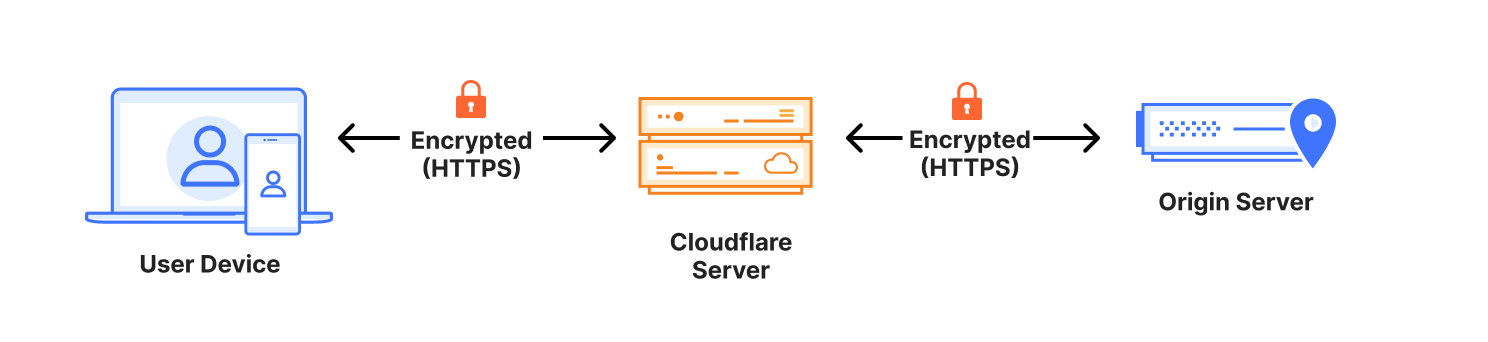
We first talked about this process in 2014: at that time, securing connections was hard to configure, prohibitively expensive, and required specialized knowledge to set up correctly. To help alleviate these pains, Cloudflare introduced Universal SSL, which allowed web properties to obtain a free SSL/TLS certificate to enhance the security of connections between browsers and Continue reading
Celebrating one year of Project Cybersafe Schools

August 8, 2024, is the first anniversary of Project Cybersafe Schools, Cloudflare’s initiative to provide free security tools to small school districts in the United States.
Cloudflare announced Project Cybersafe Schools at the White House on August 8, 2023 as part of the Back to School Safely: K-12 Cybersecurity Summit hosted by First Lady Dr. Jill Biden. The White House highlighted Cloudflare’s commitment to provide free resources to small school districts in the United States. Project Cybersafe Schools supports eligible K-12 public school districts with a package of Zero Trust cybersecurity solutions – for free, and with no time limit. These tools help eligible school districts minimize their exposure to common cyber threats.
Cloudflare’s mission is to help build a better Internet. One way we do that is by supporting organizations that are particularly vulnerable to cyber threats and lack the resources to protect themselves through projects like Project Galileo, the Athenian Project, the Critical Infrastructure Defense Project, Project Safekeeping, and most recently, Project Secure Health.
Schools are vulnerable to cyber attacks
In Q2 2024, education ranked 4th on the list of most attacked industries. Between 2016 and 2022, there were 1,619 K-12 cyber incidents. Continue reading
Hedge 238: What Went Wrong? (Crowdstrike)
The massive failure resulting from a failed update to 8.5 million Windows hosts by Crowdstrike will live in Internet history for years to come. The failure will be studied by engineering teams and college classes to understand what went wrong and how we can stop this from happening in the future. Derick Winkworth (@cloudtoad), Eyvonne Sharp, Tom Ammon, and Russ White hang out at the hedge to talk about what happened and lessons learned from a network engineering perspective.
download
Crowdstrike released a detailed description of the problematic update here.
Building Layer-3-Only EVPN Lab
A few weeks ago, Roman Dodin mentioned layer-3-only EVPNs: a layer-3 VPN design with no stretched VLANs in which EVPN is used to transport VRF IP prefixes.
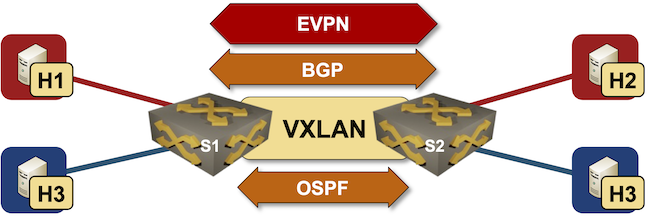
The reality is a bit muddier (in the VXLAN world) as we still need transit VLANs and router MAC addresses; the best way to explore what’s going on behind the scenes is to build a simple lab.
D2DO248: Using Creativity and Empathy to Ease the Pain of Compliance Audits
On today’s Day Two DevOps we talk with Jen Stone, a technical security assessor and aerial arts competition organizer. Jen shares her journey from IT service desk to becoming a security assessor. She emphasizes the importance of creativity and empathy in regulatory compliance while advocating for a collaborative approach to assessments and auditing Episode Guest:... Read more »HW033: Repeater, Extender or Something Else? What Is the LATYS Focus?
Today on Heavy Wireless we discuss the LATYS Focus device.This innovative RF technology amplifies and directs signals without traditional networking layers. Our guest is Artmiz Golkaramnay, Founder of LATYS. Artmiz explains the device’s functionality, which includes a directional antenna for focused signal amplification; its technical specifications; practical applications in industrial settings; cost benefits; and ease... Read more »Network Traffic Modeling Approaches
The greatest value of a picture is when it forces us to notice what we never expected to see. - John TukeyPP025: Wi-Fi Security Part 2 – Listener Q&A
On today’s Packet Protector we answer listener questions about Wi-Fi security with guest Stephen Orr. Stephen is Chair of the Security Technical Task Group for the Wi-Fi Alliance and a Distinguished Solutions Engineer at Cisco. Questions include what recommendations Stephen would make for using multiple SSIDs vs. role-based device segmentation, what he sees as the... Read more »The backbone behind Cloudflare’s Connectivity Cloud
The modern use of "cloud" arguably traces its origins to the cloud icon, omnipresent in network diagrams for decades. A cloud was used to represent the vast and intricate infrastructure components required to deliver network or Internet services without going into depth about the underlying complexities. At Cloudflare, we embody this principle by providing critical infrastructure solutions in a user-friendly and easy-to-use way. Our logo, featuring the cloud symbol, reflects our commitment to simplifying the complexities of Internet infrastructure for all our users.
This blog post provides an update about our infrastructure, focusing on our global backbone in 2024, and highlights its benefits for our customers, our competitive edge in the market, and the impact on our mission of helping build a better Internet. Since the time of our last backbone-related blog post in 2021, we have increased our backbone capacity (Tbps) by more than 500%, unlocking new use cases, as well as reliability and performance benefits for all our customers.
A snapshot of Cloudflare’s infrastructure
As of July 2024, Cloudflare has data centers in 330 cities across more than 120 countries, each running Cloudflare equipment and services. The goal of delivering Cloudflare products and services everywhere remains consistent, although Continue reading
The backbone behind Cloudflare’s Connectivity Cloud
The modern use of "cloud" arguably traces its origins to the cloud icon, omnipresent in network diagrams for decades. A cloud was used to represent the vast and intricate infrastructure components required to deliver network or Internet services without going into depth about the underlying complexities. At Cloudflare, we embody this principle by providing critical infrastructure solutions in a user-friendly and easy-to-use way. Our logo, featuring the cloud symbol, reflects our commitment to simplifying the complexities of Internet infrastructure for all our users.
This blog post provides an update about our infrastructure, focusing on our global backbone in 2024, and highlights its benefits for our customers, our competitive edge in the market, and the impact on our mission of helping build a better Internet. Since the time of our last backbone-related blog post in 2021, we have increased our backbone capacity (Tbps) by more than 500%, unlocking new use cases, as well as reliability and performance benefits for all our customers.
A snapshot of Cloudflare’s infrastructure
As of July 2024, Cloudflare has data centers in 330 cities across more than 120 countries, each running Cloudflare equipment and services. The goal of delivering Cloudflare products and services everywhere remains consistent, although Continue reading
Migrating a Data Center Fabric to VXLAN
Darko Petrovic made an excellent remark on one of my LinkedIn posts:
The majority of the networks running now in the Enterprise are on traditional VLANs, and the migration paths are limited. Really limited. How will a business transition from traditional to whatever is next?
The only sane choice I found so far in the data center environment (and I know it has been embraced by many organizations facing that conundrum) is to build a parallel fabric (preferably when the organization is doing a server refresh) and connect the new fabric with the old one with a layer-3 link (in the ideal world) or an MLAG link bundle.
Debian Installation on Raspberry Pi
This guide demonstrates how to install Debian 12 (bookworm), also known as "bookworm," on a […]
The post Debian Installation on Raspberry Pi first appeared on Brezular's Blog.