OpenStack Summit Tokyo: Learn Open Networking with OpenStack
Meet us at OpenStack Summit Tokyo and learn how to build fast, scalable, secure OpenStack networking.
Mark McClain (CTO, Akanda Inc) and I will be presenting at the OpenStack Summit in Tokyo about the next-generation physical and virtual network that DreamHost is deploying for their DreamCompute cloud.

The design marries Cumulus Networks Dynamic LNV (Lightweight Network Virtualization) with Akanda’s Astara L3-7 services, all being orchestrated by the OpenStack Neutron.
We’ll be expanding on the talk we gave at the last OpenStack summit in Vancouver. That talk was about the design and why we should deploy it. In this one, we will be discussing in depth about our experiences deploying it in production.
If you can’t make it to Tokyo, don’t worry, the talk will be recorded.
Watch out for this space for updates on the talk!
The post OpenStack Summit Tokyo: Learn Open Networking with OpenStack appeared first on Cumulus Networks Blog.
Worth Reading: Diffie-Hellman Case Study

The post Worth Reading: Diffie-Hellman Case Study appeared first on 'net work.
Brocade Virtual Traffic manager QEMU/KVM
download developers edition (speed limited) unzip to get the 11G!! VirtualTrafficManager.img file (wonder if it can be shrunk downThe Odd Hours Solution

For many years, when I worked out in the center of the triangle of runways and taxiways, I would get up at around 4, swim a mile in the indoor poor (36 laps), shower, grab breakfast, run by base weather just to check the bigger pieces of equipment out (mostly the RADAR system), and then I’d head out to the shop. We could mostly only get downtime on the airfield equipment (particularly the VOR, TACAN, and glideslopes) in the early morning hours — unless, of course, there was a war on. Then we couldn’t get downtime at all. By 2:30 I was done with my work day, and I headed home to get whatever else done.
When I left the USAF, after being trapped in some 9–5 jobs, I joined the cisco TAC. Our shift started at 8 or 8:30, when we took over the 1–800 number from Brussels, and our shift lasted until around 2 in the afternoon (it varied over time, as the caseloads and TACs were moved around). Freed from 9–5, I started getting to work at around 5:30 again. I could spend the first two or three hours following up on cases (did you know that Continue reading
HP’s Composable Infrastructure Vision
HP wants to enable enterprises to easily and quickly spin up on-premises data center resources via software.Ben Fathi: Why I Joined CloudFlare
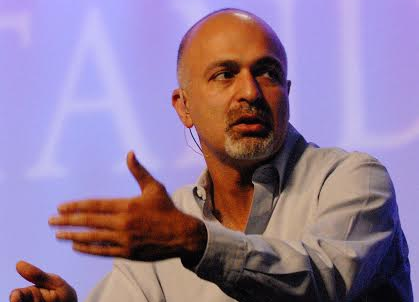
I’m sure some of you are scratching your head right about now wondering why I would join an Internet security and optimization company. But, Ben, this is not even close to your passion: operating systems.
I had the same reaction when I first saw the CloudFlare website. I wasn’t even sure it made sense for me to go interview here. After taking a closer look, however, I realized that it would be the perfect new home for me. Take a look at this page for a brief introduction to what CloudFlare does and how we do it.
Interviewing at CloudFlare
If you know me, you know that I'm a sucker for distributed systems. I fall for a hard computer science problem every time. So, it shouldn’t be a surprise to you that CloudFlare’s John Graham-Cumming, had me at “hello” when he nonchalantly described one of the company's projects: a globally distributed key value store with sub-second consistency guarantees! Ho hum! No big deal.
As the interview process progressed, the team graciously spent several hours walking me through the architecture as well as future plans and product roadmaps. These discussions and email exchanges were frequently interrupted by my cries of protest: Continue reading
7 Basic Network Security Mistakes You’re Probably Making
With the rapid growth in cyber-attacks, securing data networks is more important and complex than ever. Be on the lookout for these common security blunders that can leave your company's networks and systems at risk.Is Anyone Using Long-Distance VM Mobility in Production?
I had fun times participating in a discussion focused on whether it makes sense to deploy OTV+LISP in a new data center deployment. Someone quickly pointed out the elephant in the room:
How many LISP VM mobility installs has anyone on this list been involved with or heard of being successfully deployed? How many VM mobility installs in general, where the VMs go at least 1,000 miles? I'm curious as to what the success rate for that stuff is.
I think we got one semi-qualifying response, so I made it even simpler ;)
Read more ...CCDE – Load Balancer Designs
Introduction
This post will describe different load balancer designs, the pros and cons of the designs and how they affect the forwarding of packets.
Load Sharing Vs Load Balancing
The terms load sharing and load balancing often get intermixed. An algorithm such as Cisco Express Forwarding (CEF) does load sharing of packets meaning that packets get sent on a link based on parameters such as source and destination MAC address or source and destination IP address or in some cases also the layer 4 ports in the IP packet. The CEF algorithm does not take into consideration the utilization of the link or how many flows have been assigned to each link. Load balancing on the other hand tries to utilize the links more evenly by tracking the bandwidth of the flows and assigning flows based on this information to the different links. The goal is to distribute the traffic across the links as evenly as possible. However load balancing is mostly used to distribute traffic to different servers to share the load among them.
Why Load Balancing?
What warrants the use of a load balancer? Think of a web site such as facebook.com. Imagine the number of users Continue reading
What did you Expect? Part 4, Working with Flat Files.
So far so good. In Part 1 we connected to a Cisco switch and and performed basic Authentication with Expect. Part 2 we expanded on that and added configuration to our code that added a VLAN and configured an interface. But as I have already stated we are writing quite a bit of code just to …Using InfluxDB + Grafana to Display Network Statistics
I loathe MRTG graphs. They were cool in 2000, but now they’re showing their age. We have much better visualisation tools available, and we don’t need to be so aggressive with aggregating old data. I’ve been working with InfluxDB + Grafana recently. Much cooler, much more flexible. Here’s a walk-through on setting up InfluxDB + Grafana, collecting network throughput data, and displaying it.
Background – InfluxDB + Grafana
There’s three parts to this:
- Grafana: This is our main UI. Grafana is a “…graph and dashboard builder for visualizing time series metrics.” It makes it easy to create dashboards for displaying time-series data. It works with several different data sources such as Graphite, Elasticsearch, InfluxDB, and OpenTSDB.
- InfluxDB: This is where we store the data that Grafana displays. InfluxDB is “…an open-source distributed time series database with no external dependencies.” It’s a relatively new project, and is not quite at 1.0 yet, but it shows a lot of promise. It can be used in place of Graphite. It is very flexible, and can store events as well as time series data.
- Influxsnmp: We need to get data from the network into InfluxDB. There are a few options for Continue reading