Heavy Networking 622: Intel’s Smart Edge Brings The Cloud To The Edge (Sponsored)
In today’s sponsored Heavy Networking show with Intel, we dive into recent Intel silicon announcements that are impacting how networking services will be delivered in the years to come. The edge of the network is set to change thanks to modern CPUs that accelerate network functions including packet processing and security. Joining us is Intel's Jeni Panhorst, Vice President & General Manager, Network & Edge Platforms Division to talk about recent Intel announcements at Mobile World Congress and what it means for networking at the edge.
The post Heavy Networking 622: Intel’s Smart Edge Brings The Cloud To The Edge (Sponsored) appeared first on Packet Pushers.
Heavy Networking 622: Intel’s Smart Edge Brings The Cloud To The Edge (Sponsored)
In today’s sponsored Heavy Networking show with Intel, we dive into recent Intel silicon announcements that are impacting how networking services will be delivered in the years to come. The edge of the network is set to change thanks to modern CPUs that accelerate network functions including packet processing and security. Joining us is Intel's Jeni Panhorst, Vice President & General Manager, Network & Edge Platforms Division to talk about recent Intel announcements at Mobile World Congress and what it means for networking at the edge.Securing Cloudflare Using Cloudflare
When a new security threat arises — a publicly exploited vulnerability (like log4j) or the shift from corporate-controlled environments to remote work or a potential threat actor — it is the Security team’s job to respond to protect Cloudflare’s network, customers, and employees. And as security threats evolve, so should our defense system. Cloudflare is committed to bolstering our security posture with best-in-class solutions — which is why we often turn to our own products as any other Cloudflare customer would.
We’ve written about using Cloudflare Access to replace our VPN, Purpose Justification to create granular access controls, and Magic + Gateway to prevent lateral movement from in-house. We experience the same security needs, wants, and concerns as security teams at enterprises worldwide, so we rely on the same solutions as the Fortune 500 companies that trust Cloudflare for improved security, performance, and speed. Using our own products is embedded in our team’s culture.
Security Challenges, Cloudflare Solutions
We’ve built the muscle to think Cloudflare-first when we encounter a security threat. In fact, many security problems we encounter have a Cloudflare solution.
- Problem: Remote work creates a security blind spot of remote devices and networks.
- Solution: Continue reading
Domain Scoped Roles – Early Access
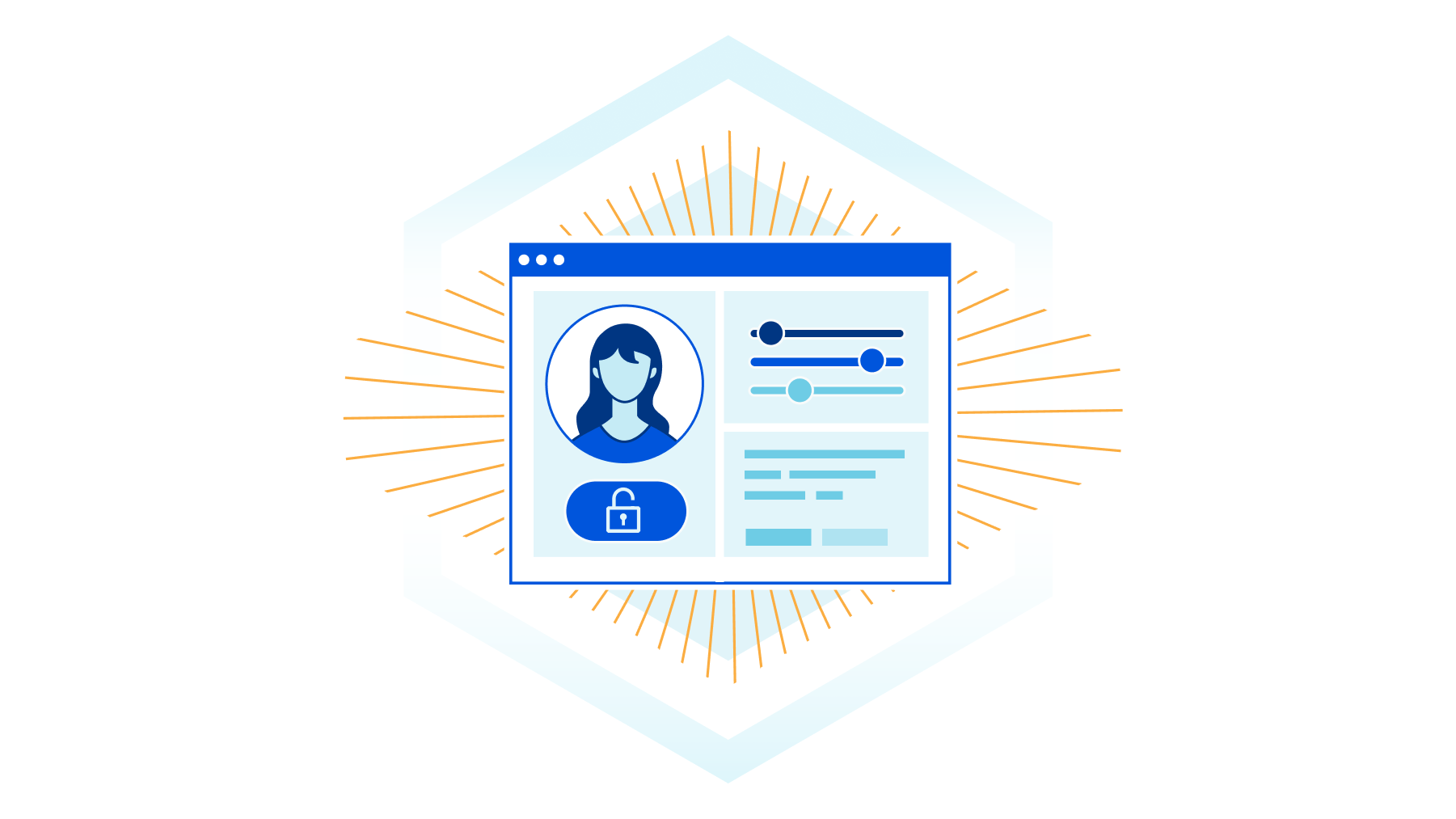
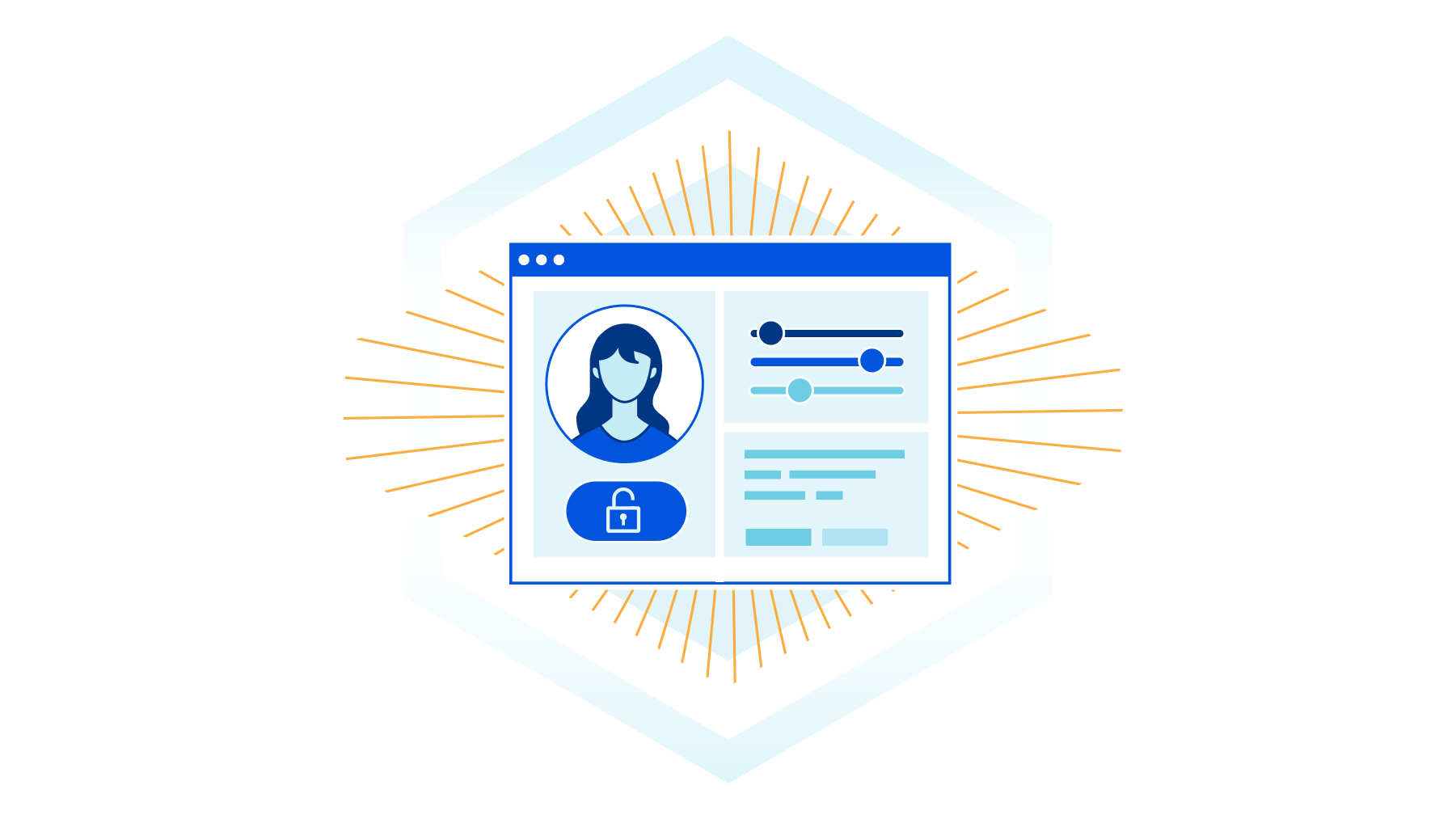
Today, Cloudflare is making it easier for enterprise account owners to manage their team’s access to Cloudflare by allowing user access to be scoped to sets of domains. Ensuring users have exactly the access they need and no more is critical, and Domain Scoped Roles provide a significant step forward. Additionally, with the introduction of Domain Groups, account owners can grant users access to domains by group instead of individually. Domains can be added or removed from these groups to automatically update the access of those who have access to the group. This reduces toil in managing user access.
One of the most common uses we have seen for Domain Scoped Roles is to limit access to production domains to a small set of team members, while still allowing development and pre-production domains to be open to the rest of the team. That way, someone can’t make changes to a production domain unless they are given access.
How to use Domain Scoped Roles
If you are an enterprise customer please talk with your CSM to get you and your team enrolled. Note that you must have Super Administrator privileges to be able to modify account memberships.
Once the beta has Continue reading
Cloudflare Observability


Whether you’re a software engineer deploying a new feature, network engineer updating routes, or a security engineer configuring a new firewall rule: You need visibility to know if your system is behaving as intended — and if it’s not, to know how to fix it.
Cloudflare is committed to helping our customers get visibility into the services they have protected behind Cloudflare. Being a single pane of glass for all network activity has always been one of Cloudflare’s goals. Today, we’re outlining the future vision for Cloudflare observability.
What is observability?
Observability means gaining visibility into the internal state of a system. It’s used to give users the tools to figure out what’s happening, where it’s happening, and why.
At Cloudflare, we believe that observability has three core components: monitoring, analytics, and forensics. Monitoring measures the health of a system - it tells you when something is going wrong. Analytics give you the tools to visualize data to identify patterns and insights. Forensics helps you answer very specific questions about an event.
Observability becomes particularly important in the context of security to validate that any mitigating actions performed by our security products, such as Firewall or Bot Management, are not Continue reading
Using Cloudflare One to Secure IoT Devices


There is probably an insecure device with an exploitable vulnerability sitting in your house. And your office. And probably even your child’s school. Cameras, printers, speakers, access control readers, thermostats, even heart monitors... all of these devices are, or can be, Internet of Things (IoT) devices. These IoT devices are seamlessly integrated into our modern lives to improve efficiency and control of our environments — yet they are notoriously insecure. This is due to the constrained nature of device hardware and their limited computational capacity, which often lead to minimize access controls, hard-coded passwords, and an inability to patch remotely.
The reality of this threat can play out dramatically. Take, for example, the 2016 Mirai botnet attack, in which hackers exploited millions of IoT devices to become a large-scale botnet network capable of launching DDoS attacks that took down major portions of the Internet, including Twitter, the Guardian, and CNN. These types of attacks are hardly an infrequent occurrence. Cloudflare experienced this reality firsthand in March 2021, when one of our potential vendors for physical security cameras, Verkada, was compromised. The incident allowed a hacker to access Verkada's internal support tools to manage the cameras remotely, enabling them to Continue reading
Introduction To Relational Databases For Network Engineers
The growth of network automation and NetDevOps as a whole has created a shift in the networking industry. The tried-and-true CLI is shifting to the API and CSV inventories are moving to YAML/JSON structures for infrastructure as code. The tools and libraries used with our network operating systems are only growing. One technology that I […]
The post Introduction To Relational Databases For Network Engineers appeared first on Packet Pushers.
No Is A Complete Sentence

Has someone asked you to do something recently that you know you don’t have time to do but felt like you needed to do anyway? Or has someone tried to get you to help with something and impressed upon you just how important it is? You probably told them “yes” out of guilt or obligation or some other kind of negative emotion. Sure, you could have declined but you thought about how bad you would feel if someone did the same to you.
Let me tell you clearly. “No” is a complete sentence. It requires no explanation or defense. It is the only thing you need to say when you know you won’t be able to do something no matter how much the other party tries to get you to agree.
Everything Sucking Equally
If you know anything about QoS, you know that once a given circuit reaches the limitation for bandwidth you can no long send additional information. What’s counterintuitive about this is most people would assume that if you try to squeeze one more stream or packet into the mix that only that last packet would be affected and everything else would work perfectly fine, right? Only one Continue reading
Digital ID Technology Promises Stronger Security
More robust sign-on security is on the way, just don't expect it to arrive anytime soon.Commitment to Customer Security


Cloudflare has been hooked on securing customers globally since its inception. Our services protect customer traffic and data as well as our own, and we are continuously improving and expanding those services to respond to the changing threat landscape of the Internet. Proving that commitment is a multi-faceted venture, the Security Team focuses on people, proof, and transparency to ensure every touchpoint with our products and company feels dependable.
People
The breadth of knowledge of the Security Team is wide and bleeding edge. Working as a security team at a security company means being highly technical, diverse, willing to test any and all products on ourselves, and sharing our knowledge with our local and global communities through industry groups and presenting at conferences worldwide. Connecting with our customers and counterparts through meetups and conferences lets us share problems, learn about upcoming industry trends, and share feedback to make improvements to the customer experience. In addition to running a formally documented, risk-based security program for Cloudflare, team members drive continuous improvement efforts across our Product and Infrastructure teams by reviewing and advising on changes, identifying and treating vulnerabilities, controlling authorization and access to systems and data, encrypting data in Continue reading
Zero Trust client sessions
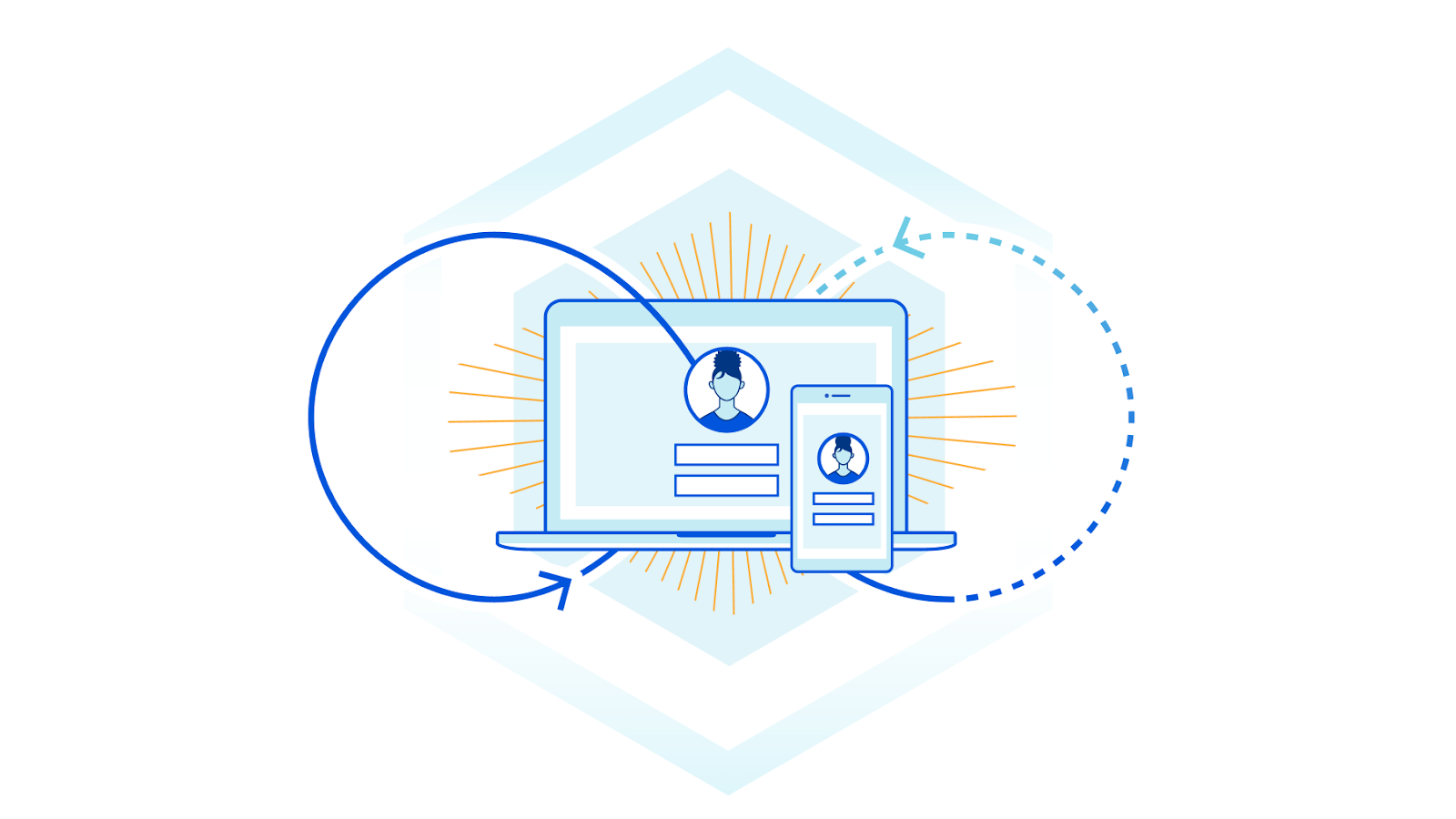
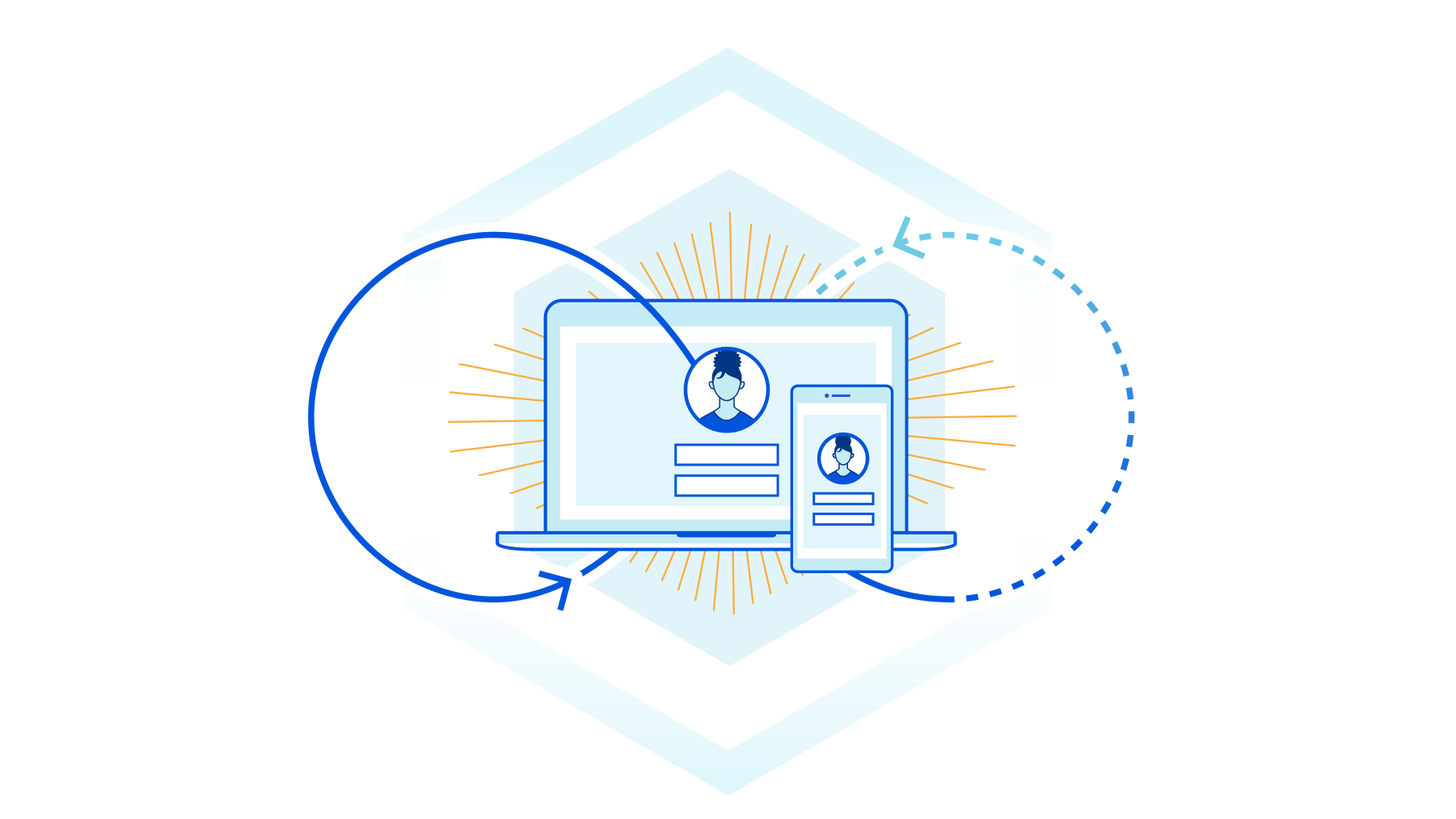
Starting today, you can build Zero Trust rules that require periodic authentication to control network access. We’ve made this feature available for years for web-based applications, but we’re excited to bring this level of granular enforcement to TCP connections and UDP flows.
We’re excited to announce that Zero Trust client-based sessions are now generally available. During CIO Week in 2021, we announced the beta program for this feature. We incorporated feedback from early users into the generally available version. In this post, I will revisit why Zero Trust client-based sessions are important, how the feature works and what we learned during the beta.
Securing traffic with Sessions
We built Zero Trust client-based sessions to enhance the security of Cloudflare’s Zero Trust Network Access (ZTNA). The Zero Trust client is software that runs on a user machine and forwards all traffic from the machine to Cloudflare before it is sent over the Internet. This includes traffic bound for internal IPs and hostnames that typically house sensitive business applications. These sensitive applications were traditionally accessed using a VPN. Unlike VPNs, Cloudflare’s ZTNA allows administrators to set granular policies about who can access a specific resource. The only piece missing was that once Continue reading
Introducing SSH command logging
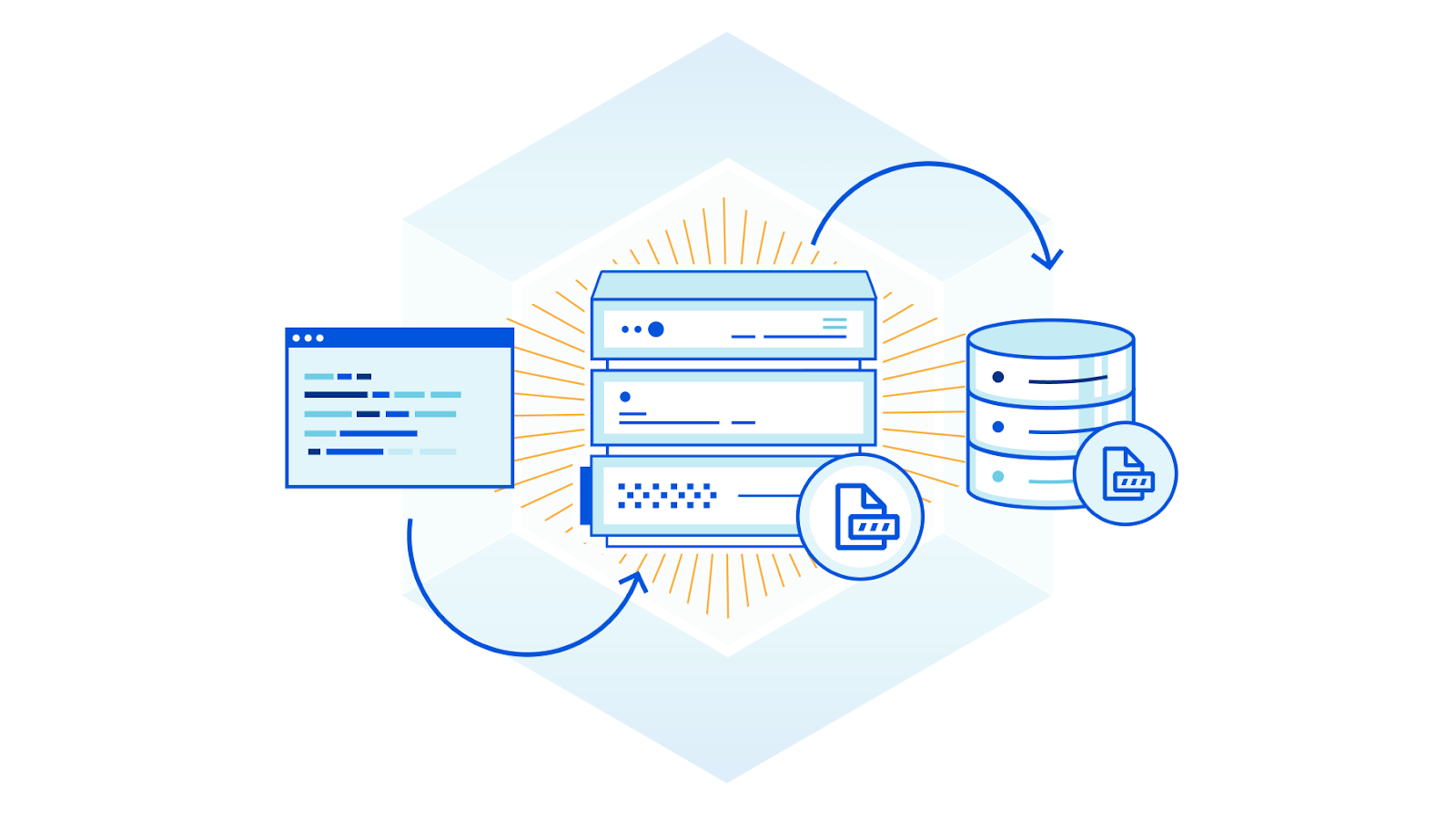
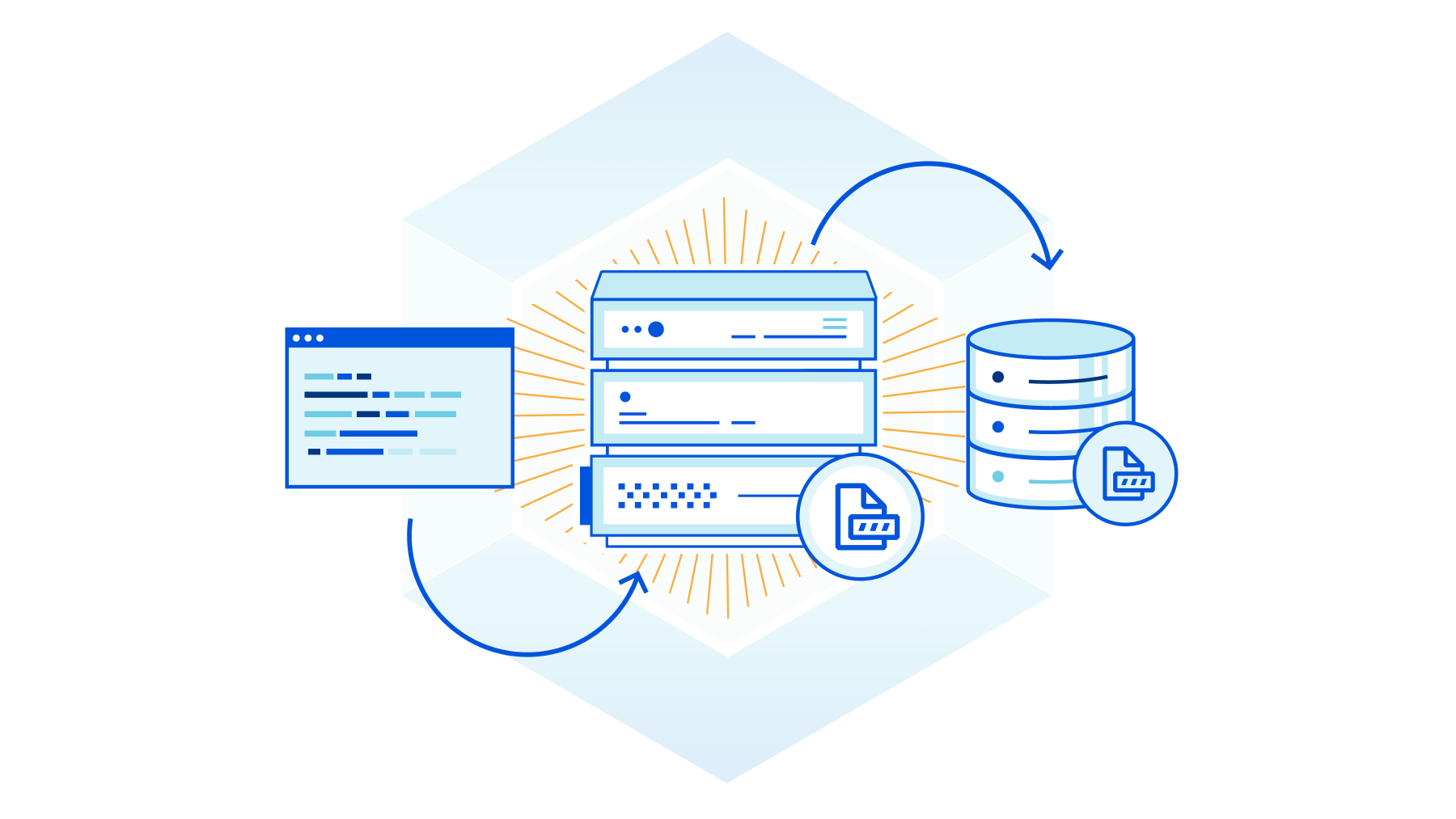
SSH (Secure Shell Protocol) is an important protocol for managing remote machines. It provides a way for infrastructure teams to remotely and securely manage their fleet of machines. SSH was a step-up in security from other protocols like telnet. It ensures encrypted traffic and enforces per user controls over access to a particular machine. However, it can still introduce a significant security risk. SSH, especially root access, is destructive in the wrong hands (think rm -r *) and can be difficult to track. Logging and securing user actions via SSH typically requires custom development or restrictive software deployments. We’re excited to announce SSH command logging as part of Cloudflare Zero Trust.
Securing SSH access
Security teams put significant effort into securing SSH across their organization because of the negative impact it can have in the wrong hands. Traditional SSH security consists of strong authentication, like certificate based authentication, and tight controls on who has “root” access. Additionally, VPNs and IP allow lists are used to further protect a machine from being publicly accessible to the Internet. The security challenges that remain are visibility and potential for lateral movement.
SSH commands to a remote machine are end-to-end encrypted, which means Continue reading
Cloudflare partners with Microsoft to protect joint customers with a Global Zero Trust Network
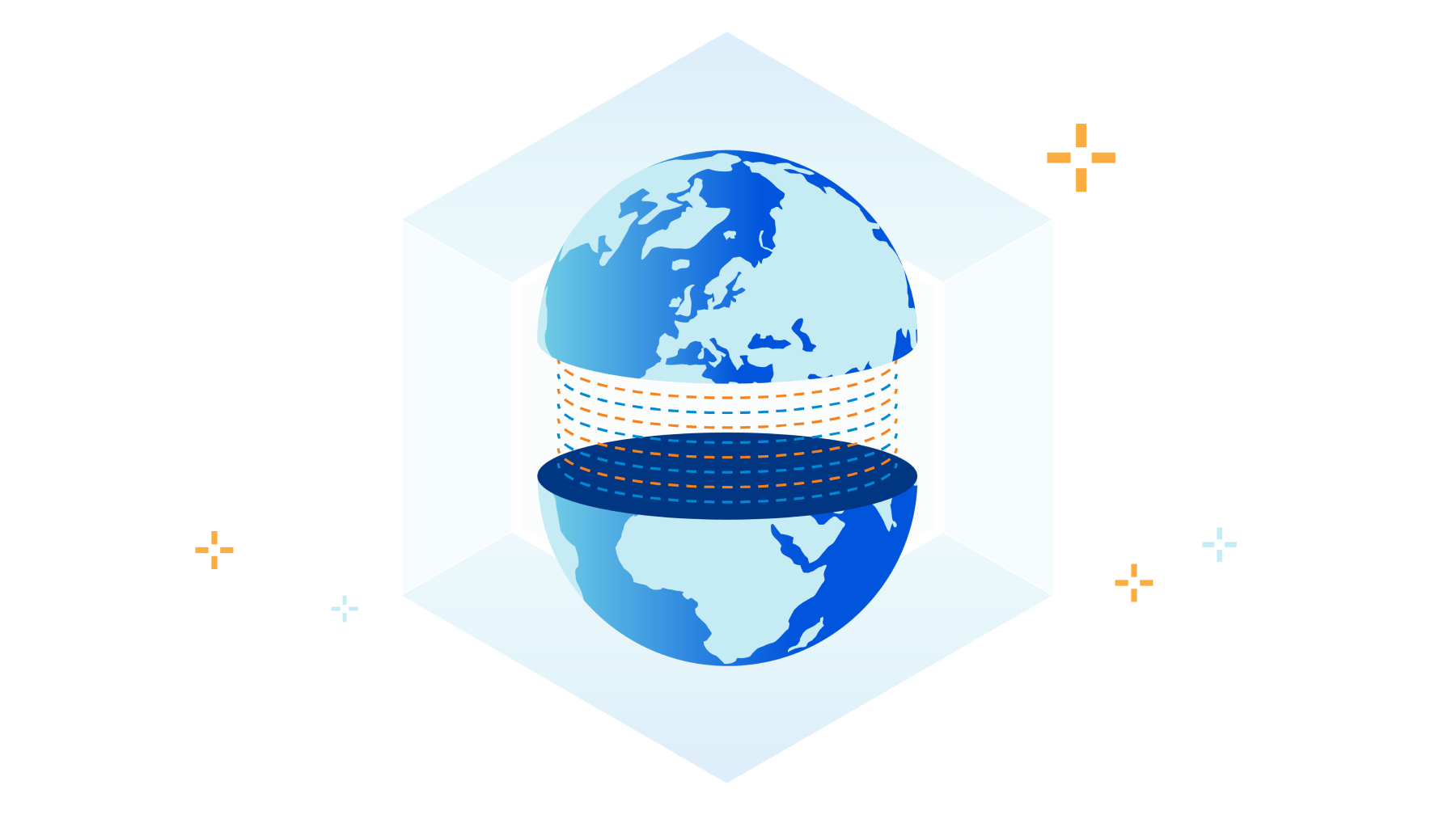
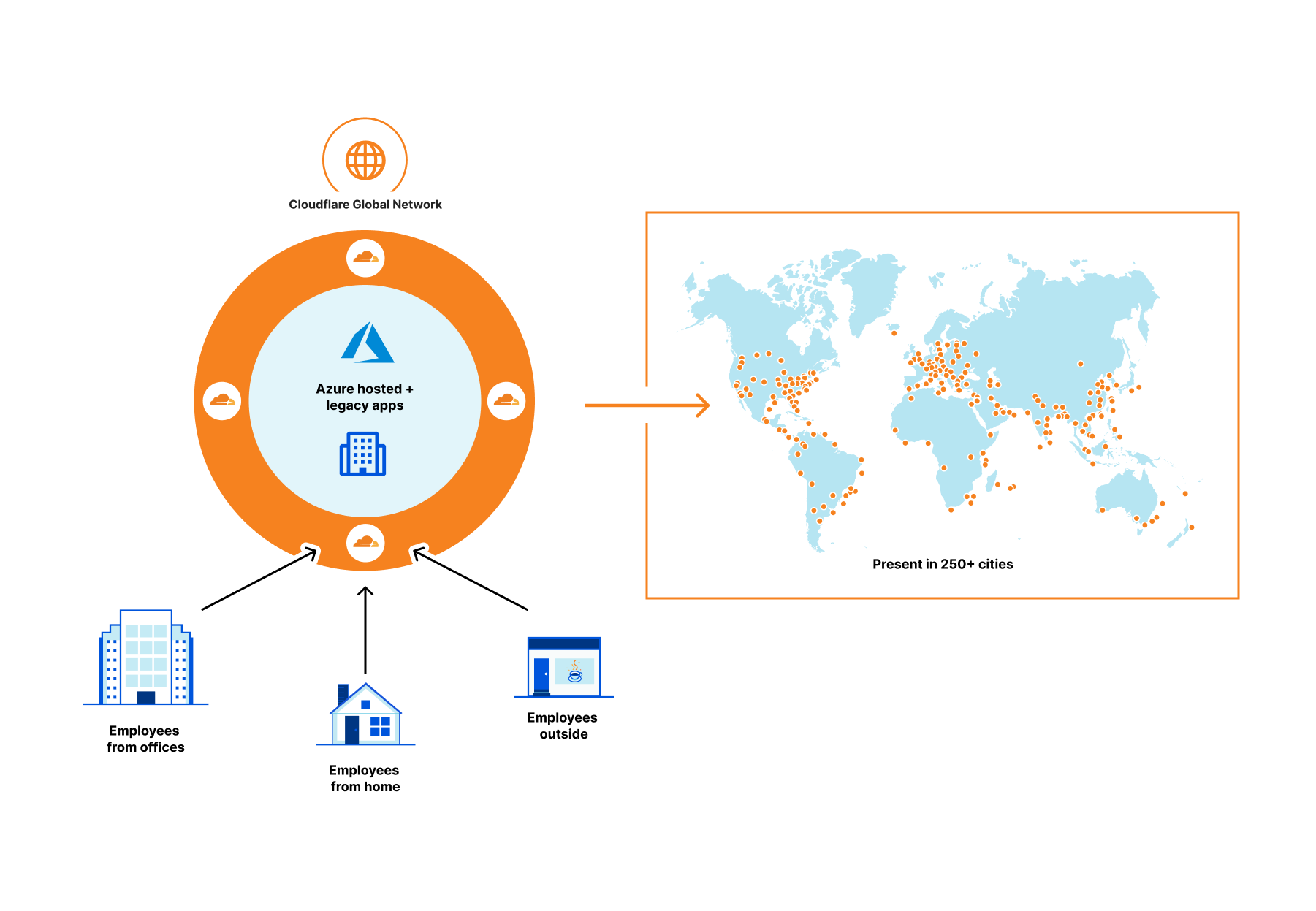
As a company, we are constantly asking ourselves what we can do to provide more value to our customers, including integrated solutions with our partners. Joint customers benefit from our integrations below with Azure Active Directory by:
First, centralized identity and access management via Azure Active Directory which provides single sign-on, multifactor authentication, and access via conditional authentication.
Second, policy oriented access to specific applications using Cloudflare Access—a VPN replacement service.
Third, an additional layer of security for internal applications by connecting them to Cloudflare global network and not having to open them up to the whole Internet.
Let’s step back a bit.
Why Zero Trust?
Companies of all sizes are faced with an accelerating digital transformation of their IT stack and an increasingly distributed workforce, changing the definition of the security perimeter. We are moving away from the castle and moat model to the whole Internet, requiring security checks for every user accessing every resource. As a result, all companies, especially those whose use of Azure’s broad cloud portfolio is increasing, are adopting Zero Trust architectures as an essential part of their cloud and SaaS journey.
Cloudflare Access provides secure access to Azure hosted applications and Continue reading
A bridge to Zero Trust
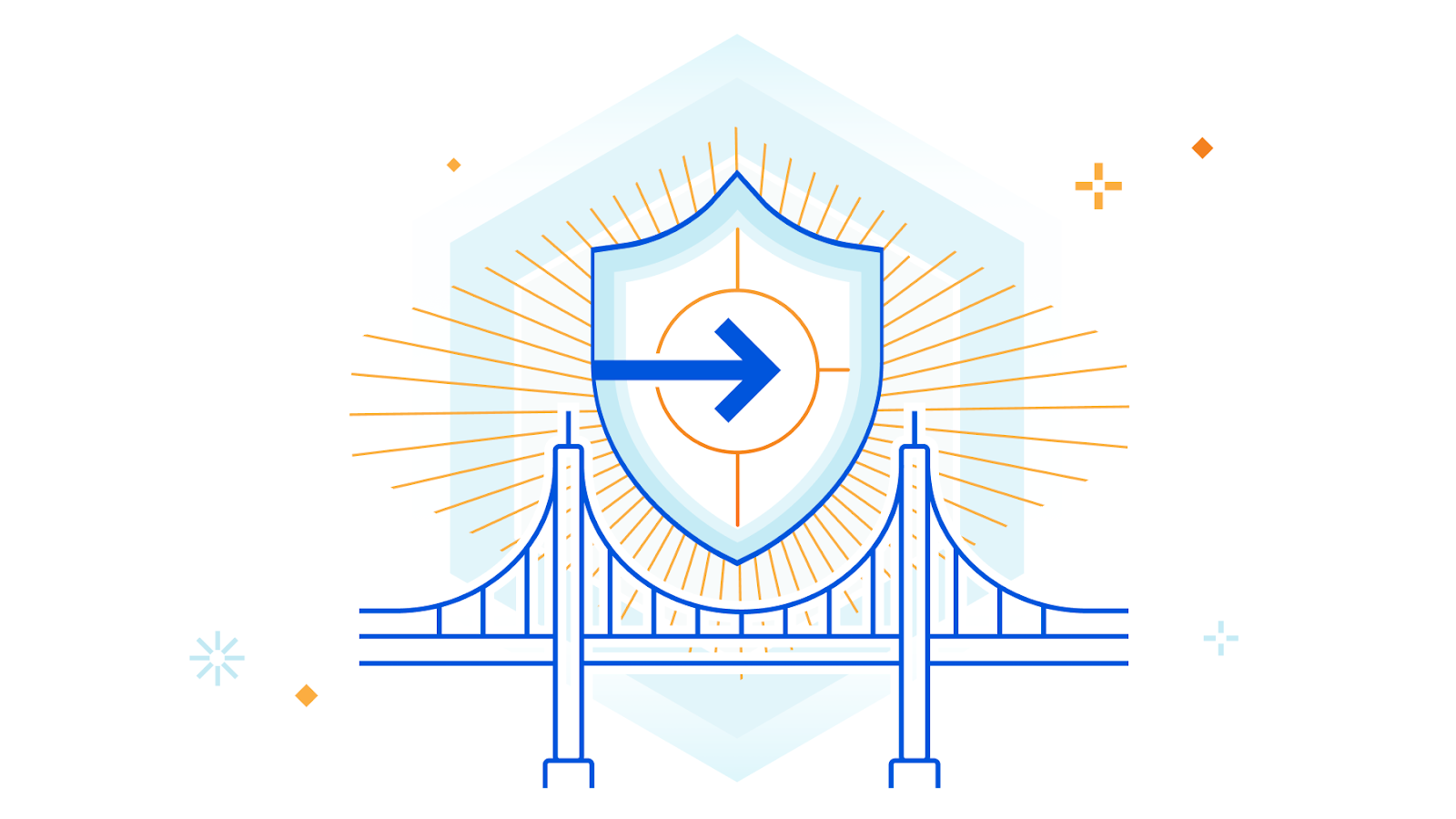
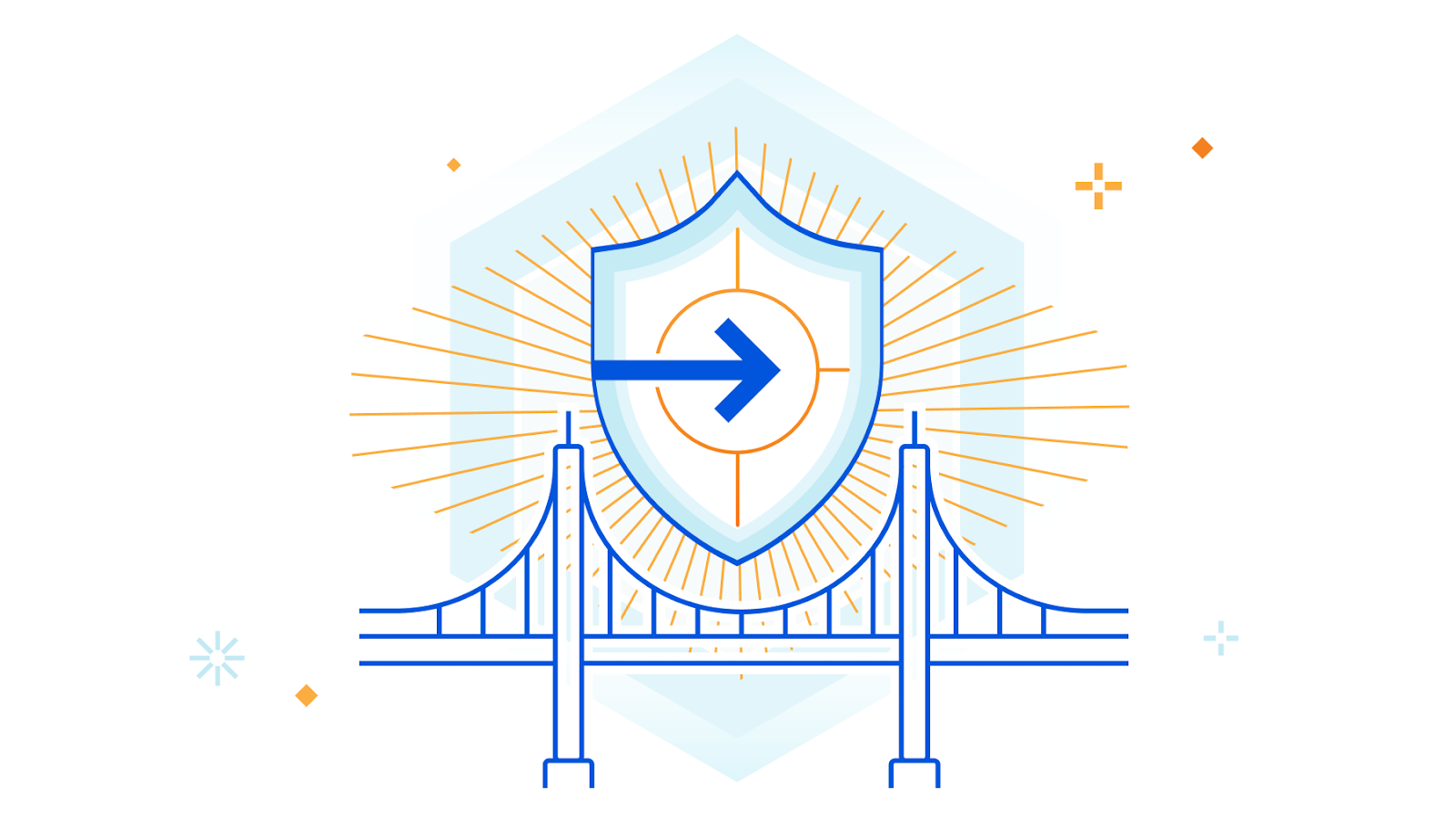
Cloudflare One enables customers to build their corporate networks on a faster, more secure Internet by connecting any source or destination and configuring routing, security, and performance policies from a single control plane. Today, we’re excited to announce another piece of the puzzle to help organizations on their journey from traditional network architecture to Zero Trust: the ability to route traffic from user devices with our lightweight roaming agent (WARP) installed to any network connected with our Magic IP-layer tunnels (Anycast GRE, IPsec, or CNI). From there, users can upgrade to Zero Trust over time, providing an easy path from traditional castle and moat to next-generation architecture.
The future of corporate networks
Customers we talk to describe three distinct phases of architecture for their corporate networks that mirror the shifts we’ve seen with storage and compute, just with a 10 to 20 year delay. Traditional networks (“Generation 1”) existed within the walls of a datacenter or headquarters, with business applications hosted on company-owned servers and access granted via private LAN or WAN through perimeter security appliances. As applications shifted to the cloud and users left the office, companies have adopted “Generation 2” technologies like SD-WAN Continue reading
Managing Clouds – Cloudflare CASB and our not so secret plan for what’s next
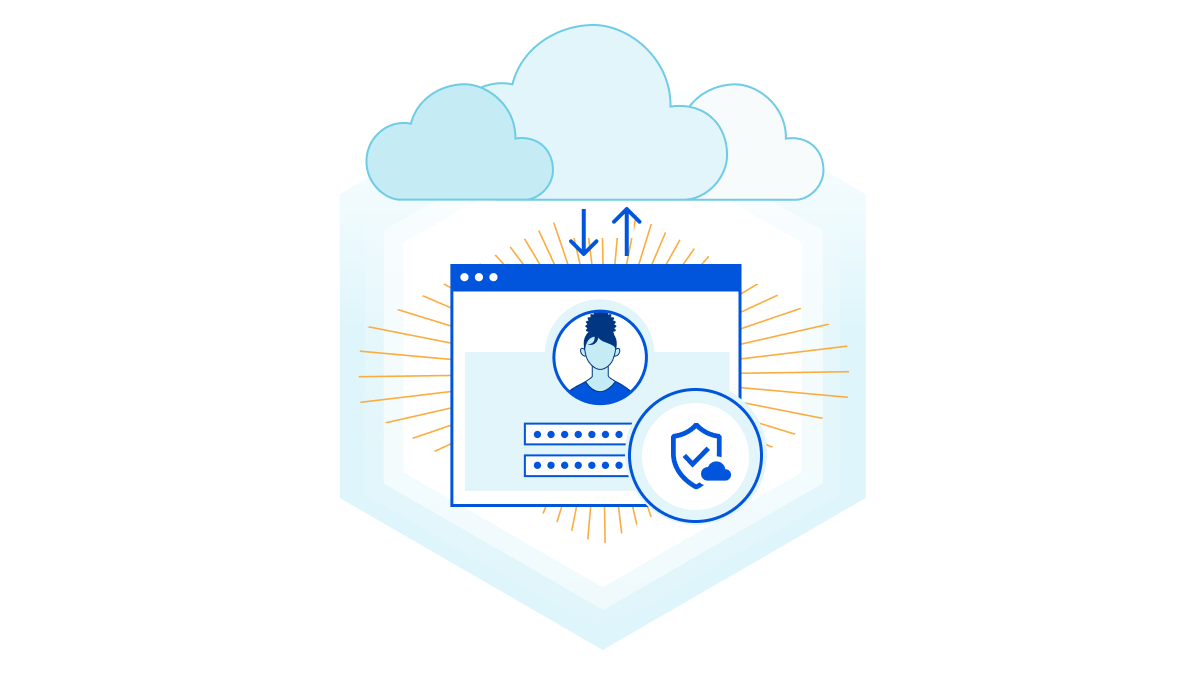
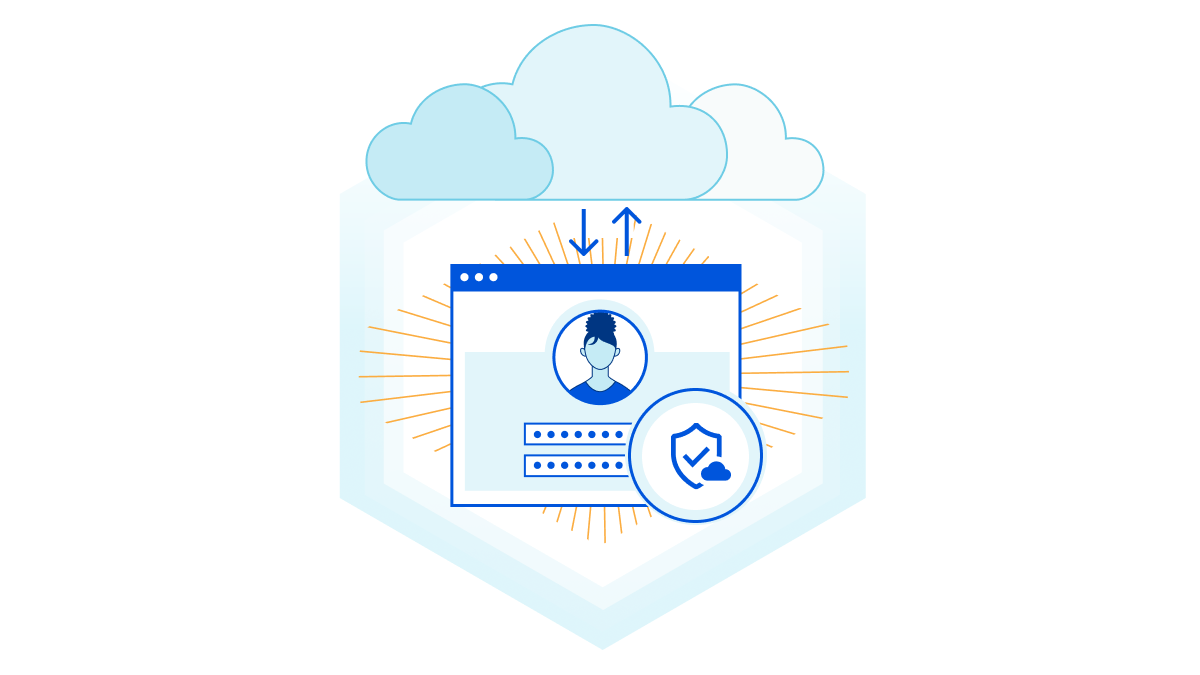
Last month we introduced Cloudflare’s new API–driven Cloud Access Security Broker (CASB) via the acquisition of Vectrix. As a quick recap, Cloudflare’s CASB helps IT and security teams detect security issues in and across their SaaS applications. We look at both data and users in SaaS apps to alert teams to issues ranging from unauthorized user access and file exposure to misconfigurations and shadow IT.
I’m excited to share two updates since we announced the introduction of CASB functionality to Cloudflare Zero Trust. First, we’ve heard from Cloudflare customers who cannot wait to deploy the CASB and want to use it in more depth. Today, we’re outlining what we’re building next, based on that feedback, to give you a preview of what you can expect. Second, we’re opening the sign-up for our beta, and I’m going to walk through what will be available to new users as they are invited from the waitlist.
What’s next in Cloudflare CASB?
The vision for Cloudflare’s API–driven CASB is to provide IT and security owners an easy-to-use, one-stop shop to protect the security of their data and users across their fleet of SaaS tools. Our goal is to make sure any IT or security Continue reading