Infrastructure Vendors Making Strides in 2019
IT infrastructure vendors are embracing software and service-based options, and developing a host of innovative technologies. Our list highlights the ones to watch.
IT infrastructure vendors are embracing software and service-based options, and developing a host of innovative technologies. Our list highlights the ones to watch.
Here’s a question I got from someone attending the Building Next-Generation Data Center online course:
Cisco NCS5000 is positioned as a building block for a data center MPLS fabric – a leaf-and-spine fabric with MPLS and EVPN control plane. This raised a question regarding MPLS vs VXLAN: why would one choose to build an MPLS-based fabric instead of a VXLAN-based one assuming hardware costs are similar?
There’s a fundamental difference between MPLS- and VXLAN-based transport: the amount of coupling between edge and core devices.
Read more ...ASAP: fast, approximate graph pattern mining at scale Iyer et al., OSDI’18
I have a real soft spot for approximate computations. In general, we waste a lot of resources on overly accurate analyses when understanding the trends and / or the neighbourhood is quite good enough (do you really need to know it’s 78.763895% vs 78 ± 1%?). You can always drill in with more accuracy if the approximate results hint at something interesting or unexpected.
Approximate analytics is an area that has gathered attention in big data analytics, where the goal is to let the user trade-off accuracy for much faster results.
(See e.g. ApproxHadoop which we covered on The Morning Paper a while back).
In the realm of graph processing, graph pattern mining algorithms, which discover structural patterns in a graph, can reveal very interesting things in our data but struggle to scale to larger graphs. This is in contrast to graph analysis algorithms such as PageRank which typically compute properties of a graph using neighbourhood information.
Today, a deluge of graph processing frameworks exist, both in academia and open-source… a vast majority of the existing graph processing frameworks however have focused on graph Continue reading
This is my Stealthwatch playground…. errrr… I mean … ahem… “work environment” for a Technical Solution Workshop I am working on for Stealthwatch.
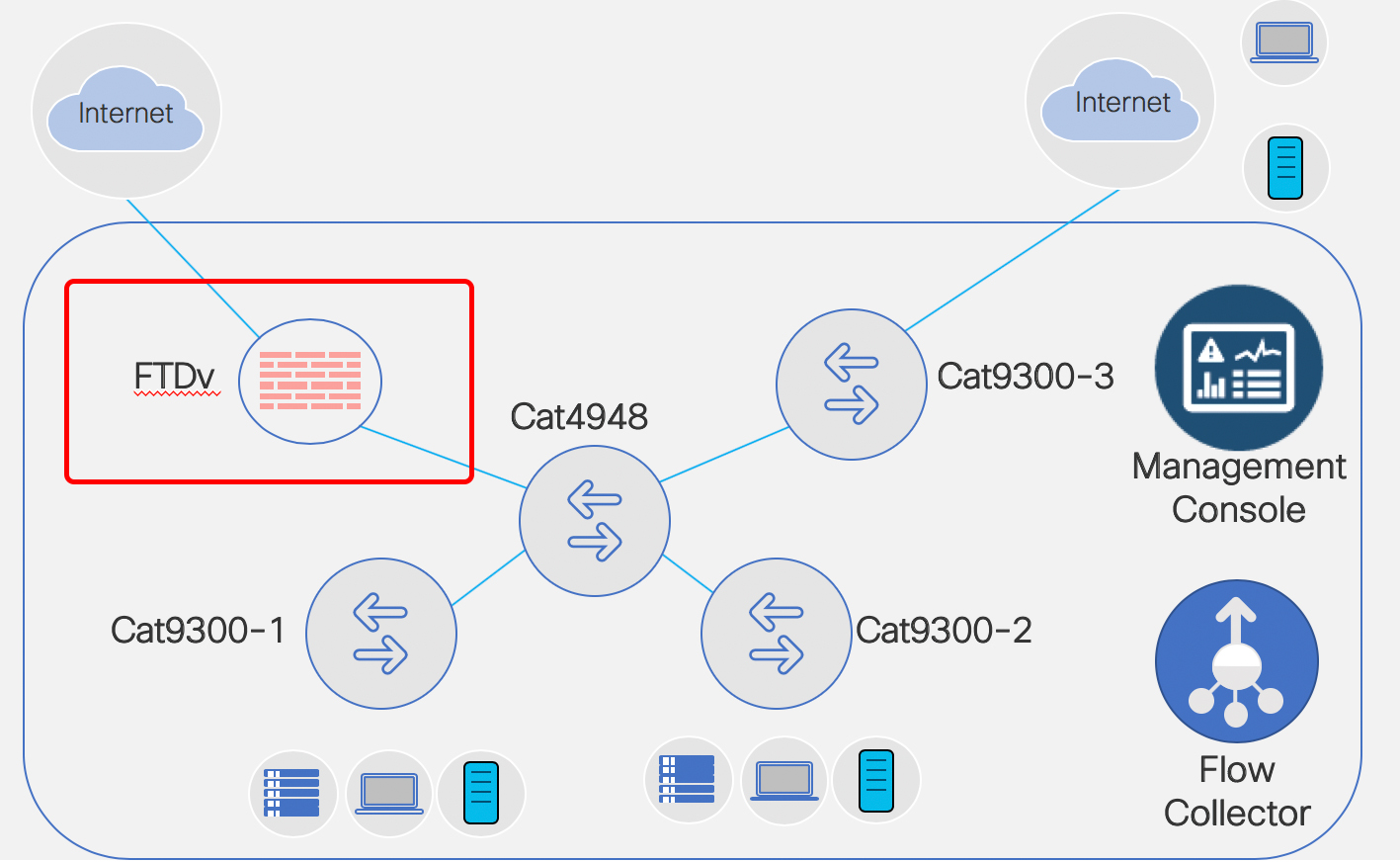
Going to set up FTDv and FMC today. A co-worker and friend, Scott Barasch, helped me get jump started… so figure I’ll pass on what I just learned to you. 
What this blog will cover is
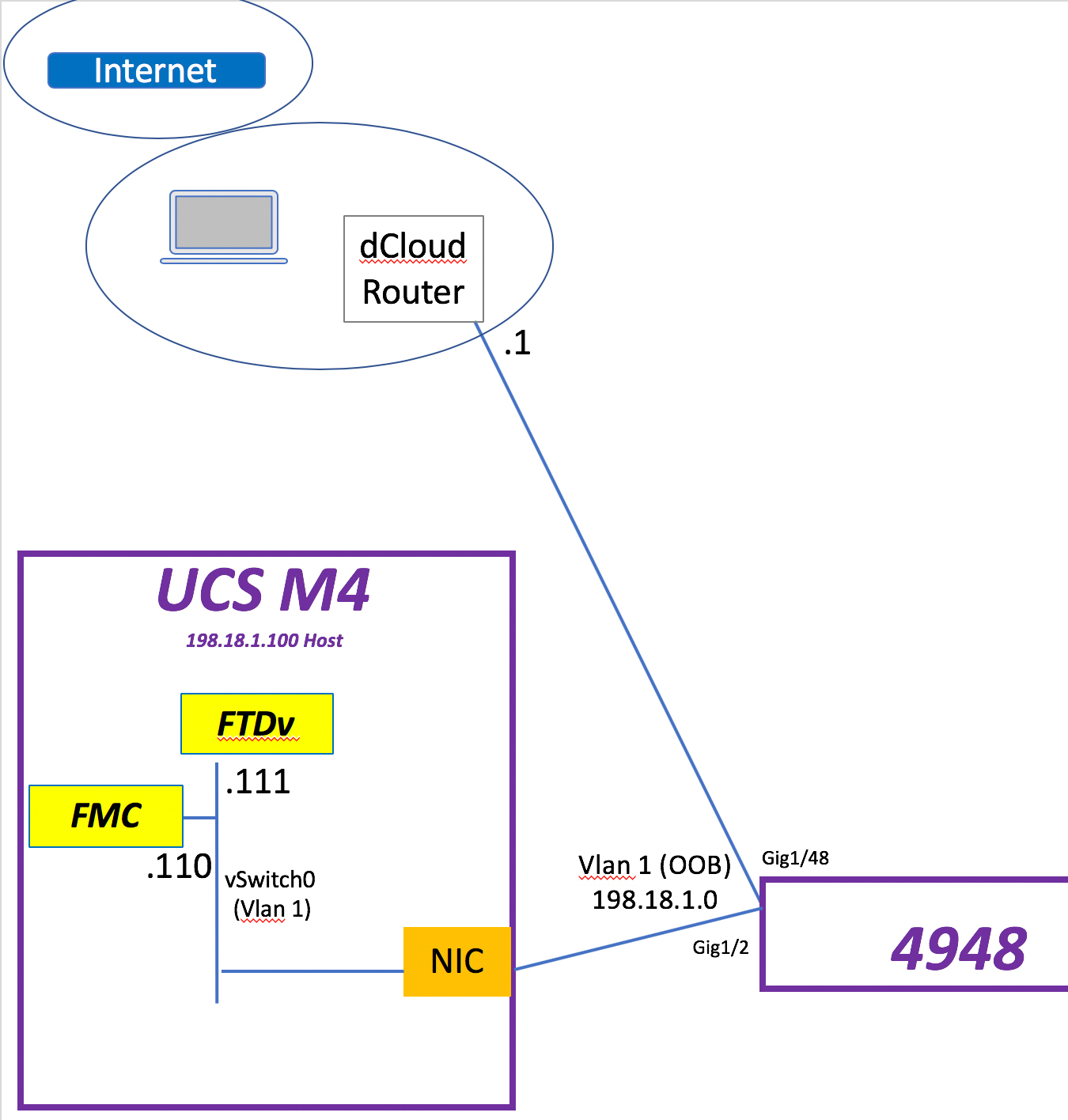
So let’s begin. What I have to host my FMC & FTDv VMs is a UCS M4 with a NIC connected to a Cat4948 in vlan 1. That NIC is tied to vSwitch0 in the UCS. Continue reading
AMD president and chief executive officer Lisa Su is fond of saying that the road to Rome goes through Naples as a way of reminding everyone that they can’t sit on the sidelines and wait for the second generation “Rome” Epyc processors to come to market in 2019. …
AMD’s Long Road From Naples To Milan Centers On Rome was written by Timothy Prickett Morgan at .
Cumulus Linux includes a RESTful programming interface for accessing network devices running that OS. It’s called HTTP API, and it implements an API to access the OpenStack ML2 driver and Network Command Line Utility, or NCLU. Understanding exactly what this means, and how it works, is essential before digging into the possibilities it presents. Here’s an overview to get this going.
The ML2 Driver, a.k.a. (in OpenStack’s terms) the Modular Layer 2 neutron plug-in, provides a framework. It enables OpenStack-based networking to use a variety of Layer 2 networking technologies, including those from Cumulus (for which a specific ML2 driver is available and ready to use). To use the OpenStack ML2 driver with Cumulus Linux switches, two essential ingredients must be present:
IBM, Google, and D-Wave tend to garner the headlines about quantum computing, but aside from a brief hubbub around the Tangle Lake quantum chip announcement earlier this year, insight into Intel’s quantum strategy tends to lag. …
Intel’s Spin on Qubits and Quantum Manufacturability was written by Nicole Hemsoth at .

This week is IETF 103 in Bangkok, Thailand, and we’re bringing you daily blog posts highlighting the topics of interest to us in the ISOC Internet Technology Team. Wednesday is a relatively light day in this respect, although there’s some pretty important matters being discussed today.
DPRIVE kicks off the day at 09.00 UTC+9, and will mostly be discussing user perspectives with respect to the recently introduced implementations of DNS-over-TLS and DNS-over-HTTPS, as well as the issues of DNS privacy between resolvers and authoritative servers. There’s also a new draft up for discussion on DNS-over-TLS for insecure delegations that describe an alternative authentication mechanism without need for DNSSEC support.
NOTE: If you are unable to attend IETF 103 in person, there are multiple ways to participate remotely.
TLS holds its second session of the week immediately after lunch at 12.20 UTC+7. This will carry-on where it left off on Monday, although will be discussing a DANE Record and DNSSEC Authentication Chain Extension for TLS. The intention is to allow TLS clients to perform DANE authentication of a TLS server without needing to perform additional DNS record lookups.
Then at 13.50 UTC+7, Homenet will be focusing on Homenet Naming Continue reading
The Border Gateway Protocol (BGP) is an IP reachability protocol that you can use to exchange IP prefixes. Traditionally, one of the nuisances of configuring BGP is that if you want to exchange IPv4 prefixes you have to configure an IPv4 address for each BGP peer. In a large network, this can consume a lot of your address space, requiring a separate IP address for each peer-facing interface.
To understand where BGP unnumbered fits in, it helps to understand how BGP has historically worked over IPv4. Peers connect via IPv4 over TCP port 179. Once they’ve established a session, they exchange prefixes. When a BGP peer advertises an IPv4 prefix, it must include an IPv4 next hop address, which is usually the address of the advertising router. This requires, of course, that each BGP peer has an IPv4 address.
As a simple example, using the Cumulus Reference Topology, let’s configure BGP peerings as follows:
Between spine01 (AS 65020, 10.1.0.0/31) and leaf01 (AS 65011, 10.1.0.1/31)
Between spine01 (10.1.0.4/31) and leaf02 (AS 65012, 10.1.0.5/31)
Leaf01 will advertise the prefix 192.0.2.1/32 and leaf02 will Continue reading
 The virtualization giant updated its hybrid cloud stack with new Kubernetes support and also announced a new integration with IBM Cloud’s managed Kubernetes service.
 The VDC service is based on VMware’s Cloud Provider Platform, and it enables customers to create virtual infrastructure combining compute, storage, and advanced networking.
 The deal was based on growing demand from enterprise customers that want to use Kubernetes as the basis for their cloud-agnostic infrastructure.
 Broadcom took over Veracode as part of its $18.9 billion purchase of CA Technologies, which it completed this week. CA bought Veracode in 2017.