The World Is Still Hungry For Servers – For Now
Two observations. One: When the world goes into recession, the server market has immediately followed. …
The World Is Still Hungry For Servers – For Now was written by Timothy Prickett Morgan at The Next Platform.
Fortinet’s SASE Solution: Protecting Remote Access From Client To Cloud
Fortinet’s FortiSASE addresses remote user security gaps. With FortiSASE, remote users can safely browse the Web, connect to private data center applications, and get controlled access to SaaS apps.
The post Fortinet’s SASE Solution: Protecting Remote Access From Client To Cloud appeared first on Packet Pushers.
Coming Soon: Ask Me Anything!?
Well, maybe not *anything*, but almost anything is fair game. I’m delighted to share with you that, starting January 2023, I’m hosting a new “Ask JJX” column right here in the Packet Pushers community! This new column lets us interact in new and exciting ways, and truly have a conversation about the topics that matter […]
The post Coming Soon: Ask Me Anything!? appeared first on Packet Pushers.
Day Two Cloud 176: Comparing Cloud Provider Network Performance (Sponsored)
Today on Day Two Cloud we examine global network performance of some of the biggest public cloud providers. Sponsor ThousandEyes shares key findings and surprising data points from its 2022 Cloud Performance Report on AWS, Azure, and Google Cloud.Day Two Cloud 176: Comparing Cloud Provider Network Performance (Sponsored)
Today on Day Two Cloud we examine global network performance of some of the biggest public cloud providers. Sponsor ThousandEyes shares key findings and surprising data points from its 2022 Cloud Performance Report on AWS, Azure, and Google Cloud.
The post Day Two Cloud 176: Comparing Cloud Provider Network Performance (Sponsored) appeared first on Packet Pushers.
Top Tech to Adopt, Explore, and Watch in 2023
Suggestions for 2023: Adopt bot detection and neutralization, explore GraphQL technology, and watch for superclouds.Cloudflare achieves FedRAMP authorization to secure more of the public sector

This post is also available in Deutsch, Français and Español.

We are excited to announce our public sector suite of services, Cloudflare for Government, has achieved FedRAMP Moderate Authorization. The Federal Risk and Authorization Management Program (“FedRAMP”) is a US-government-wide program that provides a standardized approach to security assessment, authorization, and continuous monitoring for cloud products and services. FedRAMP Moderate Authorization demonstrates Cloudflare’s continued commitment to customer trust, and Cloudflare for Government’s ability to secure and protect US public sector organizations.
Key differentiators
We believe public sector customers deserve the same experience as any other customer — so rather than building a separate platform, we leveraged our existing platform for Cloudflare for Government. Cloudflare’s platform protects and accelerates any Internet application without adding hardware, installing software, or changing a line of code. It’s also one of the largest and fastest global networks on the planet.
One of the things that distinguishes Cloudflare for Government from other FedRAMP cloud providers is the number of data centers we have in scope, with each able to run our full stack of FedRAMP Authorized services locally, with a single control plane on our private backbone. Networking and security services can only improve the Continue reading
Red Hat Ansible Automation Platform now available in AWS Marketplace

At AnsibleFest 2022 in the “windy city” Chicago, Red Hat announced Ansible Automation Platform’s upcoming availability in AWS Marketplace. That day is here!
I’d like to take a few moments to provide some more details about this offering and why you should be considering Ansible Automation Platform in AWS Marketplace.
As organization’s hybrid cloud environments continue to grow in complexity, so does the need to increase efficiency and speed. The solution is to leverage an automation platform that can help any organization create, manage, and scale their automation efforts across the entire IT infrastructure. Ansible Automation Platform is the glue that can coordinate and scale automation across all IT domains.
AWS Marketplace deployment
Ansible Automation Platform deploys directly from the AWS Marketplace as a self-managed application. There are many benefits of deploying Ansible Automation Platform in AWS Marketplace.
- It deploys into your environment, where you have total control over the solution.
- Ongoing upgrades will be simpler because of this deployment model, so while this is a self-managed solution, it’s still simpler to maintain than if you had started from scratch yourself.
- The ability to scale out the Ansible Automation Platform environment using extension nodes. (I’ll write a blog Continue reading
My Perspective on OSI Seven Layer Model
 Question: What do I think about the seven layer OSI model after 30-odd years of networking ?
More bots, more trees


Once a year, we pull data from our Bot Fight Mode to determine the number of trees we can donate to our partners at One Tree Planted. It's part of the commitment we made in 2019 to deter malicious bots online by redirecting them to a challenge page that requires them to perform computationally intensive, but meaningless tasks. While we use these tasks to drive up the bill for bot operators, we account for the carbon cost by planting trees.
This year when we pulled the numbers, we saw something exciting. While the number of bot detections has gone significantly up, the time bots spend in the Bot Fight Mode challenge page has gone way down. We’ve observed that bot operators are giving up quickly, and moving on to other, unprotected targets. Bot Fight Mode is getting smarter at detecting bots and more efficient at deterring bot operators, and that’s a win for Cloudflare and the environment.
What’s changed?
We’ve seen two changes this year in the Bot Fight Mode results. First, the time attackers spend in Bot Fight Mode challenges has reduced by 166%. Many bot operators are disconnecting almost immediately now from Cloudflare challenge pages. We expect this Continue reading
How we’re making Cloudflare’s infrastructure more sustainable
Whether you are building a global network or buying groceries, some rules of sustainable living remain the same: be thoughtful about what you get, make the most out of what you have, and try to upcycle your waste rather than throwing it away. These rules are central to Cloudflare — we take helping build a better Internet seriously, and we define this as not just having the most secure, reliable, and performant network — but also the most sustainable one.
With incredible growth of the Internet, and the increased usage of Cloudflare’s network, even linear improvements to sustainability in our hardware today will result in exponential gains in the future. We want to use this post to outline how we think about the sustainability impact of the hardware in our network, and what we’re doing to continually mitigate that impact.
Sustainability in the realm of servers
The total carbon footprint of a server is approximately 6 tons of Carbon Dioxide equivalent (CO2eq) when used in the US. There are four parts to the carbon footprint of any computing device:
- The embodied emissions: source materials and production
- Packing and shipping
- Use of the product
- End of life.
The emissions from the Continue reading
How we redesigned our offices to be more sustainable


At Cloudflare, we are working hard to ensure that we are making a positive impact on the surrounding environment, with the goal of building the most sustainable network. At the same time, we want to make sure that the positive changes that we are making are also something that our local Cloudflare team members can touch and feel, and know that in each of our actions we are having a positive impact on the environment around us. This is why we make sustainability one of the underlying goals of the design, construction, and operations of our global office spaces.
To make this type of pervasive change we have focused our efforts in three main areas: working with sustainable construction materials, efficient operations, and renewable energy purchasing (using clean sources like sunlight and wind). We believe that sustainable design goes far beyond just purchasing recycled and regenerative products. If you don’t operate your space with efficiency and renewables in mind, we haven’t fully accounted for all of our environmental impact.
Sustainability in office design & construction
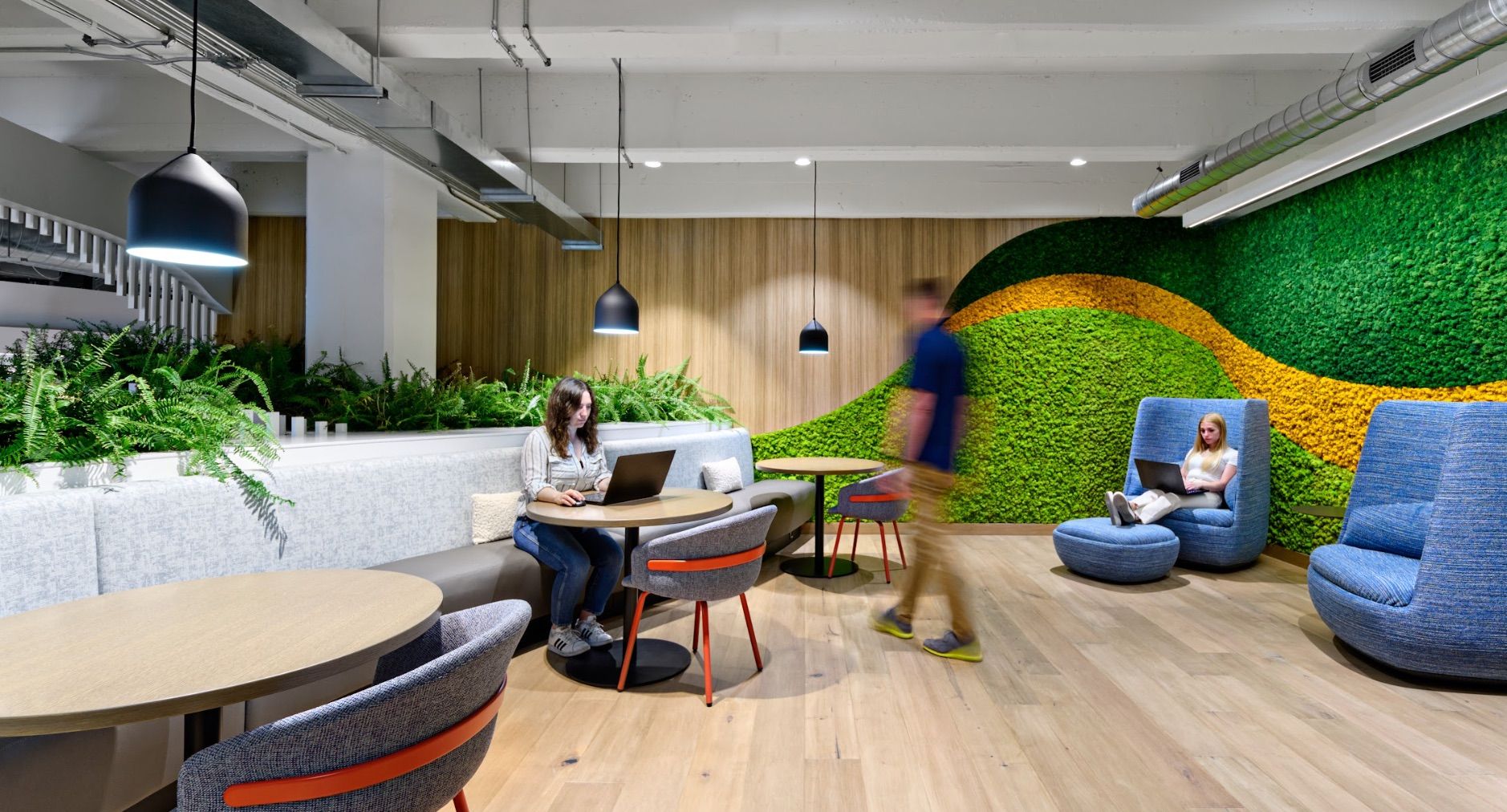
Since 2020, we have been redefining how our teams work Continue reading
Historical emissions offsets (and Scope 3 sneak preview)


In July 2021, Cloudflare committed to removing or offsetting the historical emissions associated with powering our network by 2025. Earlier this year, after a comprehensive analysis of our records, we determined that our network has emitted approximately 31,284 metric tons (MTs) of carbon dioxide equivalent (CO2e) since our founding.
Today, we are excited to announce our first step toward offsetting our historical emissions by investing in 6,060 MTs’ worth of reforestation carbon offsets as part of the Pacajai Reduction of Emissions from Deforestation and forest Degradation (REDD+) Project in the State of Para, Brazil.
Generally, REDD+ projects attempt to create financial value for carbon stored in forests by using market approaches to compensate landowners for not clearing or degrading forests. From 2007 to 2016, approximately 13% of global carbon emissions from anthropogenic sources were the result of land use change, including deforestation and forest degradation. REDD+ projects are considered a low-cost policy mechanism to reduce emissions and promote co-benefits of reducing deforestation, including biodiversity conservation, sustainable management of forests, and conservation of existing carbon stocks. REDD projects were first recognized as part of the 11th Conference of the Parties (COP) of the United Nations Framework Convention on Climate Change in Continue reading
A more sustainable end-of-life for your legacy hardware appliances with Cloudflare and Iron Mountain


Today, as part of Cloudflare’s Impact Week, we’re excited to announce an opportunity for Cloudflare customers to make it easier to decommission and dispose of their used hardware appliances sustainably. We’re partnering with Iron Mountain to offer preferred pricing and discounts for Cloudflare customers that recycle or remarket legacy hardware through its service.
Replacing legacy hardware with Cloudflare’s network
Cloudflare’s products enable customers to replace legacy hardware appliances with our global network. Connecting to our network enables access to firewall (including WAF and Network Firewalls, Intrusion Detection Systems, etc), DDoS mitigation, VPN replacement, WAN optimization, and other networking and security functions that were traditionally delivered in physical hardware. These are served from our network and delivered as a service. This creates a myriad of benefits for customers including stronger security, better performance, lower operational overhead, and none of the headaches of traditional hardware like capacity planning, maintenance, or upgrade cycles. It’s also better for the Earth: our multi-tenant SaaS approach means more efficiency and a lower carbon footprint to deliver those functions.
But what happens with all that hardware you no longer need to maintain after switching to Cloudflare?

The life of a hardware box
The life of a hardware Continue reading
Independent report shows: moving to Cloudflare can cut your carbon footprint

This post is also available in 简体中文, Français and Español.

In July 2021, Cloudflare described that although we did not start out with the goal to reduce the Internet's environmental impact, that has changed. Our mission is to help build a better Internet, and clearly a better Internet must be sustainable.
As we continue to hunt for efficiencies in every component of our network hardware, every piece of software we write, and every Internet protocol we support, we also want to understand in terms of Internet architecture how moving network security, performance, and reliability functions like those offered by Cloudflare from on-premise solutions to the cloud affects sustainability.
To that end, earlier this year we commissioned a study from the consulting firm Analysys Mason to evaluate the relative carbon efficiency of network functions like firewalls, WAF, SD-WAN, DDoS protection, content servers, and others that are provided through Cloudflare against similar on-premise solutions.
Although the full report will not be available until next year, we are pleased to share that according to initial findings:
Cloudflare Web Application Firewall (WAF) "generates up to around 90% less carbon than on-premises appliances at low-medium traffic demand."
Needless to say, we Continue reading
Cloud Networking Platforms – it’s all about making choices!

Whether it is something as simple as what kind of coffee to order for your commute to the office, which route to take to avoid traffic, or in my case, whether to support the USA or England in the 2022 world cup group stage game, we all make a myriad of choices every day.

A Quick Look at AWS Scalable Reliable Datagram Protocol
One of the most exciting announcements from the last AWS re:Invent was the Elastic Network Adapter (ENA) Express functionality that uses the Scalable Reliable Datagram (SRD) protocol as the transport protocol for the overlay virtual networks. AWS claims ENA Express can push 25 Gbps over a single TCP flow and that SRD improves the tail latency (99.9 percentile) for high-throughput workloads by 85%.
Ignoring the “DPUs could change the network forever” blogosphere reactions (hint: they won’t), let’s see what could be happening behind the scenes and why SRD improves TCP throughput and tail latency.