A gentle introduction to Linux Kernel fuzzing
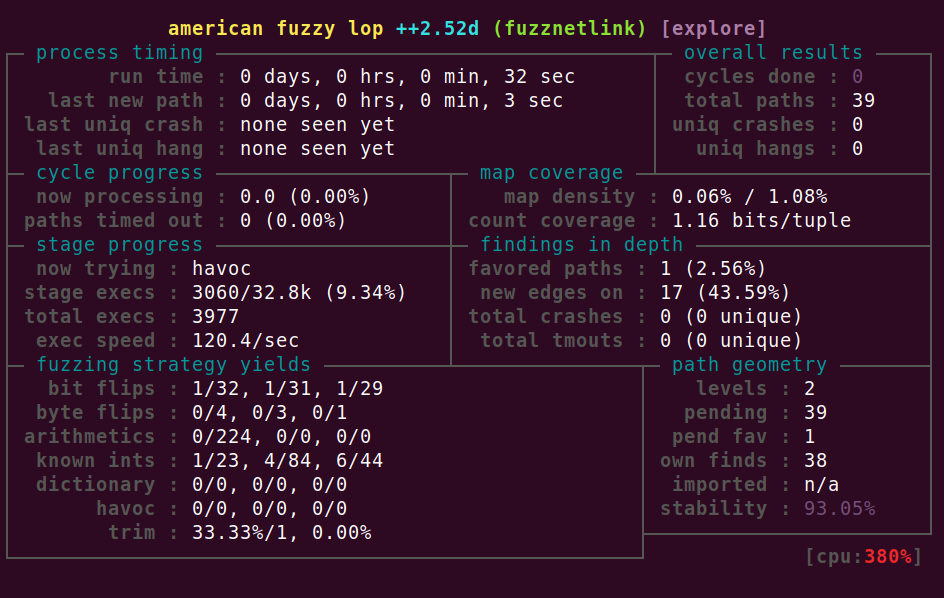
For some time I’ve wanted to play with coverage-guided fuzzing. Fuzzing is a powerful testing technique where an automated program feeds semi-random inputs to a tested program. The intention is to find such inputs that trigger bugs. Fuzzing is especially useful in finding memory corruption bugs in C or C++ programs.

Normally it's recommended to pick a well known, but little explored, library that is heavy on parsing. Historically things like libjpeg, libpng and libyaml were perfect targets. Nowadays it's harder to find a good target - everything seems to have been fuzzed to death already. That's a good thing! I guess the software is getting better! Instead of choosing a userspace target I decided to have a go at the Linux Kernel netlink machinery.
Netlink is an internal Linux facility used by tools like "ss", "ip", "netstat". It's used for low level networking tasks - configuring network interfaces, IP addresses, routing tables and such. It's a good target: it's an obscure part of kernel, and it's relatively easy to automatically craft valid messages. Most importantly, we can learn a lot about Linux internals in the process. Bugs in netlink aren't going Continue reading