0
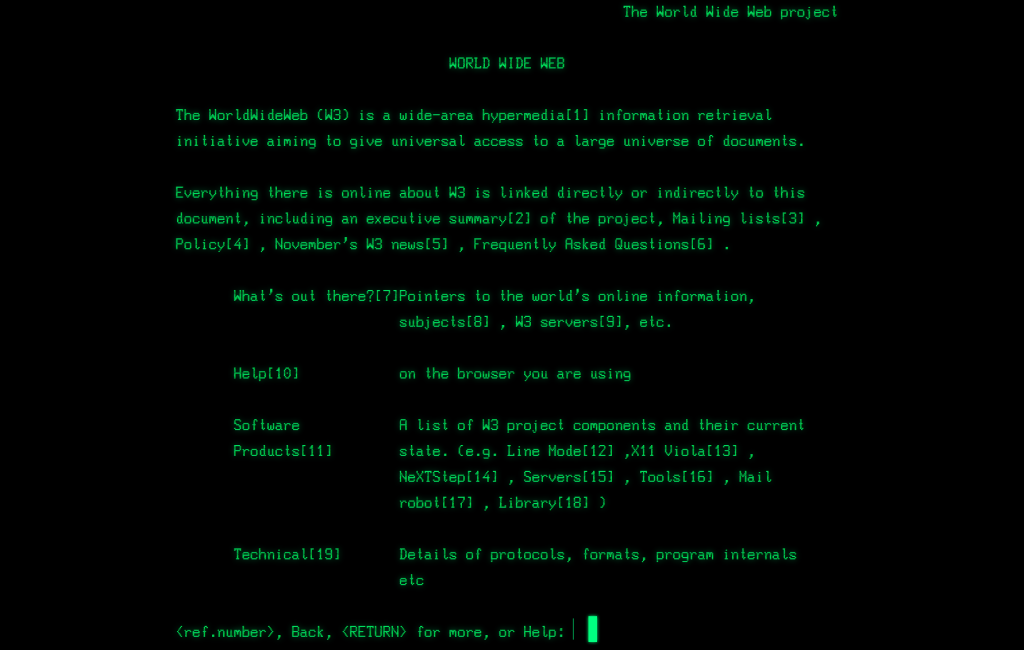
Back around 1991, I was traveling throughout the eastern USA teaching an “Introduction to the Internet” course I had written. The students were mainly from telecom, financial, and software companies wanting to know what this Internet thing was all about. I taught about IP addresses and DNS, using email, sending files with FTP, using archie and veronica to find info, engaging in USENET discussions, and using Gopher to explore “gopherspace”.
At the end of the course, one of the final sections was on “emerging technologies”. And there, nestled in with HyTelnet and WAIS, was one single page about this new service called the “World-Wide Web”.
And all the page really said was: telnet to info.cern.ch, login as “www”, and start pressing numbers to follow links on the screen.
That was it! (and you can still experience that site today)
We had no idea in those very early days that what we were witnessing was the birth of a service that would come to create so much of the communication across the Internet.
In only a few short years, of course, I was teaching new courses on “Weaving the Web: Creating HTML Documents” and Continue reading
 Nginx’s open-source web server for multi-cloud architecture powers more than 374 million...
 The open source project creates the necessary tunnels and routes between Kubernetes clusters that...
 As part of the five-year deal, Aurecon will replace its Orange MPLS network with SD-WAN to increase...
 Beyond recruitment and training, the security industry needs to retain talent. We need to take care...
 The U.S. government is pressuring Germany to ban Huawei from 5G deployments over national security...