Everything you ever wanted to know about UDP sockets but were afraid to ask, part 1
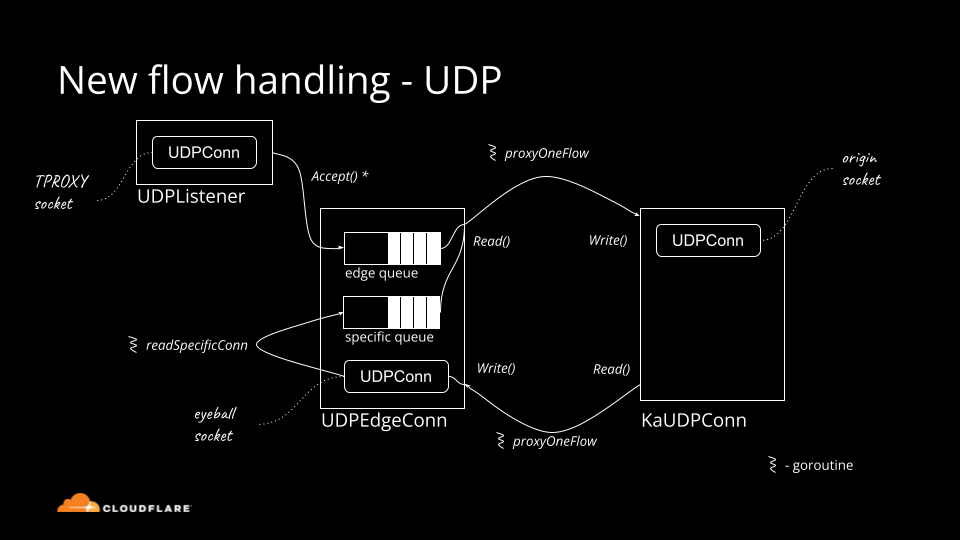
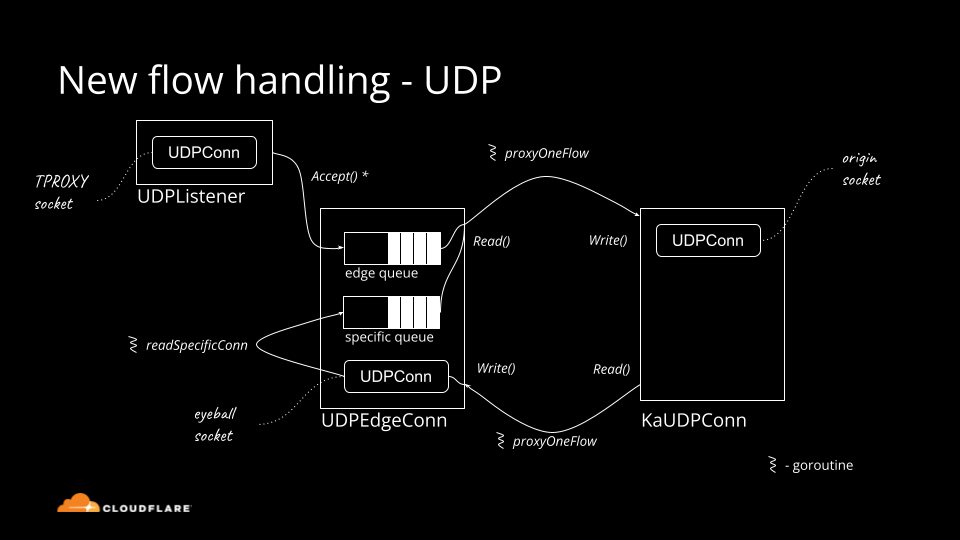
Historically Cloudflare's core competency was operating an HTTP reverse proxy. We've spent significant effort optimizing traditional HTTP/1.1 and HTTP/2 servers running on top of TCP. Recently though, we started operating big scale stateful UDP services.
Stateful UDP gains popularity for a number of reasons:
— QUIC is a new transport protocol based on UDP, it powers HTTP/3. We see the adoption accelerating.
— We operate WARP — our Wireguard protocol based tunneling service — which uses UDP under the hood.
— We have a lot of generic UDP traffic going through our Spectrum service.
Although UDP is simple in principle, there is a lot of domain knowledge needed to run things at scale. In this blog post we'll cover the basics: all you need to know about UDP servers to get started.
Connected vs unconnected
How do you "accept" connections on a UDP server? If you are using unconnected sockets, you generally don't.
But let's start with the basics. UDP sockets can be "connected" (or "established") or "unconnected". Connected sockets have a full 4-tuple associated {source ip, source port, destination ip, destination port}, unconnected Continue reading