On today's Day Two Cloud, we talk with Microsoft about how it's embracing Terraform to make it Azure-friendly, including the Terraform Export Tool, the AzAPI Provider, and a Terraform on Azure community. This is not a sponsored episode.
To facilitate the huge scale of Cloudflare’s customer base, we maintain data centers which span more than 300 cities in over 100 countries, including approximately 30 locations in Mainland China.
The Cloudflare global network is built to be continuously updated in a zero downtime manner, but some changes may need a server reboot to safely take effect. To enable this, we have mechanisms for the whole fleet to automatically reboot with changes gated on a unique identifier for the reboot cycle. Each data center has a maintenance window, which is a time period - usually a couple of hours - during which reboots are permitted.
We take our customer experience very seriously, and hence we have several mechanisms to ensure that disruption to customer traffic does not occur. One example is Unimog, our in-house load balancer that spreads load across the servers in a data center, ensuring that there is no disruption when a server is taken out for routine maintenance.
The SRE team decided to further reduce risk by only allowing reboots in a data center when the customer traffic is at the lowest. We also needed to automate the existing manual process for determining the window Continue reading
5G and beyond mobile networks are requesting automation capabilities to rapidly scale up their service rollout. To that end, Kubernetes and cloud-native infrastructures unlock a great deal of flexibility through declarative configuration.
However, there is a large number of important non-declarative components (e.g. legacy OSS/BSS systems, bare metal servers, network infrastructure, etc.) that will still require imperative configuration for the foreseeable future.
Declarative vs Imperative, a Zero-Sum Game for 5G?
Short answer: definitely not.
Kubernetes and Red Hat OpenShift are built around a declarative model in which configuration Custom Resources (CRs) capture the desired end state and the cluster works to reconcile to it. This model fits in seamlessly with tools like GitOps and the different engines (i.e. clusters, applications, observability, and governance) provided by Red Hat Advanced Cluster Management for Kubernetes.
The market for managed security services is shifting as enterprises weigh their requirements for cloud-based security capabilities and vendors refine their feature sets and product integrations.Converged security services can offer significant benefits to enterprises when it comes to manageability, scalability, security, and price, according to research firm Gartner, which introduced the term SASE, or secure access service edge. SASE is a network architecture that combines software-defined wide area networking (SD-WAN) and security functionality into a unified cloud service that promises simplified WAN deployments, improved efficiency and security, and application-specific bandwidth policies.To read this article in full, please click here
The market for managed security services is shifting as enterprises weigh their requirements for cloud-based security capabilities and vendors refine their feature sets and product integrations.Converged security services can offer significant benefits to enterprises when it comes to manageability, scalability, security, and price, according to research firm Gartner, which introduced the term SASE, or secure access service edge. SASE is a network architecture that combines software-defined wide area networking (SD-WAN) and security functionality into a unified cloud service that promises simplified WAN deployments, improved efficiency and security, and application-specific bandwidth policies.To read this article in full, please click here
The National Center for Supercomputing Applications at the University of Illinois just fired up its Delta system back in April 2022, and now it has just been given $10 million by the National Science Foundation to expand that machine with an AI partition, called DeltaAI appropriately enough, that is based on Nvidia’s “Hopper” H100 GPU accelerators. …
Today's Heavy Wireless episode explores building sustainable and efficient backhaul networks with sponsor Ceragon Networks. We discuss the challenges of backhaul, the complementarity of wireless and fiber solutions, the frequencies and protocols used in wireless backhaul, and the concept of disaggregated routing.
Today's Heavy Wireless episode explores building sustainable and efficient backhaul networks with sponsor Ceragon Networks. We discuss the challenges of backhaul, the complementarity of wireless and fiber solutions, the frequencies and protocols used in wireless backhaul, and the concept of disaggregated routing.
Dhiraj Sehgal is the Director of Technical Marketing at Tigera, where he helps customers learn more about Calico and provides best practices for securing cloud-native environments. He is passionate about everything cloud native, from Kubernetes to cloud security and observability.
Mike Bookham is a Channel Solutions Engineer at Cockroach Labs. As part of Mike’s role, he helps a range of different types of partner organizations get familiar with CockroachDB from a technical perspective. Mike has worked with cloud-native technologies for a number of years and specializes in Kubernetes and the surrounding ecosystem.
With the rapid adoption of Kubernetes in organizations and the push to standardize the orchestration of resources with this approach, databases are now also being deployed into Kubernetes. Historically, persistent workloads like databases were not recommended for their deployment into Kuberntes as it was complex to manage how data would be stored. This was a result of Kubertnes originally being designed for non persistent microservice architectures. However, in more recent times new database vendors are emerging with software built from the ground up to run in this environment.
Kubernetes mandates how the networking is deployed and configured in Continue reading
Some of the most convenient “tricks” on Linux depend on the use of a handful of special characters. This post takes a look at a number of them and shows how they work.Using > and >>
Using the > and >> characters will have similar but different effects, and both depend on how you use them in a command. The > character can be used to direct output into a file. For example, these commands will put the specified text into a file. If the file exists, however, any former content will be overwritten. Notice how only one "hello" remains in the file.$ echo hello > world
$ echo hello > world
$ cat world
hello
Using >>, on the other hand, will add the text provided to the end of a file. If the file doesn’t exist, the command will create it.To read this article in full, please click here
Some of the most convenient “tricks” on Linux depend on the use of a handful of special characters. This post takes a look at a number of them and shows how they work.Using > and >>
Using the > and >> characters will have similar but different effects, and both depend on how you use them in a command. The > character can be used to direct output into a file. For example, these commands will put the specified text into a file. If the file exists, however, any former content will be overwritten. Notice how only one "hello" remains in the file.$ echo hello > world
$ echo hello > world
$ cat world
hello
Using >>, on the other hand, will add the text provided to the end of a file. If the file doesn’t exist, the command will create it.To read this article in full, please click here
SD-WANs (software-defined wide area networks) have been in wide-scale use for several years now, and their adoption has accelerated in recent years. According to a report by IDC, the worldwide SD-WAN infrastructure market reached $4.5 billion in 2020, representing a dramatic 45.5% increase from the previous year.Today, SD-WAN is considered a mainstream technology, and companies like Microsoft, Vodafone, and Visa are using it to connect their branch offices, data centers, and cloud resources. As more organizations adopt cloud-based applications and services, the demand for SD-WAN is likely to continue to grow.But within SD-WAN solutions there are critical limitations–particularly for organizations that operate globally since SD-WAN lacks a global backbone.To read this article in full, please click here
By: Lilly Fleming, Healthcare Marketing, HPE Aruba Networking.Healthcare organizations have undergone substantial digital transformation over the last decade. There are more medical and personal IoT devices in the healthcare landscape than ever before, and this trend is not slowing down. The healthcare IT organization faces the difficult challenge of added complexities, including how they prioritize investments in digital tools, technology, and analytics. Channel Partners can help their healthcare customers meet the needs of their patients and stakeholders by enabling them to overcome these challenges.To read this article in full, please click here
By: Scott Raynovich, Founder and Chief Analyst, FuturiomAs end users adopt software-defined technology that can help them more easily deploy and manage secure networks, they are increasingly looking to the technologies known as secure access service edge (SASE) and secure service edge (SSE).But digging deeper into these acronyms, it gets more complex. SASE and SSE products aren’t exactly product categories per se – but platforms for integrating a variety of network security functions. These wide-ranging features might include all the most popular features/acronyms, including Advanced Threat Protection (ATP), Cloud Access Security Broker (CASB), Data Loss Prevention (DLP), Firewall-as-a-Service (FWaaS), Intrusion Detection System/Intrusion Prevention System (IDS/IPS), Next-Generation Firewall (NGFW), Software-Defined Wide-Area Networking (SD-WAN), Secure Web Gateway (SWG), Unified Threat Management (UTM), and Zero Trust Network Access (ZTNA). The integration of these functions is a key driving force behind the growth of the SASE market.To read this article in full, please click here
APIs account for more than half of the total traffic of the Internet. They are the building blocks of many modern web applications. As API usage grows, so does the number of API attacks. And so now, more than ever, it’s important to keep these API endpoints secure. Cloudflare’s API Shield solution offers a comprehensive suite of products to safeguard your API endpoints and now we’re excited to give our customers one more tool to keep their endpoints safe. We’re excited to announce that customers can now bring their own Certificate Authority (CA) to use for mutual TLS client authentication. This gives customers more security, while allowing them to maintain control around their Mutual TLS configuration.
The power of Mutual TLS (mTLS)
Traditionally, when we refer to TLS certificates, we talk about the publicly trusted certificates that are presented by servers to prove their identity to the connecting client. With Mutual TLS, both the client and the server present a certificate to establish a two-way channel of trust. Doing this allows the server to check who the connecting client is and whether or not they’re allowed to make a request. The certificate presented by the client - the client certificate Continue reading
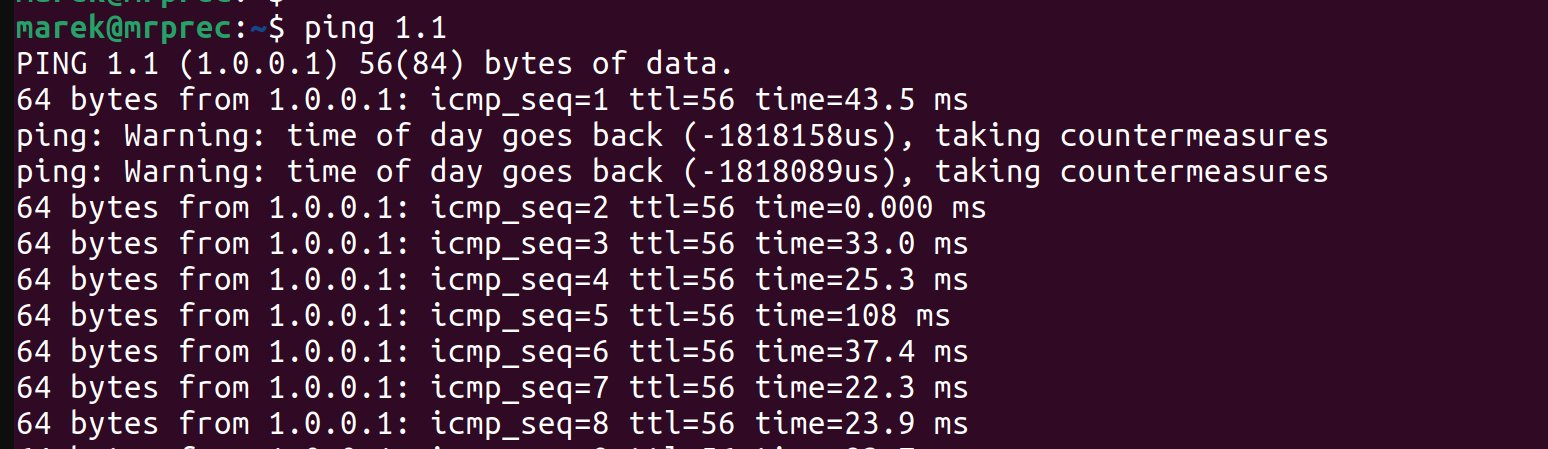
Once my holidays had passed, I found myself reluctantly reemerging into the world of the living. I powered on a corporate laptop, scared to check on my email inbox. However, before turning on the browser, obviously, I had to run a ping. Debugging the network is a mandatory first step after a boot, right? As expected, the network was perfectly healthy but what caught me off guard was this message:
I was not expecting ping to take countermeasures that early on in a day. Gosh, I wasn't expecting any countermeasures that Monday!
Once I got over the initial confusion, I took a deep breath and collected my thoughts. You don't have to be Sherlock Holmes to figure out what has happened. I'm really fast - I started pingbefore the system NTP daemon synchronized the time. In my case, the computer clock was rolled backward, confusing ping.
While this doesn't happen too often, a computer clock can be freely adjusted either forward or backward. However, it's pretty rare for a regular network utility, like ping, to try to manage a situation like this. It's even less common to call it "taking countermeasures". I would totally expect ping to just print Continue reading
One of the challenges with Catalyst SD-WAN is managing templates. Depending on how successful you are in standardizing your deployment, you risk ending up with many device templates. This can also be amplified if you have several platforms as each platform requires its own set of device templates. Feature templates, while reusable, offers no concept of grouping feature templates which means that there is a lot of work involved in building a new device template. To overcome some of these challenges, Cisco has introduced Configuration Groups starting with 20.8 and going forward where 20.11 currently has the most features implemented. This is also often referred to as UX 2.0 in some presentations. Let’s take a look at Configuration Groups by looking at the building blocks.
Configuration Group – Logical grouping of features or configuration that is applied to devices. Similar to a device template but it can be applied to different models.
Feature Profile – Building block of configurations that can be reused across different Configuration Groups. Example feature profiles are Transport Profile, System Profile, Service Profile.
Feature – The Feature Profile consists of features. The individual capability to be shared across Configuration Groups such as service Continue reading
Smart engineers were forever using Linux (in particular, its traffic control/queue discipline functionality) to simulate WAN link impairment. Unfortunately, there’s a tiny hurdle you have to jump across: the tc CLI is even worse than iptables.
A long while ago someone published a tc wrapper that simulates shitty network connections and (for whatever reason) decided to call it Comcast. It probably does the job, but I would prefer to have something in Python. Daniel Dib found just that – tcconfig – and used it to
simulate WAN link behavior on VMware vSphere.